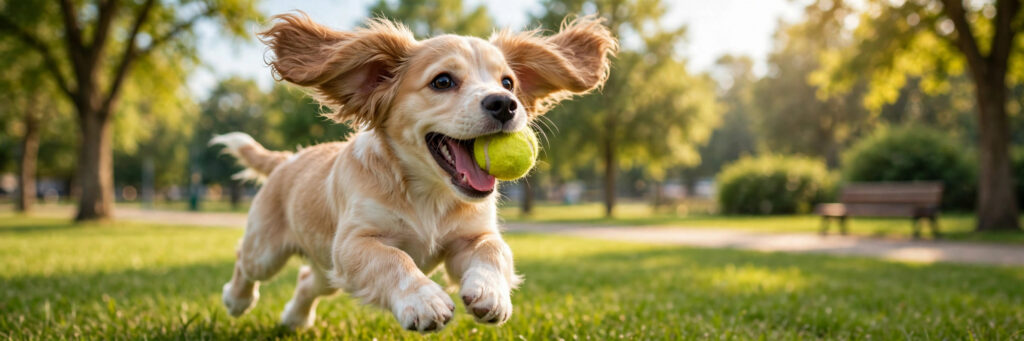
You take one step across the living room, and suddenly your puppy is attached to your ankle like a tiny furry shark. You try to walk to the kitchen, and those needle-sharp teeth are grabbing your socks, your shoelaces, your bare feet — everything. It hurts, it is annoying, and if you have guests, it can be downright embarrassing.
Take a deep breath. This is one of the most common puppy complaints, and it is almost never a sign of aggression. Puppies bite feet and ankles because that is how they are wired to explore, play, and herd — your moving feet just look like the most fun toy in the room. The good news is that this behavior is very trainable, and with a consistent plan, most puppies grow out of it in a matter of weeks.
Let us break down why it happens and exactly how to stop it.
Why Puppies Go After Feet and Ankles
Understanding the “why” makes the training much easier. Your puppy is not being bad — several normal instincts are working against you at once.
It Triggers Their Chase Instinct
Dogs are wired to chase things that move. When you walk, your feet dart forward, swing back, and shuffle along the floor. To a puppy’s brain, that looks exactly like prey. Shoes with flapping laces and loose pant legs make the game even more exciting. This is the same reason puppies chase balls, leaves, and their own tails — movement is irresistible to them.
Puppies Explore With Their Mouths
A puppy’s mouth is like a human baby’s hands. Puppies taste and nibble everything to learn about the world, and your feet are simply within easy reach.
Teething Pain
Between roughly 3 and 6 months of age, puppies lose their baby teeth and grow in their adult teeth. This process can make their gums sore and itchy, and chewing on things — including your shoes and ankles — brings relief. If your puppy’s biting suddenly got worse, teething may be a big part of the story.
Herding Instincts
Many breeds were developed to herd animals by nipping at their heels. If you have a herding breed like a Border Collie, Australian Shepherd, Corgi, or Heeler, ankle-biting is in their DNA. These breeds need extra training and mental outlets, but the same techniques work.
They Want Your Attention
Here is an uncomfortable truth: if you yelp, jump, or chase the puppy when it bites your ankles, you are rewarding it. From the puppy’s point of view, a big reaction means the game is working. Even negative attention is still attention, and attention is the best prize in a puppy’s world.
Too Much Energy or Overtiredness
A puppy that has not had enough playtime will invent its own entertainment. On the flip side, an overtired puppy loses impulse control and gets nippy, just like a cranky toddler. Both problems look the same at ankle level. If you are not sure which one you are dealing with, our guide on signs your puppy is overtired and cranky, not misbehaving can help you tell the difference.
How to Stop Your Puppy From Biting Feet and Ankles
There is no single magic trick, but this combination of techniques works for most puppies. Be patient and consistent — every person in the household must follow the same rules, or the puppy will learn that biting works sometimes, which makes it much harder to stop.
1. Freeze and Go Boring
The moment your puppy latches onto your ankle, stop moving completely. Stand still like a tree. No stepping away, no shaking your foot, no laughing. Movement is the reward, so removing the movement removes the fun. Most puppies will lose interest within a few seconds and let go. The instant they release, calmly praise them and walk on.
This sounds too simple to work, but it is the foundation of everything else. If everyone in the house does this every time, many puppies stop ankle-biting within a week or two.
2. Redirect to Something Better
Freezing stops the fun, but your puppy still needs something to do with its mouth. Always have a toy within reach — keep tug toys or rope toys in every room if you have to. The moment your puppy releases your ankle (or just before it grabs on, when you see the “stalking” body language), offer the toy instead.
Make the toy exciting: wiggle it, drag it on the floor, let the puppy chase it. You are teaching your puppy that toys are for biting and ankles are boring. This redirection habit is the same skill behind our step-by-step guide on how to stop a puppy from chewing furniture and shoes — the principle is identical: replace the wrong target with the right one.
3. Teach “Leave It” and “Sit”
Impulse control is the long-term fix. A puppy that knows “leave it” can stop itself even when the urge strikes. Start in calm moments, not during an ankle attack:
- Hold a treat in your closed fist and let the puppy sniff it. The moment it backs away, say “leave it,” open your hand, and give the treat.
- Build up to placing the treat on the floor and rewarding the puppy for ignoring it.
- Practice with toys, then with a foot that moves slightly.
Pair this with a rock-solid “sit.” When your puppy runs at your ankles, asking for a sit gives it a job to do instead of biting. Reward generously — and when you are training with food rewards, check our tips on best treats for training a puppy without overfeeding so you do not accidentally overdo the calories.
4. Soothe Teething Pain
If your puppy is in the teething window, give those sore gums legal outlets:
- Offer frozen toys — wet a rope toy, freeze it, and let the puppy chew on the cold, soothing texture.
- Try frozen carrots or a frozen washcloth (supervised only, so the puppy does not swallow fabric).
- Rotate chew toys so they stay interesting.
A puppy whose gums feel better is a puppy that bites less.
5. Meet Their Exercise and Play Needs
A tired puppy is a well-behaved puppy — but “tired” means the right kind of tired. Short play sessions, sniff walks, and training games burn energy far better than one exhausting marathon session. Aim for several short play bursts through the day rather than one long one.
Mental exercise matters just as much. Puzzle feeders, snuffle mats, and short training sessions wear a puppy out quickly — ten minutes of “find the treat” can calm a puppy more than a thirty-minute walk. Herding breeds especially need a “job,” and even simple tricks count.
6. Use a Time-Out When Needed
If your puppy is in a wild biting frenzy and nothing redirects it, it is probably overtired. Calmly place it in its crate or a boring pen for a short nap — not as punishment, just as a quiet break. Most puppies fall asleep within minutes, which tells you everything: it was tiredness, not defiance.
7. Manage the Environment
While training is underway, set yourself up for success:
- Wear shoes or slippers instead of walking barefoot — bare skin is extra tempting.
- Tuck in shoelaces and avoid dangling pant legs around the puppy.
- Use baby gates to keep the puppy out of hallways where the chase game is most tempting.
- Never let the puppy rehearse the behavior unsupervised — every successful ankle-bite strengthens the habit.
Your 2-Week Step-by-Step Fix Plan
Here is a simple plan to follow:
Days 1–3: Go boring. Every person in the house freezes the moment teeth touch skin. Keep toys in every room and redirect every time. Remove temptations (shoes, laces, dangling clothes). You are simply breaking the fun-reward cycle.
Days 4–7: Add training. Start “leave it” and “sit” practice twice a day for five minutes. Continue freeze-and-redirect during walks. Add one frozen teething toy per day if teething. Increase short play sessions.
Days 8–14: Build the habit. Practice “leave it” with a moving foot at low intensity. Reward four-paws-on-the-floor calm behavior around feet with treats and praise. Keep a log of biting incidents — you should see the number dropping.
Ongoing: Stay consistent. Most puppies show big improvement in 2–4 weeks, though herding breeds and very young puppies may take longer. Regression is normal during teething spikes — just go back to the plan.
What NOT to Do
Some common reactions actually make ankle-biting worse. Avoid these:
- Do not yell, push, or shove the puppy away. Pushing feels like play-wrestling to a puppy, and yelling is exciting. Both reward the behavior.
- Do not hit or flick the puppy’s nose. This can create fear and hand-shyness, and fearful puppies may bite harder later. It damages trust without teaching what to do instead.
- Do not chase the puppy or run away. Running triggers the chase instinct and turns you into the best game ever.
- Do not use punishment-based tools like spray bottles or shake cans as your main strategy. Startling a puppy might interrupt the bite once, but it does not teach the puppy what to do instead — and it can create anxiety.
- Do not wear the puppy out with marathon exercise. An exhausted, overstimulated puppy gets wilder, not calmer. Short sessions beat long ones.
- Do not expect one family member’s training to work if others allow the biting. Puppies learn rules per person. If one person lets it slide, the puppy learns “biting works sometimes” — and “sometimes” is the hardest schedule to unlearn.
When to See a Vet
Normal puppy nipping is common and trainable. But some signs suggest something more is going on, and a vet visit is the right move:
- The biting is getting harder, not softer. Normal puppy biting should gradually decrease in intensity as the puppy learns bite inhibition. Biting that gets harder over weeks is a red flag.
- The puppy guards resources — stiffening, growling, or snapping when you approach its food, toys, or resting spot.
- Biting comes with other worrying changes: sudden aggression, lethargy, loss of appetite, excessive itching, or skin problems (pain can make any puppy bite).
- The puppy seems unable to calm down at all, even after rest, play, and training — possible signs of an underlying issue worth discussing.
- Bites that break skin frequently, especially in a puppy older than 6 months.
A vet can rule out pain, skin irritation, or other medical issues that may be contributing to the behavior. If the vet gives the all-clear but the behavior continues, ask for a referral to a certified professional dog trainer or veterinary behaviorist — not just any trainer, but one who uses positive, reward-based methods.
FAQ
Is it normal for puppies to bite feet and ankles?
Yes, it is extremely normal. Almost every puppy goes through a phase of nipping at feet, hands, and clothing. It is driven by play instincts, teething, and curiosity — not aggression. With consistent training, most puppies grow out of it by 5 to 6 months of age.
Why does my puppy only bite MY ankles and not other people’s?
Usually it is about opportunity and reaction. If you move quickly, wear interesting shoes, or react with big jumps and noises, you are simply more fun to bite. It can also be a sign of bonding — puppies often test boundaries most with their favorite person. Take it as a strange compliment, then train through it.
At what age do puppies stop biting ankles?
Most puppies show major improvement between 4 and 6 months as teething ends and training takes hold. Herding breeds may take longer and need more structured outlets. If intense biting continues past 7 to 8 months despite consistent training, it is worth discussing with your vet or a professional trainer.
Should I yelp like a puppy when mine bites me?
This used to be popular advice, but results are mixed. Some puppies pause at a yelp; others get more excited. If a calm “ouch” makes your puppy pause, use it — if it riles the puppy up, drop it and just freeze instead.
Can I use bitter spray on my shoes to stop the biting?
Bitter-tasting sprays can help as a backup on items like furniture, but they are not a training solution. Test any spray on a hidden spot first, reapply often, and never spray it on the puppy. Redirecting and training are what actually fix the problem.
The Bottom Line
Your puppy biting your feet and ankles is annoying, sometimes painful, and completely normal. Behind those needle teeth is a baby animal learning how the world works — and you are its favorite teacher. Freeze the fun, redirect the mouth, train impulse control, meet the puppy’s needs for play and rest, and keep the whole household consistent.
In a few weeks, you will walk across the room in peace — and your puppy will be busy with a toy instead of your socks. That is a future worth training for.