
Cats have a reputation for being independent little creatures who are perfectly happy on their own. And it’s true that most adult cats are fine alone for a few hours at a time. But when “a few hours” turns into an entire workday, five days a week, some cats do start to feel lonely — and they’ll tell you about it, in their own way.
If you come home every evening to a cat that seems restless, clingy, or just not quite themselves, loneliness could be the reason. The good news is that once you know the warning signs, there are plenty of simple things you can do to make your cat’s solo hours happier.
This guide walks you through how to spot loneliness in your cat, what you can do about it, and when a change in behavior means it’s time to check in with your vet.
Warning Signs Your Cat Is Lonely
Cats don’t sigh dramatically and stare out of the window (well, most of them don’t). Their signs of loneliness look different — and some of them are easy to mistake for “just being a cat.” Here’s what to watch for.
Becoming Extremely Clingy When You Get Home
A happy cat is usually pleased to see you. But a lonely cat takes it to another level: following you from room to room, meowing constantly, climbing on you the second you sit down, and refusing to leave your side for hours. If your cat is fine in the morning but turns into your shadow every evening, they may be making up for a long, boring day without company.
Excessive Meowing or Vocalizing
Some cats are naturally chatty. But a sudden increase in meowing — especially loud, attention-seeking yowls when you arrive home — can be a sign your cat spent the day feeling bored and understimulated. Pay attention to when the meowing happens. Meows that start the moment you walk through the door and continue nonstop are often about reconnecting after a lonely day.
Destructive Behavior
Scratched-up furniture, knocked-over plants, and shredded toilet paper can all be signs of a bored, under-stimulated cat. Cats who spend long hours alone sometimes entertain themselves in ways you won’t appreciate. If this behavior started around the time your work schedule changed or your hours got longer, loneliness or boredom is a possible cause.
Litter Box Problems
A cat that suddenly starts avoiding the litter box may be stressed — and loneliness can be a source of stress. Before jumping to conclusions, though, rule out medical causes and dirty litter. But if everything checks out and the problem keeps happening, emotional stress from being alone too long could be part of the picture.
Changes in Eating Habits
Some lonely cats lose interest in food, while others overeat out of boredom. Either way, a noticeable change in appetite that lasts more than a day or two is worth paying attention to. One thing that helps some owners is keeping meals interesting even when they’re not home — automatic cat feeders can split meals into smaller, timed portions so your cat has something to look forward to during the day.
Hiding More Than Usual
If your normally social cat starts spending the whole day hidden away, take note. Hiding can mean many things — illness, fear, stress — and loneliness-driven sadness is one possible cause. Check out our guide on why cats hide under the bed to help you figure out what your cat might be feeling.
Over-Grooming
A cat that licks or chews their fur obsessively — sometimes to the point of bald patches — may be dealing with stress or anxiety. Boredom and loneliness can trigger this in some cats. Over-grooming always deserves a vet visit, because skin problems and allergies can cause the same symptom.
Which Cats Are Most at Risk of Loneliness?
Not every cat minds being alone. Some are genuinely fine snoozing the day away. But certain cats are more likely to struggle:
- Kittens and young cats — they have more energy and a stronger need for play and interaction.
- Recently adopted cats — a cat that just lost its previous home or housemates may feel the emptiness more.
- Single cats in small apartments — less space and no other animals mean fewer things to keep them occupied.
- Very social breeds — Siamese, Burmese, Ragdoll, and similar breeds are known for craving human company.
- Cats used to company — if your household recently changed (a roommate moved out, another pet passed away), your cat may feel the loss.
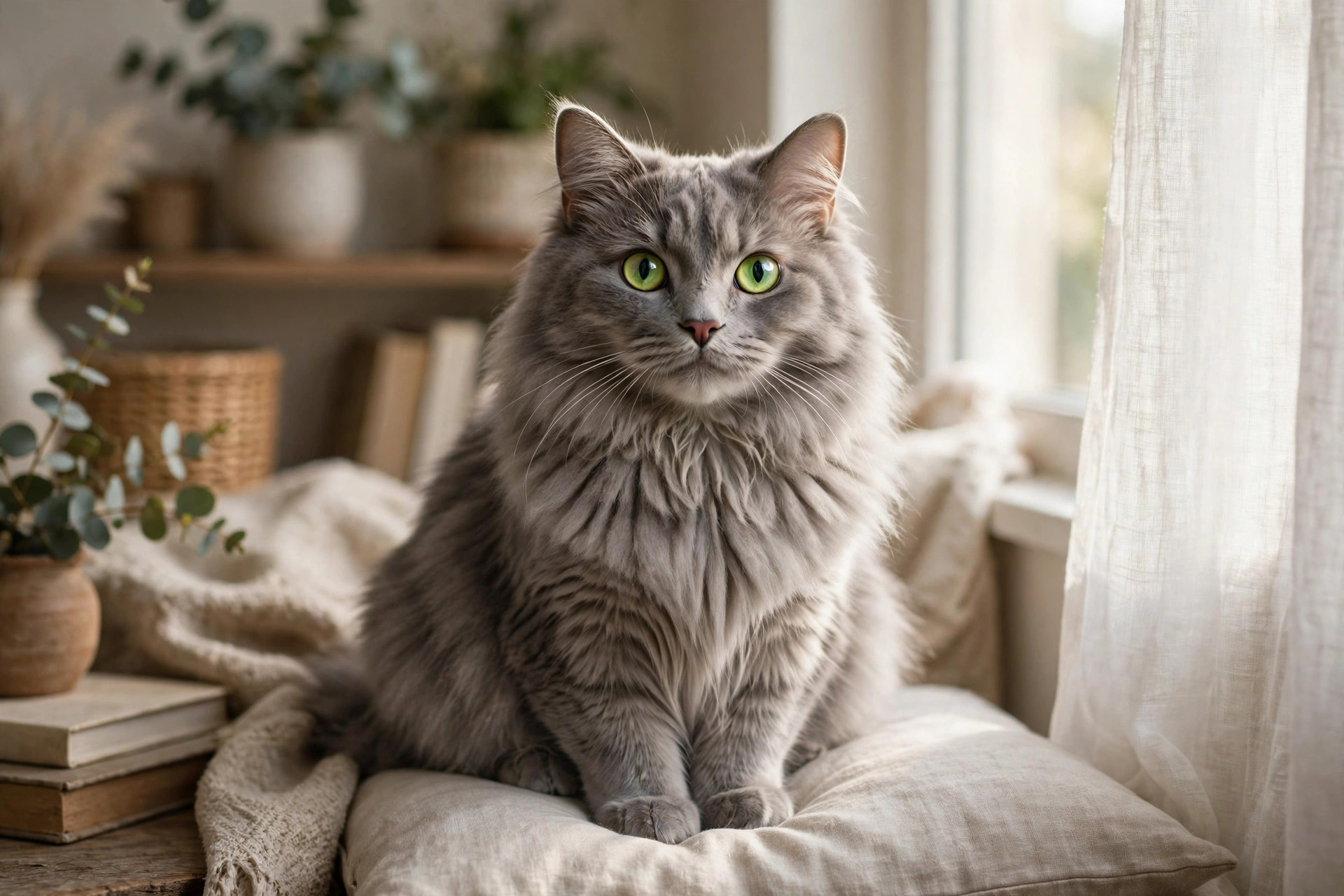
Practical Tips: Enriching Your Cat’s Day While You’re Gone
You can’t quit your job, but you can absolutely make your cat’s alone time better. Here are ideas that actually work.
Make the Home More Interesting
- Window perches: Cats love watching the world go by. A sturdy perch or cat tree by a window gives them “cat TV” all day long.
- Rotate toys: Don’t leave all the toys out at once. Put out a fresh set every few days so things feel new. Mice, crinkle balls, and puzzle toys are great picks.
- Cardboard boxes and paper bags: Cheap, simple, and endlessly entertaining. Cats adore them.
- Vertical space: Shelves, cat trees, and cleared-off bookcases let your cat climb and explore, which keeps both body and mind active.
Puzzle Feeders and Food Games
Instead of leaving a full bowl of dry food out, try hiding small portions of kibble around the house or using a puzzle feeder. Hunting for food taps into your cat’s natural instincts and turns mealtime into a game. This is especially helpful for cats that tend to overeat from boredom.
Background Noise
Some cats seem calmer with gentle background sound. Try leaving a radio on a talk station or playing a calm playlist. There are even “videos for cats” on streaming platforms with birds and squirrels — some cats watch them, some nap through them, and both outcomes are fine.
A Consistent Routine
Cats are creatures of habit. If your schedule is regular, keep it that way: feed at the same times, play at the same time each evening, and keep morning and evening rituals steady. A predictable routine helps a lonely cat feel more secure.
Quality Time When You’re Home
The 20–30 minutes after you get home matter a lot. Make it count:
- Play an active game (feather wand, laser pointer, fetch) before dinner.
- Give focused attention — petting, brushing, talking to them — without your phone in your hand.
- Let them sleep on your chest or curl up with you while you relax in the evening. That closeness reassures them.
Should You Get a Second Cat?
This is the question every lonely-cat owner asks. A feline companion can be wonderful — but it’s not an automatic fix.
It may help if: your cat is young, social, and has lived happily with other cats before.
Think carefully if: your cat is older, territorial, or has always been an only pet. Some cats would rather be a little lonely than share their home with a rival.
If you do decide to adopt, go slowly. A proper introduction takes days or even weeks — rushing it can create stress instead of solving it. Read our step-by-step guide on how to introduce two adult cats without fighting before you bring a new cat home.
What NOT to Do
- Don’t punish attention-seeking behavior. Scolding a clingy or vocal cat doesn’t address the loneliness — it just adds stress.
- Don’t get a second cat on impulse. Adopting a companion can help, but a bad match makes things worse. Take your time and consider your current cat’s personality.
- Don’t leave your cat alone for more than 24 hours without someone checking in. Even the most independent cat needs fresh water, food, and a clean litter box daily.
- Don’t assume it’s “just their personality.” If your cat’s behavior has changed recently, something is causing it — don’t ignore the shift.
- Don’t try to “make up for it” with treats alone. Extra food doesn’t replace interaction, and it can lead to weight gain. Play and attention are what they really want.
- Don’t rely on medication or calming products without vet advice. Products like calming diffusers may help some cats, but talk to your vet first about what’s safe and appropriate.
When to See a Vet
Most loneliness responds well to enrichment and more quality time. But some signs should never wait — they can point to medical problems that need professional attention:
- Not eating for more than 24 hours
- Hiding constantly and refusing to come out, even for favorite people or food
- Over-grooming to the point of bald spots or sores
- Sudden aggression toward you or others in the home
- Lethargy, vomiting, diarrhea, or any physical symptom alongside the behavior change
- Litter box avoidance that continues after you’ve ruled out a dirty box
When in doubt, call your vet. A checkup can rule out medical causes, and your vet can also advise on anxiety or stress-related behavior. Never try to diagnose your cat yourself — many medical conditions look like “moodiness” at first.
FAQ
How long can a cat be left alone during the day?
Most healthy adult cats are fine alone for 8–10 hours during a typical workday, as long as they have food, fresh water, a clean litter box, and some enrichment. Kittens under 6 months shouldn’t be alone that long — 4 hours is a better limit for them.
Do cats actually miss their owners?
Yes — many cats do. Research and countless owner experiences suggest cats form real attachments to their people. Signs like greeting you at the door, following you around in the evening, and sleeping on your clothes are all ways cats show they’ve missed you.
Is it cruel to leave a cat alone all day while I work?
Not necessarily. Millions of cats live happily with working owners. It becomes a problem only if your cat shows ongoing signs of loneliness or stress that you don’t address. With good enrichment and quality evening time, most cats do just fine.
Will getting a second cat cure loneliness?
Sometimes, but not always. A compatible companion can transform a lonely cat’s life. But a bad match can add stress and conflict. Consider your cat’s age, temperament, and history with other animals — and introduce any new cat very gradually.
What are the first signs a cat is lonely?
The earliest and most common signs are increased clinginess when you get home, extra meowing, and small behavior changes like sleeping more or playing less. Catching it early means you can adjust their environment before boredom turns into real stress.
Conclusion
Cats may act like they don’t need anyone, but the truth is softer than that: many cats genuinely enjoy our company and feel its absence during a long day alone. The good news is that loneliness in cats is one of the most fixable problems an owner can face.
Start by watching for the signs — the extra meowing, the clinginess, the little behavior changes. Then make their solo hours more interesting with toys, window views, puzzle feeders, and a steady routine. And when you’re home, give them the best part of your evening: your full, undivided attention, even if it’s just for twenty minutes.
Your cat chose you as their person. A few small changes can make sure they never have to wonder whether you chose them back.