
If you have ever sat down on a dark sofa only to stand up covered in cat hair, you know the struggle. Shedding is normal with a cat, but when fur seems to be everywhere — clothes, bedding, furniture, even food — it is natural to wonder whether something is wrong and what you can do.
The good news is that you usually cannot stop shedding completely, and you do not need to. A healthy cat will always shed some fur. What you can do is reduce it a lot with a few simple, consistent habits.
Why Do Cats Shed So Much?
Shedding is how cats renew their coats: old hairs fall out and new ones grow in. Most cats shed a little all year, with heavier shedding in spring and autumn as coats adjust to daylight and temperature. Indoor cats, under artificial light and steady temperatures, may shed more evenly all year instead of having one big seasonal shed.
Some cats simply shed more than others. Long-haired breeds like Persians and Maine Coons drop more visible fur than short-haired cats, and older cats may shed more as their grooming habits change. Dark furniture, fleece blankets, and carpets also show hair more clearly than smooth, light-coloured surfaces.
Possible causes of heavier-than-usual shedding include a poor diet, dehydration, stress, lack of grooming, and skin dryness. Shedding alone is rarely a cause for alarm, but if it comes on suddenly or is paired with other changes, it is worth paying closer attention (see “When to See a Vet” below).
Tip 1: Brush Your Cat Regularly
Regular brushing is the single most effective way to reduce shedding: you catch loose fur before it lands on your sofa, prevent tangles and mats, distribute the coat’s natural oils, and get a chance to notice skin problems early.
For short-haired cats, brushing once or twice a week is usually enough. Long-haired cats need a quick brush every day or every other day. Use a soft slicker brush or a stainless-steel comb, and keep sessions short and gentle. Many cats learn to enjoy brushing if you start slowly and stop before they get restless — a small treat afterwards helps build a positive routine.
Always brush in the direction of hair growth, and be extra gentle around the belly and legs. If you hit a tangle, work it apart slowly with your fingers rather than pulling it out. Regular brushing also means fewer hairballs, since your cat swallows less loose fur.
Tip 2: Feed a Balanced Diet for a Healthy Coat
A cat’s coat reflects her overall nutrition: cats on a complete, balanced diet tend to have stronger, shinier fur that sheds less. Look for a quality food that lists a named animal protein, such as chicken or fish, first and is labelled “complete and balanced” for your cat’s life stage.
Omega-3 and omega-6 fatty acids are especially helpful for skin and coat health, and many quality foods already include fish oil or flaxseed. If you are thinking about adding a supplement, ask your vet first — more is not always better, and some can upset a sensitive stomach.
Avoid frequent food changes, which can upset digestion, and keep treats to a small part of the daily diet. A well-hydrated cat also has healthier skin and less dry, flaky fur.
Tip 3: Keep Your Cat Hydrated
Dehydration can make skin dry and flaky, which often leads to more shedding. Many cats do not drink enough, especially on a mostly dry-food diet. Encourage drinking with several water bowls around the house, away from the food bowl, refreshed daily — some cats prefer wide, shallow bowls that do not touch their whiskers.
Some wet food also boosts water intake — even one small wet meal a day helps — and a drinking fountain is worth trying, as many cats prefer running water.
Tip 4: Reduce Stress at Home
Stress is a common and often overlooked cause of extra shedding. Cats are creatures of habit, and changes like moving house, a new baby, a new pet, loud building work, or even rearranged furniture can leave them anxious — and an anxious cat may groom excessively or shed more than usual.
You can help by keeping a predictable daily routine for feeding, play, and rest. Give your cat safe hiding spots, such as a covered bed or a high perch, and play with her for ten to fifteen minutes a day — a wand toy or feather teaser helps burn off nervous energy and builds confidence.
If shedding increased after a big change at home, the two may be linked, and it often settles once your cat adjusts. But if your cat seems withdrawn, hides constantly, eats less, or starts peeing on the couch or outside the litter box, stress or another problem may need attention.
Tip 5: Manage Shedding Around the House
Even with the best grooming routine, some fur will still end up around your home — the trick is to make cleaning it quick and easy so it never builds up. A slightly dampened rubber glove wiped over a sofa picks up fur surprisingly well, lint rollers work well for clothes, and a vacuum with a pet-hair attachment handles carpets and rugs.
Washable throws over your cat’s favourite sleeping spots are a game-changer: instead of cleaning the whole sofa, you just wash the throw. Smooth fabrics show less fur than fleece or velvet, and a quick daily once-over with a roller beats one big weekly clean.
Tip 6: Bathe Only When Truly Needed
Most cats do not need regular baths — bathing too often strips natural oils from the skin, leaving it dry and actually increasing shedding. A bath is useful only when your cat has got something sticky or dirty in her coat, or if your vet has recommended a medicated wash.
If you do bathe your cat, use a gentle shampoo made specifically for cats — never human shampoo, which is too harsh for their skin. Use lukewarm water, keep the bath short, rinse thoroughly, and towel-dry her gently. For most cats, a bath every few months at most is plenty, and many never need one at all.
Tip 7: Check for Fleas and Skin Irritation
Fleas and skin irritation can make a cat scratch, lick, and shed more than usual. Even indoor cats can pick up fleas, which may arrive on clothing or other pets. Part the fur near the base of the tail and look for tiny dark specks, called flea dirt — if you find them, talk to your vet about a suitable treatment. Never use dog flea products on cats, as some are dangerous for them.
Dry, flaky skin can also come from low humidity, especially in winter when heating dries the air — a humidifier in the room where your cat sleeps can help. If the skin looks red, sore, or scabby, or your cat scratches constantly, get veterinary advice rather than trying home remedies.
Tip 8: Give Your Cat a Comfortable Place to Shed
Cats shed most where they sleep and groom, so a dedicated, comfortable spot concentrates fur in one easy-to-clean place. A cosy cat bed with a washable cover, in a warm, quiet corner, will quickly become her favourite resting spot — wash the cover weekly and you will catch a large share of loose fur before it spreads.
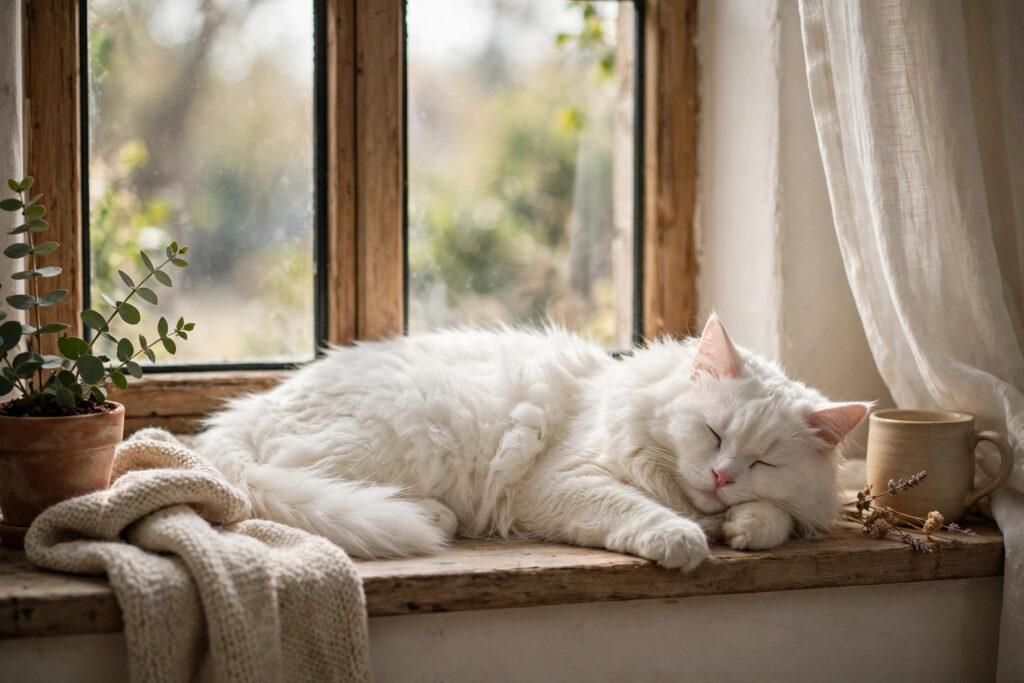
A washable mat on a sunny windowsill — another favourite shedding spot — takes seconds to shake out.
Tip 9: Groom Long-Haired Cats Daily
With a long-haired cat, daily grooming is the price of that beautiful coat: long fur tangles easily, trapping loose hair that then falls out in clumps. A short daily comb-through prevents mats and massively reduces fur around the house.
Work through the coat in sections, from neck to tail, paying attention behind the ears, under the armpits, and around the back legs, where mats form first. Tease mats apart with your fingers and a wide-toothed comb — never cut one out with scissors close to the skin, as it is very easy to nick your cat. A professional groomer can help with stubborn mats.
Tip 10: Be Patient and Consistent
Reducing shedding is not a one-week fix — it takes a few weeks of regular brushing, good food, and a calm home before you see the full difference. These habits benefit your cat in every way, not just your furniture: a brushed, well-fed, hydrated, relaxed cat will almost always shed less.
Keep a simple routine: brush on set days, keep fresh water available, play daily, and clean up fur little and often. If you have tried these steps for a month or two and shedding is still heavy or getting worse, ask your vet for guidance — there may be an underlying cause worth checking.
What NOT to Do
There are a few common mistakes that can make shedding worse or even harm your cat:
- Do not shave your cat. A cat’s coat protects her from sun, cold, and skin injury. Shaving can damage the coat, cause uneven regrowth, and leave your cat stressed and vulnerable. It is only appropriate if a vet recommends it for a medical reason.
- Do not use human shampoo or harsh grooming products. These can dry out and irritate your cat’s skin, leading to more shedding, not less.
- Do not use dog flea or grooming products on cats. Some ingredients that are safe for dogs are toxic to cats.
- Do not over-bathe your cat. Frequent baths strip the skin’s natural oils and can make dryness and shedding worse.
- Do not punish your cat for shedding. It is natural and not something she can control — punishment only creates stress, which can increase shedding further.
- Do not start supplements or change diets suddenly without veterinary advice. Sudden changes can upset digestion and make things worse.
When to See a Vet
Most shedding is normal, but some signs suggest your cat needs a veterinary check. Contact your vet if you notice any of the following:
- Bald patches, thinning fur, or hair loss in one area
- Red, sore, scabby, or flaky skin
- Constant scratching, licking, or biting at the coat
- A sudden, large increase in shedding with no clear cause
- Changes in appetite, weight, energy, or litter box habits
- Vomiting, diarrhoea, or other signs of illness alongside shedding
Possible causes of abnormal shedding include allergies, skin infections, hormonal problems, and nutritional deficiencies, but only a vet can identify the cause through examination and, if needed, tests. If your cat is also panting more than usual or coughing repeatedly, seek advice promptly — these signs may point to a problem needing attention.
Frequently Asked Questions
Is it normal for my cat to shed a lot?
Yes — most cats shed a little all year, with heavier shedding in spring and autumn, and long-haired and older cats often shed more. It only becomes a concern when it is sudden, patchy, or paired with skin problems or behaviour changes.
Can I ever stop my cat from shedding completely?
No, and you should not try — shedding is a healthy, natural process that renews your cat’s coat. You can reduce it significantly with regular brushing, good nutrition, hydration, and a low-stress home. Be sceptical of any product that promises to stop shedding entirely.
How often should I brush my cat?
Short-haired cats usually need brushing once or twice a week; long-haired cats benefit from a short brush every day or every other day. Keep sessions gentle and short — a calm five minutes beats a stressful fifteen.
Does diet really affect shedding?
Yes. A complete, balanced diet with quality protein and healthy fatty acids supports strong fur that sheds less, while poor nutrition can leave the coat dull and brittle. If you are unsure about your cat’s food, your vet can advise on a suitable option.
Should I bathe my cat to reduce shedding?
Bathing is rarely necessary and usually does not help much — most cats groom themselves very well. A bath is useful only if the coat is dirty or your vet recommends it, since bathing too often dries the skin and can increase shedding. Stick to brushing as your main tool.
Conclusion
Living with a shedding cat means accepting a little fur in your life — but not surrendering your sofa and clothes to it. With regular brushing, a balanced diet, fresh water, a calm home, and a few smart cleaning habits, you can cut shedding to a level that is easy to live with.
Most importantly, enjoy the routine. Brushing your cat, playing together, and keeping her comfortable are not chores — they are part of the quiet, everyday bond you share. Be patient and consistent, and your cat will reward you with a healthier coat, a happier mood, and a little less fur on your favourite black jumper.