
Bringing a puppy home is exciting, joyful, and a little bit chaotic. Puppies explore the world with their mouths — chewing, sniffing, licking, and squeezing into places you never thought possible. That curiosity is normal, but your home needs a little preparation before the big day.
Puppy-proofing does not mean turning your house into a bare room. It means looking at your home from puppy height, removing the real dangers, and setting up one safe space where your new puppy can rest, play, and learn the rules. This guide walks you through your home room by room, so nothing important gets missed.
Start at Puppy Height
Before you move a single item, get down on the floor. Look under sofas, behind doors, and along skirting boards. Puppies notice things we walk straight past: a loose cable, a dropped pill, a small coin, a tasty-looking plant leaf.
Walk through every room your puppy will enter, checking gaps behind furniture, low shelves, open bags, and anything dangling within reach. If you can reach it while crouching, your puppy probably can too.
Living Room: Cables, Cords, and Small Objects
The living room is usually where a puppy spends the most time, so start here.
Hide or cover cables and cords
Puppies love to chew cables. Phone chargers, laptop leads, lamp cords, TV cables, and extension leads are all tempting. Chewing a live cable can cause a painful shock or burn, so this is one of the most important jobs.
Run cables behind furniture where possible, and use cable covers or trunking for anything that must cross the floor. Unplug chargers when they are not in use and keep them in a drawer. Move power strips off the floor and behind a heavy piece of furniture.
Remove small swallowable objects
Anything small enough to fit in a puppy’s mouth is a choking or blockage risk. Scan the floor and low surfaces for coins, hair ties, buttons, children’s small toys, batteries, socks, and bits of packaging. Batteries are especially dangerous, so keep remote controls out of reach and store spare batteries in a closed container.
Put shoes away in a closed cupboard. Puppies love shoes, and laces, buckles, and small decorations can come loose and be swallowed.
Protect furniture and give safe chews instead
Move precious or fragile items higher for the first few months, and use washable throws on sofas. Give your puppy something better to chew instead: safe chew toys help them learn what is theirs to chew and what is not. Many puppies chew more when teething, and learning about why puppies chew so much and how to soothe them makes that phase easier to handle.
Kitchen: Food, Bins, and Cleaning Products
The kitchen holds more dangers than almost any other room, because puppies are driven by smell, and a kitchen full of food smells is very tempting.
Keep toxic foods out of reach
Many everyday foods are unsafe for dogs. Chocolate, grapes and raisins, onions, garlic, xylitol (found in some sugar-free gum and peanut butter), cooked bones, and alcohol should never be within a puppy’s reach. Keep food in closed cupboards, not on low counters or open shelves.
Teach everyone the same rule: no food from the table unless you know it is safe.
Secure bins and cleaning products
Kitchen bins are a magnet for puppies. Food scraps, bones, wrappers, and packaging can all be harmful. Use a bin with a secure, heavy lid, or keep the bin inside a cupboard with a childproof latch. Take rubbish out regularly, and never leave a bin bag on the floor.
Dishwasher tablets, washing-up liquid, surface sprays, bleach, and oven cleaner should all live in a high cupboard or a cupboard fitted with a childproof lock. Even mild-smelling products can upset a puppy’s stomach. Mop up spills straight away, and keep your puppy out of the room while you are cleaning floors until they are fully dry.
Bathroom and Laundry Room: Medicines, Toilet, and Small Items
Bathrooms and laundry rooms are small, but they are full of hazards.
Human medicines are one of the most common causes of accidental poisoning in dogs. Painkillers, vitamins, supplements, and prescription medicines must be kept in a closed, high cabinet — never on a bedside table, bathroom shelf, or in an open bag. Keep handbags hung up or in a closed room, too.
Puppies will drink from the toilet if they get the chance, and toilet water may contain cleaning chemicals. Keep the lid closed at all times, and consider a childproof toilet lock if your puppy learns to lift it.
Washing powder, fabric softener, and laundry pods are toxic if chewed or eaten, so keep them in a high, closed cupboard. Never leave a washing machine or tumble dryer door open, as puppies can climb inside. Put dirty laundry in a closed hamper rather than a pile on the floor, because socks and underwear are favourite items to chew and swallow.
Bedroom: A Calm, Safe Resting Place
Your puppy’s sleeping area should feel calm and safe. Keep cables, chargers, medicines, jewellery, and hair accessories away from the bed area or in drawers. If your puppy will sleep in a crate, place it in a quiet corner away from draughts and direct heat, with a comfortable bed. Let your puppy explore the bedroom slowly, under supervision — a smaller world feels safer to a new puppy.
Balcony, Stairs, and Garden Gaps
Outdoor and in-between spaces need just as much attention as indoor rooms.
Block stairs at first
Stairs can be risky for young puppies, whose joints and coordination are still developing. Use a baby gate at the top and bottom of the stairs until your puppy is older and steadier, and carry very small puppies up and down if needed. Teach stair use gradually, one step at a time, when your puppy is ready.
Make balconies safe
Never leave a puppy unsupervised on a balcony. Check that railings are close enough together that a puppy cannot squeeze through or get their head stuck, and block gaps with mesh or boards. Remove toxic plants, and keep furniture and pots away from the edge.
Check garden fences and gaps
Walk the boundary of your garden and look for holes under fences, loose panels, gaps beside gates, and spaces under sheds. Puppies are surprisingly good at squeezing through small gaps, so fix weak spots before arrival day and check the gate latch closes properly every time.
Also check the garden itself: remove toxic plants, sharp tools, slug pellets, fertiliser, and standing water, keep compost bins closed, and clear away sharp sticks and stones. Harmful garden plants include lilies, daffodils, foxglove, and azaleas. Check houseplants the same way, and move any that could be toxic out of reach.
Set Up a Safe Puppy Zone
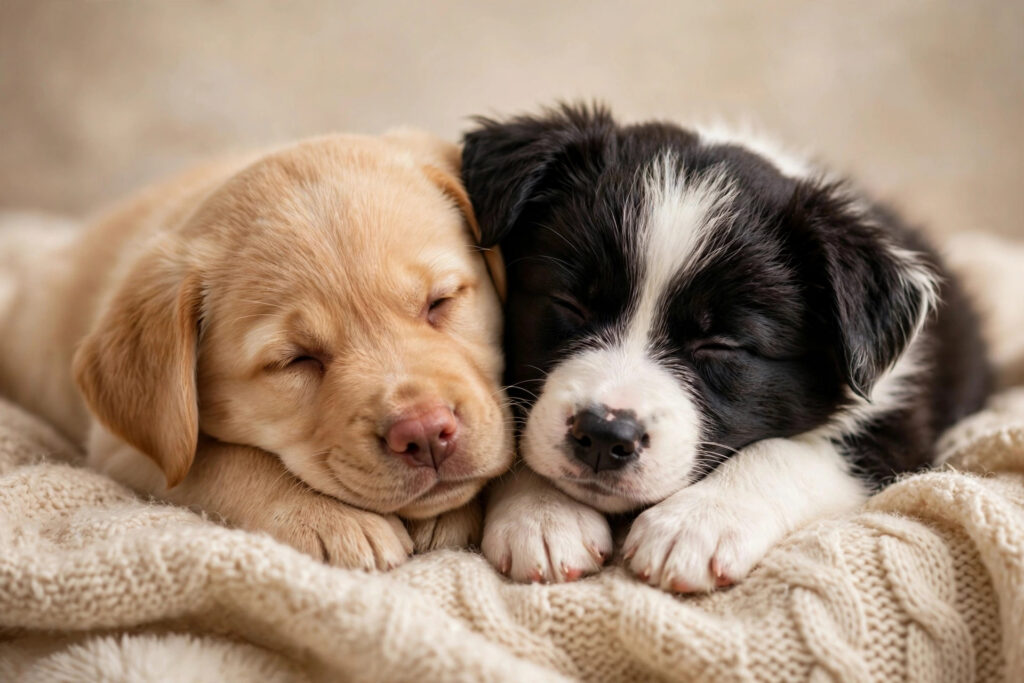
One of the best things you can do before your puppy arrives is to set up a dedicated puppy zone: a small, safe area where your puppy can rest, play, eat, and feel secure, especially when you cannot watch them every second.
Your puppy zone needs a crate or playpen big enough for your puppy to stand, turn around, and stretch out comfortably. Inside it, place a comfortable bed with a washable cover, a heavy tip-proof water bowl kept full and clean, and a few puppy-safe toys in different textures, such as a soft toy, a rubber chew, and a puzzle feeder. Offer safe chew toys made for puppies, and avoid cooked bones, very hard chews for tiny puppies, and anything small enough to break into swallowable pieces. Keep the zone free of cables, plants, and anything chewable that is not meant for your puppy.
Make the first day calm
Your puppy’s first day in a new home is a lot to take in. Keep the house quiet, limit visitors for the first day or two, and let your puppy explore their zone at their own pace. Show them where their bed, water, and toilet spot are, and keep to a simple, gentle routine.
A simple first-day routine: toilet break on waking, a small meal, a short play session, another toilet break, a nap in the crate, and repeat. Puppies sleep a lot, often 18 to 20 hours a day, so do not worry if yours sleeps most of the time. Keep early learning sessions short and fun — reading about how long puppy training sessions should be each day can help.
What NOT to Do
Puppy-proofing is about preparation, not punishment. Avoid these common mistakes:
- Do not use punishment for chewing or accidents. Puppies are learning, not misbehaving. Redirect them calmly to a safe toy or the right toilet spot instead.
- Do not leave your puppy unsupervised in an unproofed room. If you cannot watch them, use their crate or playpen.
- Do not give your puppy the whole house on day one. Too much freedom too soon leads to accidents, chewing, and overwhelm. Expand their space gradually as they learn the rules.
- Do not rely on “they will learn not to touch it.” Puppies explore by mouthing. Remove the danger instead of hoping they will avoid it.
- Do not use toxic air fresheners, plug-ins, or strong scented candles near your puppy. Puppies have sensitive noses, and some scents can irritate them.
- Do not leave children and puppies unsupervised together. Even gentle children can accidentally hurt a puppy, and even gentle puppies can nip when excited.
When to See a Vet
Most puppy-proofing is about prevention, but accidents can still happen. If your puppy eats something potentially dangerous — such as chocolate, grapes, raisins, onions, garlic, xylitol, medicines, cleaning products, batteries, or a sharp or large object — contact your vet straight away. Do not wait for symptoms to appear, and do not try to make your puppy vomit unless your vet specifically tells you to.
Signs that need urgent veterinary attention include vomiting or diarrhoea (especially if repeated or containing blood), drooling, pawing at the mouth, or difficulty swallowing, lethargy, weakness, collapse, or unsteadiness, seizures, trembling, or unusual behaviour, a swollen face or mouth, difficulty breathing, straining to pass something, a swollen or painful belly, and not eating or drinking, or seeming in pain.
If you are unsure whether something your puppy ate is dangerous, call your vet and describe exactly what was eaten, how much, and when. Keep packaging or a photo of the item if you can. Save your vet’s number, and an emergency vet clinic’s number, in your phone before your puppy arrives.
Remember, this article is general information only. It is not a substitute for veterinary advice, and your vet is always the right person to ask about your individual puppy.
Frequently Asked Questions
How early should I puppy-proof my home?
Start at least a few days before your puppy arrives, so you have time to buy a baby gate, cable covers, a crate, and safe toys, and to fix garden gaps or move toxic plants.
Do I need to puppy-proof every room?
Only the rooms your puppy will use, but be thorough in those rooms. Keep doors closed to rooms that are not puppy-proofed, such as a home office full of cables. As your puppy grows and learns, you can gradually open up more space.
What is the safest chew for a young puppy?
Look for toys made specifically for puppies, suited to their age and breed. Avoid cooked bones, very hard chews for tiny puppies, and anything that can splinter or break into small pieces. Supervise chewing at first, and replace toys once they wear out.
Should my puppy sleep in a crate?
Many puppies feel secure in a crate, and it helps with toilet training and keeping them safe at night. Never use it as punishment. Make it comfortable, keep the door open during the day at first, and build up crate time gradually and positively.
When can my puppy explore the garden freely?
Supervised garden time is fine from day one, once fencing is secure, gaps are blocked, and toxic plants and chemicals are removed. Unsupervised time should wait until your puppy is older, reliably comes when called, and you are confident the garden is fully secure. When you are ready, read a trusted guide on how to socialize a puppy safely, step by step.
A Calm Start Makes a Happy Puppy
Puppy-proofing is really an act of love. It says: this home is ready for you, and you are safe here. By hiding cables, locking away medicines and cleaning products, blocking stairs and garden gaps, and setting up a cosy puppy zone, you give your new puppy the best possible start.
Your home does not need to be perfect. It just needs to be safe enough for a curious little explorer to learn, play, and rest without harm. Take it room by room, keep the first days calm, and enjoy those early weeks — they lay the foundation for a confident, happy adult dog.
Welcome home, little one. Your adventure is just beginning.