
It is a cold December evening. You are walking past a street vendor roasting chestnuts, and the warm, nutty smell fills the air. Your dog is sitting beside you, nose in the air, eyes fixed on the paper bag in your hand. Or maybe you are at home, peeling a bowl of roasted chestnuts, and your dog is doing that hopeful stare — the one that says, “Just one, please?”
It is a fair question. Many nuts are dangerous for dogs: macadamia nuts are toxic, and walnuts can cause serious problems too. So are chestnuts safe, or are they another nut to keep away from your dog?
The honest answer is: it depends on which chestnut you mean. Plain, cooked sweet chestnuts are safe for most dogs in small amounts as an occasional treat. But horse chestnuts — the shiny brown conkers you find on the ground in parks in autumn — are toxic and can make your dog very ill.
That difference matters a lot, especially at Christmas, when sweet chestnuts are everywhere and conkers are still lying under trees. This guide will help you tell the two apart, serve sweet chestnuts safely, and know exactly when to call your vet.
The Short Answer: Yes — But Only Sweet Chestnuts
If you bought your chestnuts from a shop, a market stall, or a supermarket, they are almost certainly sweet chestnuts. These are the edible kind, and dogs can eat them in small amounts.
Sweet chestnuts come from trees in the Castanea family — American, European, Chinese, and Japanese chestnuts. They are the nuts people roast at Christmas markets and stir into stuffing. For dogs, they are a low-fat, starchy treat with some fibre, potassium, and a little vitamin C.
Horse chestnuts are a completely different nut from a different tree. Also called conkers or buckeyes, they grow on Aesculus trees — the ones with big hand-shaped leaves you see in parks and gardens. They contain a natural chemical called aesculin, which is toxic to dogs. Even one can cause vomiting and diarrhoea, and several can lead to tremors, wobbliness, or seizures.
So the rule is simple: sweet chestnuts, yes, in small amounts. Horse chestnuts, never.
Sweet Chestnuts vs Horse Chestnuts: How to Tell Them Apart
This is the most important part of this article, because the two nuts look similar at first glance. If you are ever unsure which one you are holding, do not feed it to your dog. When in doubt, throw it out.
The shell and husk. Sweet chestnuts grow inside a very spiky burr — a round, prickly case that looks like a tiny sea urchin. Horse chestnuts grow inside a much smoother, leathery husk with only a few short spikes, or sometimes none at all.
The nut itself. A sweet chestnut is usually smaller, flatter on one side, and comes to a little point at the tip. A horse chestnut is rounder, smoother, and shinier, with a pale cream patch on one side.
The tree and leaves. Sweet chestnut trees have long, narrow, toothed leaves. Horse chestnut trees have big leaves made of five to seven leaflets spread out like the fingers of a hand. If you picked the nut up under a tree with hand-shaped leaves, it is a horse chestnut.
If your dog found it on the pavement or in a park, assume it is a horse chestnut and take it away. Teaching your dog to drop things on command helps here — our guide on how to teach your dog to drop it on command shows how to train it.
What Is Actually in a Sweet Chestnut?
Sweet chestnuts are different from most nuts. While almonds, walnuts, and cashews are high in fat, chestnuts are mostly starch — more like a potato than a nut. A roasted sweet chestnut is roughly 40 to 45 percent water, with complex carbohydrates, a few grams of fibre, and only about 2 percent fat.
That makes them a gentler treat than many nuts, but they are not a superfood for dogs. They offer some fibre, potassium, a little vitamin C, and B vitamins — but a good dog food already covers all of these. Chestnuts are simply a safe occasional snack, not something your dog needs.
The Benefits — and the Limits
Let us be honest: the benefits are modest. Chestnuts are a low-fat, natural treat — a nice change from biscuits and processed snacks — and a soft piece of roasted chestnut can be a satisfying little reward. The fibre may help digestion a little.
But the limits matter more than the benefits. They are starchy, so too many can add calories and lead to weight gain, especially in small or less active dogs. The starch and fibre can also ferment in your dog’s gut, causing wind, bloating, and loose stools. And they are not a meal — chestnuts should never replace proper dog food or make up more than about 10 percent of your dog’s daily calories.
How to Serve Chestnuts to Your Dog Safely
If you decide to share a chestnut or two with your dog, a little preparation makes all the difference. Follow these steps every time.
Cook them first
Always serve chestnuts cooked — roasted or boiled. Raw chestnuts are hard, bitter, and full of tannins that can upset your dog’s stomach. Roasting softens the nut and makes it easier to chew and digest. If you are roasting a batch for the family, set aside one or two plain ones for your dog before you add any salt or seasoning.
Remove the shell and the papery skin
Peel off the hard outer shell and the thin brown papery skin underneath. Both are tough, dry, and hard to digest, and the shell can be a choking hazard. Only the soft, pale nut inside should go to your dog.
Cut into small pieces
Never give your dog a whole chestnut. Cut it into small, bite-sized pieces, especially for small breeds and puppies, who are most at risk of choking. A whole chestnut can also block the throat or, if swallowed, cause a blockage further down.
Serve them plain
This is non-negotiable. Plain chestnuts only — no salt, no sugar, no butter, no honey. That means no candied chestnuts, no chestnuts roasted in sugar, no fried chestnuts, and no chestnut spread or purée. Chestnut spreads can contain xylitol, an artificial sweetener that is extremely toxic to dogs, even in tiny amounts. Our guide on can dogs eat peanut butter safely explains the xylitol risk in detail, since many peanut butters carry the same warning.
Start small
The first time your dog tries chestnut, offer just one small piece and wait a day to see how its stomach reacts. Some dogs handle new foods easily; others get an upset stomach from anything unfamiliar. If there is no vomiting or diarrhoea after 24 hours, you can offer a small amount again another day.
How much is okay?
As a rough guide, once your dog has tried chestnuts without any trouble: small dogs about half a chestnut, chopped up; medium dogs about one; large dogs one to two. That is per serving, and only occasionally — a few times a week at most, not every day. If your dog is overweight, has diabetes, or has a sensitive stomach, ask your vet first.
What about water chestnuts?
Water chestnuts are a different thing altogether — the crisp white vegetable you find in stir-fries, not a tree nut. Peeled water chestnuts are also safe for dogs in small amounts. Just peel them first, cut them into small pieces, and serve them plain, the same as sweet chestnuts.
Can Puppies Eat Chestnuts?
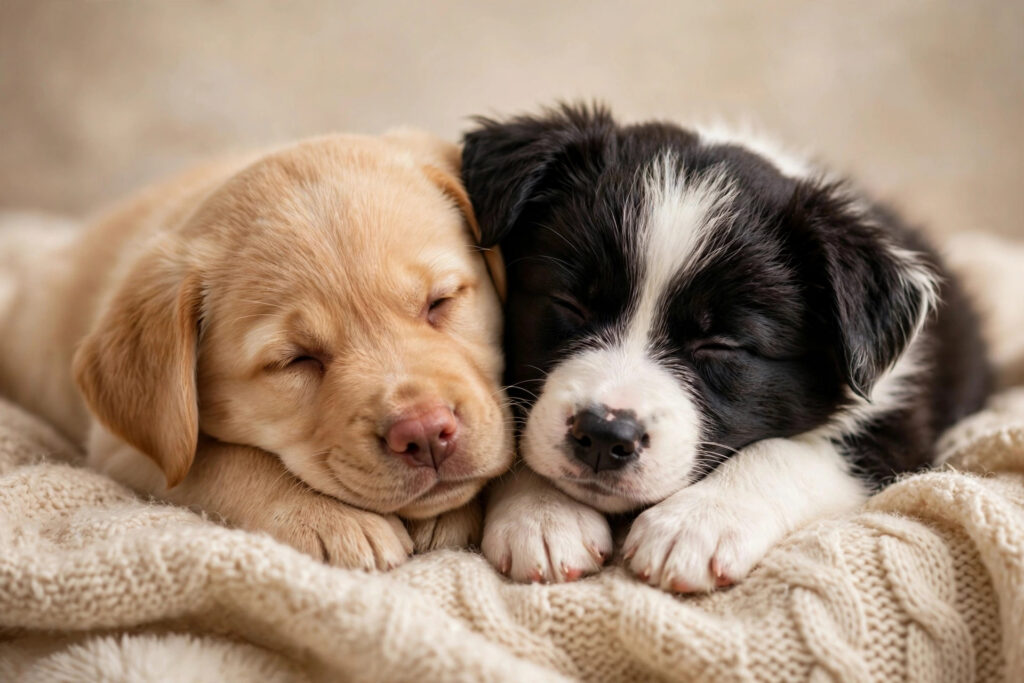
Puppies can have a tiny taste of plain cooked sweet chestnut once they are eating solid food, but there is no rush. Puppies have small throats and sensitive stomachs, so the choking risk is higher and the chance of an upset tummy is greater. If you do offer a piece, make it very small, soft, and well chopped — and watch your puppy closely while it eats.
Most puppies do just fine without chestnuts. Their regular puppy food and a puppy-safe training treat are a better choice. A small piece of cooked pumpkin is a safer seasonal snack — our guide on can dogs eat pumpkin safely covers the benefits and the right portions.
Christmas and Holiday Dangers Around Chestnuts
Chestnuts are at their most popular at Christmas, which is also the season when your dog is most likely to get into trouble with them. A few situations to watch out for:
- Roasting chestnuts at home. Hot chestnuts straight from the oven can burn your dog’s mouth. Let them cool completely before offering any, and keep the hot tray out of reach.
- Chestnut stuffing. Stuffing often contains onion, garlic, butter, and herbs that are not safe for dogs. Give a plain chestnut instead.
- Fallen conkers in the park. Autumn and early winter walks are prime conker season. Dogs, especially puppies, love to pick up shiny round objects. Keep an eye on your dog under horse chestnut trees, and use the “leave it” command if it goes for a fallen nut.
What NOT to Do
- Do not feed horse chestnuts or conkers. Ever. They are toxic, and even one can cause serious illness.
- Do not let your dog forage for nuts outdoors. Nuts picked up on walks may be horse chestnuts, or they may be mouldy, which brings its own risks. Store-bought sweet chestnuts only.
- Do not give whole chestnuts. Always chop them up. Whole nuts are a choking and blockage risk.
- Do not serve raw chestnuts. They are hard, bitter, and tough on your dog’s stomach.
- Do not add salt, sugar, butter, or flavourings. Plain is the only safe way.
- Do not feed candied chestnuts, chestnut spread, or chestnut purée. These often contain sugar and sometimes xylitol.
- Do not give chestnuts every day. They are an occasional treat, not a daily snack.
- Do not feed chestnuts to a dog with a nut allergy or a known sensitive stomach without checking with your vet first.
When to See a Vet
Most dogs that eat a small piece of plain cooked sweet chestnut will be perfectly fine. But there are times when you should call your vet straight away.
Call your vet immediately if your dog has eaten a horse chestnut or conker. Do not wait for symptoms to appear. Tell your vet how many your dog ate and roughly when. Horse chestnut poisoning can cause vomiting, diarrhoea, drooling, wobbliness, tremors, and in serious cases seizures. Quick treatment makes a real difference.
Also call your vet if you notice any of these signs after your dog eats any kind of chestnut:
- Repeated vomiting or diarrhoea
- Drooling more than usual
- A swollen or painful belly
- Refusing food or water
- Lethargy, weakness, or unusual sleepiness
- Trembling, shaking, or trouble walking
- Straining to pass a stool, or no stool at all — possible signs of a blockage
If your dog seems to be choking — pawing at its mouth, gagging, struggling to breathe — stay calm, check whether you can see and safely remove the obstruction, and get to a vet immediately.
For what to do in the first minutes after your dog eats something it should not have, our first-aid guide on what to do when your dog eats something he should not walks through the steps to take before you reach the vet. This article is general information, not a diagnosis — every dog is different, so if you are ever unsure, a quick call to your vet is always worth it.
FAQ
Can dogs eat roasted chestnuts?
Yes, plain roasted sweet chestnuts are safe for most dogs in small amounts. Make sure they are fully peeled, cut into small pieces, and served without salt, sugar, butter, or any flavouring. Never feed horse chestnuts — those are toxic.
Can dogs eat raw chestnuts?
It is best not to. Raw sweet chestnuts are hard and bitter, and the tannins in them can upset your dog’s stomach. Always cook chestnuts first, by roasting or boiling, and let them cool before serving.
How many chestnuts can a dog eat in a day?
Very few. A small dog can have about half a chestnut, a medium dog about one, and a large dog one to two — chopped up, and only occasionally, not daily. Too many can cause gas, loose stools, and weight gain because chestnuts are starchy.
Are chestnuts toxic to dogs?
Sweet chestnuts are not toxic. Horse chestnuts (conkers) are toxic, because they contain aesculin. If your dog eats a horse chestnut, call your vet immediately, even if your dog seems fine at first.
Can dogs eat chestnut stuffing?
No. Chestnut stuffing usually contains onion, garlic, butter, and herbs that are not safe for dogs. Give your dog a plain cooked chestnut instead.
The Bottom Line
So, can dogs eat chestnuts safely? Yes — if you mean plain, cooked sweet chestnuts, served peeled, chopped, and in small amounts. They are a low-fat, seasonal treat your dog can enjoy alongside you on a cold winter evening.
But the “which chestnut” question is everything. Horse chestnuts are toxic, and they look just similar enough to cause real trouble. Learn the difference, buy your chestnuts from a shop, and never let your dog snack on nuts it finds on the ground.
Share a little, keep it plain, and watch your dog enjoy that small taste of Christmas. And if anything ever feels off — a fallen conker swallowed on a walk, a tummy that seems upset, or a dog that just is not itself — trust your gut and call your vet. A quick phone call is a small price for peace of mind.