
You walk through the front door and your cat trots over with a soft, musical “mrrp!” It is not quite a meow and not quite a purr. Or maybe you have caught your cat at the window, staring at a bird and making short, sharp, bird-like sounds.
If either moment sounds familiar, you have heard your cat trill or chirp — two of the sweetest sounds in a cat’s vocabulary. This guide explains what they mean, how to read your cat’s body language, and when to see a vet.
What Is a Trill?
A trill is a short, musical sound that rises in pitch, made with the mouth mostly closed. Vets often describe it as a purr interrupted by a meow — a soft, rolling “mrrp” that lasts only a second or two. Mother cats trill to kittens, and adults trill to cats they like — so a trill at you means they count you as family.
What Is a Chirp?
A chirp is sharper and higher-pitched than a trill — a short “chirp-chirp” that sounds a little like a bird’s call. Cats most often make it when they spot prey they cannot reach, like a bird outside the window or a fly on the other side of a screen door.
Some people say “chirrup” for a sound that blends the two. What matters is context: a soft rolling sound aimed at you is usually a greeting, while a sharp bird-like sound aimed at the window is usually about hunting.
Trill vs. Chirp vs. Meow
A meow is made with the mouth open and can mean almost anything — hello, feed me, let me out, or I am unhappy. It is mostly a sound cats use with humans; adult cats rarely meow at each other.
A trill is made with the mouth mostly closed, rises in pitch, and sounds musical and warm. It is almost always friendly.
A chirp is short, sharp, and bird-like, and is usually aimed at something the cat is watching, not at you.
A purr is a low, continuous rumble cats make when content — though cats can also purr when stressed or in pain. Listen for where the sound is aimed: a trill at your face as you come home is a very different message from a chirp at a sparrow on the fence.
7 Sweet Meanings Behind Your Cat’s Trills and Chirps
1. “Hello! I Missed You!”
This is the most common meaning of a trill. Many cats trill the moment their favourite person walks in, comes home from work, or wakes up in the morning. It is a greeting — the cat version of a cheerful “hi!” You will often see it with a tail held high, ears forward, and the cat walking toward you — sometimes followed by a rub against your legs or a headbutt. It means one thing: I am glad you are here.
2. “I Am Happy and Content”
Cats also trill when they are simply feeling good — while kneading a soft blanket, settling onto your lap, or wandering around on a sunny afternoon. It is a contentment sound, your cat’s way of humming to themselves. A gentle word back or a slow stroke usually earns you another trill. To learn more about the quiet ways cats show happiness, read about why your cat slow blinks at you — the slow blink is another soft signal that means your cat feels safe with you.
3. “Follow Me!”
Mother cats use a special trill to call their kittens and lead them somewhere — to food, to a safe spot, or just to a new room. Adult cats keep this habit with the people they love. If your cat trills and then walks away, looking back over their shoulder, they are probably inviting you to follow. The destination is often the food bowl, a favourite toy, or a door they want opened. Follow them and see.
4. “I Want Your Attention (or a Treat)”
Sometimes a trill is a polite request — for petting, play, or a snack. It is gentler than a loud, insistent meow, more like tapping you on the shoulder than shouting across the room. The clue is in what happens next: if your cat trills and sits by the treat cupboard, the request is probably food; if they flop over and show you their belly, they probably want affection or play. You do not have to say yes every time.
5. “Look at That Bird!”
This is the chirp’s most famous job. When a cat spots a bird, a squirrel, or an insect through the window, many cats start making short, sharp chirps, usually crouched low with eyes locked on the target and tail twitching.
Experts believe it is a mix of excitement and frustration: the hunting instinct has switched on, but the prey is out of reach behind glass. It is completely normal and healthy. To understand it better, read our guide on why your cat chatters at birds.
6. “I Am Excited!”
Not every chirp is aimed at prey. Some cats chirp when they are excited about something good — when you pick up their favourite toy, open the treat bag, or when a friend they like visits. The sound is bright and quick, and it usually comes with a playful body: wide eyes, ears forward, body low and ready to pounce. This is a great moment to play — grab a wand toy and let your cat burn off that excitement.
7. “I Love You and I Trust You”
Trilling is a sound cats mostly use with family — with their kittens, with cats they are bonded to, and with the humans they trust most. A cat who trills at you regularly feels safe, loved, and at home with you. Trilling is almost always positive, which is what sets it apart from meowing: a meow can mean almost anything, but a trill is nearly always good news.
Trilling is just one of many small ways cats say “I love you.” To spot the others, see the signs your cat actually loves you.
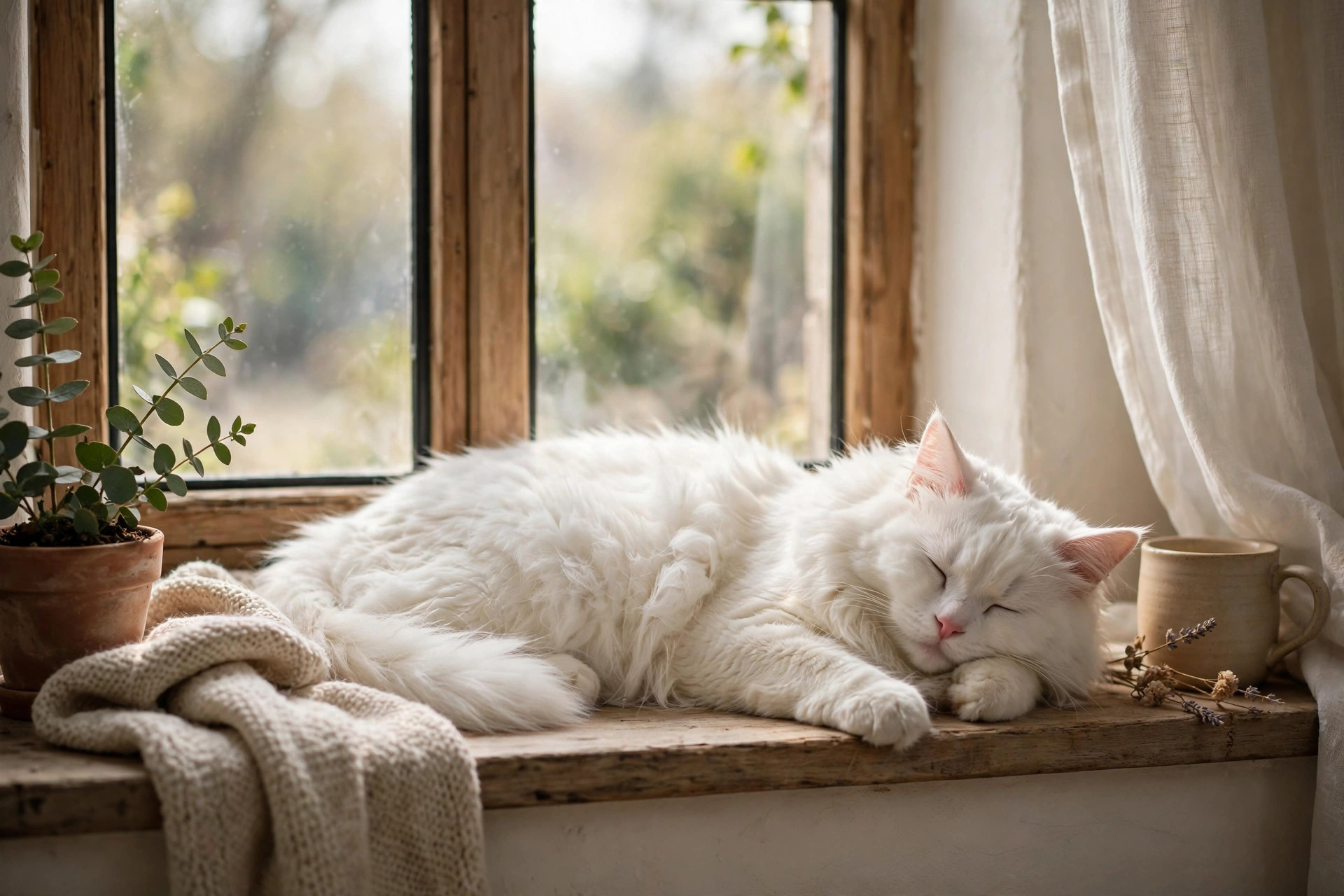
How Body Language Tells Trills and Chirps Apart
The sound alone does not tell the whole story — your cat’s body is the other half of the message.
A happy greeting trill comes with a tail held high, ears forward, bright relaxed eyes, and the cat moving toward you. A content trill comes with a soft, relaxed body — kneading paws or half-closed eyes. A “follow me” trill comes with the cat walking away and glancing back, tail up, pausing to check that you are coming.
A hunting chirp looks very different: the cat is crouched low, body tense, eyes fixed on the window, ears forward and alert, tail twitching. This cat is not talking to you — they are focused entirely on the bird outside. An overstimulated chirp during intense play comes with slightly flattened ears, wide pupils, and a fast-swishing tail. Give your cat space to calm down before petting them.
Why Some Cats Trill and Others Don’t
Not every cat trills, and that is completely normal. Breed can play a small role — Maine Coons and Siamese cats are known for being more vocal — but personality matters more, and young cats tend to trill more, having learned the sound from their mothers.
If your cat has never trilled, do not worry — it does not mean they love you less. But if your cat used to trill and has suddenly gone quiet, pay attention: a sudden change in vocal behaviour is one of the vet warning signs below.
How to Respond When Your Cat Trills or Chirps at You
Answer warmly. When your cat trills a greeting, talk back in a soft, friendly voice — many cats trill again when you answer.
Keep the petting going. If your cat trills while you are stroking them, you are doing it right — and if they move away, let them go.
Follow if they lead. When your cat trills and walks away looking back at you, follow them. They are showing you something — food, a toy, or a spot they want to share.
Give them a play outlet after a prey chirp. A short play session with a wand toy lets them act out the chase safely and settle down.
Don’t pet a cat mid prey-chirp. A cat locked onto prey can be overstimulated, and a surprise touch may startle them or earn you an accidental scratch. Wait until they have relaxed.
What NOT to Do
- Don’t ignore a “follow me” trill every time. If your cat keeps inviting you and you never respond, they may stop trying.
- Don’t tease your cat with unreachable prey. Dangling something just out of reach, or tapping on the window to wind your cat up, leaves them frustrated and stressed.
- Don’t grab or restrain a chirping cat. A cat in hunting mode is tense and focused. Picking them up suddenly can frighten them and may lead to a scratch.
- Don’t assume every new sound is fine. Any sudden change in your cat’s voice — new hoarseness or straining — deserves attention.
- Don’t compare your cat to other cats. Some cats trill constantly and some almost never do. Both are normal.
When to See a Vet
Trilling and chirping are almost always normal. But a change in your cat’s sounds is worth a vet visit if you notice any of the following:
- A sudden change in vocal sounds. If your cat has always trilled and suddenly stops, or their voice becomes hoarse, raspy, or strained, that could be a possible sign of a sore throat, an upper respiratory infection, or another problem.
- Trilling paired with lethargy. A cat who seems unusually tired, sleeps far more than normal, or has lost interest in play and food may be unwell.
- Hiding more than usual. A cat who starts hiding under the bed or in closets, especially with a change in sounds or appetite, may be in pain.
- Appetite loss. If your cat stops eating, eats much less than usual, or drinks far more or far less water than normal, mention it to your vet.
- Breathing changes. Noisy breathing, wheezing, coughing, sneezing fits, or open-mouth breathing are all reasons to call your vet promptly, as they can be possible signs of a respiratory problem.
- Discharge from the eyes or nose. Runny eyes, a runny nose, or sneezing along with a changed voice can point to a cold-like infection.
This article is for general information only and is not a substitute for veterinary advice. You know your cat best. If something feels off, a quick call to your vet is always the right move — even if it turns out to be nothing.
FAQ
Is trilling a sign my cat loves me?
In most cases, yes. Trilling is a friendly, social sound cats use with family members they trust. A cat who trills at you regularly is showing affection and comfort.
Why does my cat chirp at birds through the window?
Your cat is responding to their hunting instinct. The chirp is a mix of excitement and frustration at prey they can see but cannot reach. A play session afterwards helps burn off that energy.
My cat never trills. Is something wrong?
Almost certainly not. Some cats are simply quieter than others. A cat who never trills but is otherwise happy, eating well, and affectionate in their own way is perfectly fine. What matters is a sudden change — if a cat who used to trill a lot suddenly goes silent, mention it to your vet.
Can I trill back at my cat?
Yes! Try making a soft, rising “mrrp” sound with your mouth mostly closed. Your cat may trill right back. Even if your impression is not perfect, your cat will recognise the friendly tone.
Why does my cat trill at night or early in the morning?
Cats are most active at dawn and dusk, so early morning trills are very common. Your cat may be greeting you, asking for breakfast, or feeling playful. A short play session or a small meal can help settle them. If the night-time trilling is new or comes with restlessness or pacing, mention it to your vet, especially in older cats.
Conclusion
A trill is a small sound, but it carries a big message. When your cat greets you with that soft, musical “mrrp,” they are telling you that you are family, that they are happy to see you, and that they feel safe in your home. When they chirp at a bird through the window, they are showing you their wild side — the hunter that still lives inside every house cat.
So the next time your cat trills at you, answer back. Say hello, follow them if they lead you somewhere, or simply enjoy the sound. These little conversations are your cat’s way of saying what they cannot put into words: I love you, I trust you, and I am glad you are here.