
You’re sitting peacefully with your cat when suddenly those sharp little teeth sink into your hand. One minute you’re friends, the next you’re staring at a bite mark and wondering what you did wrong. Don’t worry — you’re not alone, and your cat probably isn’t angry at you.
Cat biting is one of the most common things cat owners deal with, and most of the time it’s completely normal. The key is learning to read the signs, understand what your cat is trying to tell you, and respond the right way. Here are the 8 most common reasons cats bite and what to do about each.
1. Play Biting (Especially in Kittens)
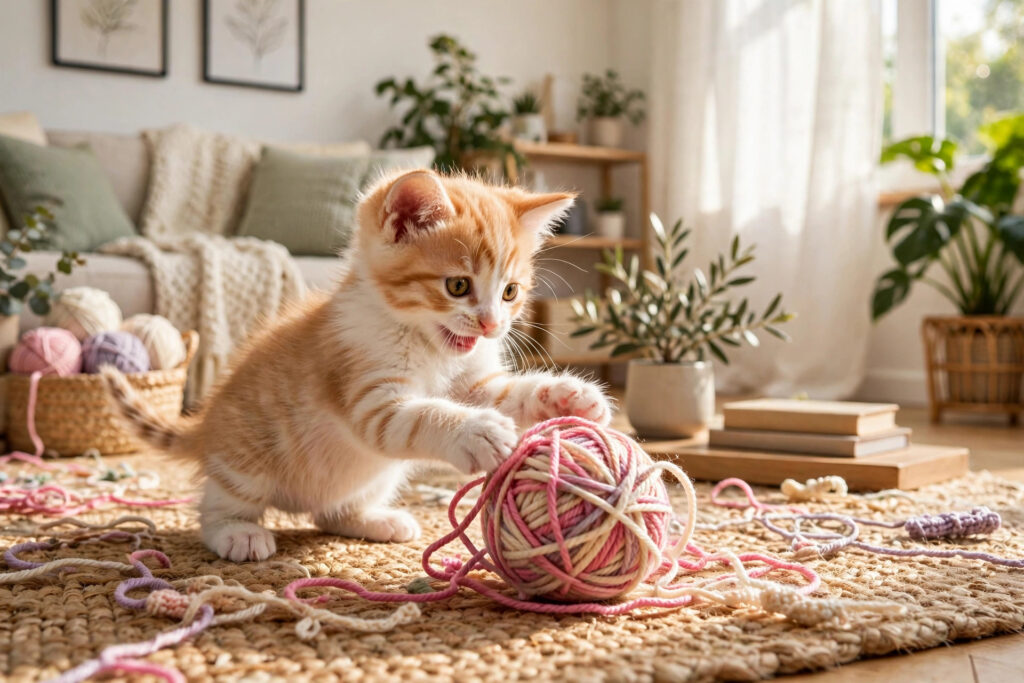
Kittens learn about the world with their mouths, just like human babies do with their hands. When kittens play together, they bite, pounce, and wrestle — and if your kitten was taken from its littermates early, it may never have learned that biting hurts.
If your kitten bites your fingers or toes, it’s not being mean — it’s practicing hunting skills, and your moving fingers look like prey. Kittens raised with siblings usually get a loud yelp when they bite too hard, which teaches them to be gentle. Without that feedback, they need you to teach them.
What to do: Every time your kitten bites, make a high-pitched “ouch!” and pause play for a minute — this mimics how another kitten would react. Then redirect their energy to a wand toy, stuffed mouse, or crinkle ball. Be consistent, and most kittens learn within a few weeks.
2. “Love Bites”
This confuses a lot of owners. Your cat is purring, rubbing against you, clearly happy — and then chomp, a gentle bite on your hand or chin. These “love bites” are actually a sign of affection.
Cats groom each other by licking and sometimes gently nibbling. When your cat does this to you, it’s treating you like family. Love bites are usually very gentle — more of a nibble than a real bite, with no real pressure behind them.
What to do: If the bites are gentle and don’t hurt, many owners simply accept them as affection. If you’d rather not be nibbled, calmly withdraw your hand and offer a pet instead. Never punish a love bite — punishing affection can damage your bond.
3. Overstimulation During Petting
This is one of the most common biting triggers. You’re stroking your cat, everything is lovely, and suddenly your cat bites your hand.
Cats can become overstimulated by petting, especially along the back, belly, or tail. Their skin is very sensitive, and repeated stroking can go from pleasant to annoying in seconds. Many cats warn first — tail twitching, ears flattening, skin rippling along the back, or purring suddenly stopping. Miss those signs, and the bite comes next.
What to do: Learn your cat’s petting limits. Most cats prefer short sessions focused on the head, cheeks, and chin. Watch for the warning signs and stop before your cat reaches its limit. Over time, you’ll learn exactly how much petting your particular cat enjoys.
4. Fear or Pain Biting
A scared or hurting cat may bite out of self-defense — a survival instinct, not bad behavior. If a cat feels cornered, trapped, or suddenly frightened, biting is one of the few ways it can protect itself.
Pain biting works the same way. A cat with an injury, sore spot, or illness that causes discomfort may bite when touched in the painful area. A cat that was previously gentle but suddenly starts biting should always make you wonder whether something hurts.
What to do: Never corner a frightened cat. Give it space, speak softly, move slowly, and let the cat decide when it’s ready for interaction. If you suspect pain — especially biting when one specific area is touched — that’s a sign to visit the vet.
5. Territorial Behavior
Some cats get defensive about certain spaces, objects, or even people. If your cat bites when you reach for its favorite sleeping spot, try to move it, or approach its food bowl, territorial instincts may be at play.
What to do: Respect your cat’s space. Make sure every cat in the home has its own food bowl, water source, and litter box (one per cat plus one extra), plus quiet hiding spots. Don’t force a cat off its favorite perch — lure it with a treat instead. A cat that feels secure about its resources usually becomes less defensive.
6. Redirected Aggression
This can be startling. Your cat is sitting calmly on the windowsill watching birds outside, and when you reach over to pet it, it bites you hard.
Your cat was in full hunting mode — pupils wide, body tense, focused on birds it can’t reach. That built-up excitement has to go somewhere, and your hand was the closest target. The cat isn’t mad at you.
What to do: Learn to recognize “hunting mode” — intense staring out the window, chattering at birds, tail twitching rapidly. During these moments, leave your cat alone until it calms down. Or channel that energy into a wand-toy play session, letting your cat “hunt” something appropriate.
7. Attention-Seeking Biting
Some cats learn that biting gets a reaction — any reaction. If your cat bites your ankle when you walk past or nips your hand when you’re on your phone, it might simply be saying “hey, pay attention to me!”
Cats quickly learn cause and effect. If biting makes you look at them, talk to them, or chase them, they’ve learned biting works as a communication tool. Even negative attention can reinforce it, because to the cat, any attention beats none.
What to do: Make biting boring. When your cat bites for attention, calmly stand up and walk away — no talking, no eye contact, no drama. A few minutes later, give your cat attention on your terms: a toy, gentle pets, or a training session. Reward calm behavior, ignore the biting, and your cat will learn that calm behavior gets attention while biting gets nothing.
8. Possible Medical Reasons
Sometimes biting isn’t behavioral at all. Dental problems, arthritis, skin conditions, or other health problems can make a cat irritable and more likely to bite. A cat that was sweet but suddenly starts biting may be trying to tell you something is wrong.
What to do: If the biting is new, sudden, or getting worse — especially in a previously gentle cat — schedule a vet checkup to rule out medical causes first. This is always the safest step when behavior changes out of nowhere.
How to Read Your Cat’s Body Language
The secret to avoiding most bites is learning the warning signs your cat gives before biting — humans just often miss them:
- Tail twitching or lashing: Rapid flicking means irritation is building.
- Ears flattening: Ears rotating back or pressing flat signal discomfort or fear.
- Dilated pupils: Very wide pupils in normal light can mean excitement, fear, or overstimulation.
- Skin rippling: Twitching skin along the back while petting means stop.
- Sudden stillness: A cat that suddenly freezes mid-pet may be deciding what to do next.
- Growling or hissing: Clear warnings. Respect them and give your cat space.
Watch for these signals — most owners find that within a few weeks they can sense a bite coming before it happens.
How to Redirect Biting the Right Way
Stopping biting isn’t about punishment — it’s about giving your cat a better option:
Keep toys within reach. Wand toys, stuffed mice, and crinkle balls give your cat something appropriate to bite. When play biting starts, swap your hand for a toy.
Schedule daily play. Most cats need at least 15–20 minutes of active play per day, ideally split in two. A tired cat is a calm cat.
Use “ouch and pause.” When bitten during play, make a high-pitched “ouch,” then stop all interaction for 30–60 seconds — this teaches your cat that biting ends the fun.
Reward calm behavior. When your cat sits near you calmly or plays gently with toys, offer praise or treats. Cats repeat behaviors that get rewarded.
Don’t use your hands as toys. Wiggling fingers under a blanket or letting your kitten “attack” your hand teaches them hands are toys. Always use an actual toy instead.
Be patient and consistent. Everyone in the household must follow the same rules, or your cat gets mixed messages. Most cats show real improvement within a few weeks.
What NOT to Do
Don’t hit or yell at your cat. Physical punishment and screaming only teach your cat to fear you — a frightened cat may bite more, not less, and it damages the trust between you.
Don’t pull your hand away fast. Jerking your hand back triggers your cat’s prey drive — your hand looks like something to chase. Instead, go still for a moment, then slowly withdraw. A still “prey” is boring, and most cats will release their grip.
Don’t use your hands as toys. Cute with a tiny kitten, not cute with a full-grown cat’s sharp teeth. From day one, hands are for petting and feeding, not wrestling.
Don’t punish after the fact. Cats don’t connect punishment with something they did minutes ago — scolding later is meaningless to them.
Don’t declaw as a solution. Declawing doesn’t address biting at all, and it can cause chronic pain that actually increases biting.
When to See a Vet
Most cat biting is behavioral and can be managed at home — but some situations need professional help. Contact your vet if:
- The aggression is sudden. A gentle cat that suddenly starts biting may be in pain or unwell — sudden behavior changes always deserve a vet check.
- Your cat bites when touched in one spot. This suggests possible pain or injury in that area. Don’t poke at it — let the vet examine it.
- The biting is getting worse. If bites are becoming more frequent, harder, or more unpredictable despite your efforts, get professional guidance.
- Bites break the skin deeply. Clean the wound immediately with soap and water. Watch for signs of infection over the next few days: increasing redness, swelling, warmth, pain, red streaks, or fever. See a doctor promptly if any appear — cat bite infections can become serious quickly.
- Your cat shows other worrying signs. Loss of appetite, hiding, limping, excessive grooming of one area, litter box changes, or lethargy alongside biting all point to a possible medical issue.
Your vet can rule out pain and illness, and can refer you to a cat behaviorist if the problem is purely behavioral.
FAQ
Why does my cat bite me gently?
Gentle nibbling, often called “love bites,” is usually a sign of affection. Cats groom each other with gentle nibbles, and your cat is treating you like family. As long as it doesn’t hurt or break the skin, it’s normal and harmless. If you’d prefer it to stop, calmly withdraw your hand rather than reacting dramatically.
Why does my cat bite when I pet her?
The most likely reason is overstimulation. Your cat’s skin is sensitive, and pleasant petting can become irritating after a while. Watch for warning signs like tail twitching, ears flattening, or skin rippling — those mean “I’ve had enough.” Try shorter sessions focused on the head and cheeks, which most cats prefer.
How do I stop my cat from biting?
Combine several approaches: redirect biting to toys, use “ouch and pause” during play, schedule daily play sessions, learn your cat’s body language, and reward calm behavior. Be consistent — everyone in the house should follow the same rules. Most cats improve noticeably within a few weeks.
Is it normal for kittens to bite?
Yes, completely normal. Kittens explore the world with their mouths and practice hunting skills through play biting. If your kitten bites too hard, make a high-pitched “ouch” and pause play — this teaches gentleness. Almost all kittens grow out of hard biting as they mature with consistent guidance.
Should I be worried if my cat bites and breaks the skin?
Clean the wound right away with soap and running water. Cat bites can push bacteria deep under the skin, so watch it closely for the next few days. If you notice increasing redness, swelling, warmth, pain, red streaks, or fever, see a doctor promptly — cat bite infections can become serious. Deep puncture wounds deserve medical attention sooner.
Conclusion
Cat biting can be frustrating, especially when it seems to come out of nowhere — but once you understand the reasons, it starts to make sense. Whether it’s playful nipping, love bites, overstimulation, or your cat’s way of asking for space, every bite is a form of communication. Your cat is telling you something, and learning to listen is the key to fewer bites and a happier relationship.
Be patient. No cat changes overnight, but with consistent redirection, daily play, and a little attention to body language, most biting problems improve dramatically. And remember — if the behavior changes suddenly or you’re ever unsure, your vet is always the right call. A happy, healthy cat and a bite-free home are absolutely within reach.