
Are Poinsettias Toxic to Cats and Dogs? What Every Pet Owner Should Know Before Christmas
The tree is up, the stockings are hung, and right by the front door sits that gorgeous red poinsettia you picked up at the grocery store. It looks like pure Christmas — until your cat starts batting at the leaves or your puppy tries to take a bite.
If you have pets and poinsettias in the same house, you’ve probably wondered: are poinsettias actually dangerous for cats and dogs? The short answer is reassuring but not a free pass — poinsettias are only mildly irritating, not deadly. But the bigger holiday-plant picture is more serious, because some other Christmas favorites are genuinely dangerous. Here’s what every pet owner should know, plus pet-safe alternatives for worry-free decorating.
Are Poinsettias Poisonous to Cats and Dogs?
Despite their scary reputation, poinsettias (Euphorbia pulcherrima) are not among the most dangerous plants for pets. According to the ASPCA, poinsettias are considered mildly toxic to cats, dogs, and even horses. They earned a frightening reputation decades ago through a rumor that a child died from eating poinsettia leaves — a story that was never proven and has since been widely debunked.
That said, “mildly toxic” doesn’t mean “harmless.” Poinsettias contain a milky white sap called latex that can irritate your pet’s mouth, stomach, and skin. If your cat or dog chews on the leaves or stems, here’s what pet owners commonly report:
- Drooling or lip-smacking after chewing the leaves
- Mild vomiting or an upset stomach
- Diarrhea in some cases
- Skin irritation if the sap touches bare skin (more common in people handling the plant, but possible in pets too)
Most of the time, a nibble or two causes nothing more than a queasy stomach that passes within a day. The real risk rises if a pet eats a large amount of the plant — a determined chewer could end up with more significant stomach upset. But unlike some holiday plants we’ll cover below, poinsettias are very unlikely to cause anything life-threatening.
Why Do Cats Love Poinsettias So Much?
If you’re a cat owner, you’ve probably noticed that poinsettias seem to have a magnetic pull on your feline. There’s a reason for that — and understanding it can help you keep both the plant and the cat happy.
Cats are drawn to the waxy, broad leaves that rustle and move, which triggers their play and hunting instincts. The low-hanging leaves sit right at batting height, and the plant’s subtle smell invites investigation. Kittens and young cats are the worst offenders, since everything is a toy at that age.
That playful curiosity is also why some cats develop odd habits like kneading or chewing on soft plant material. If your cat seems unusually attracted to your holiday plants, it may help to understand why cats knead with their paws — it’s often a comfort behavior, and redirecting it to a soft blanket can save your decorations.
Dogs, on the other hand, tend to be less obsessed with poinsettias but more likely to chew them out of boredom or curiosity — especially puppies, who explore the world with their mouths. A puppy left unsupervised near a floor-level plant arrangement is a recipe for a chewed plant and an upset stomach.
The Holiday Plants That Are Actually Dangerous
Here’s the part that matters most. While poinsettias get all the attention, several other popular Christmas plants pose a much bigger threat to pets. If you only remember one section of this article, make it this one.
True Lilies (Extremely Dangerous to Cats)
This is the big one for cat owners. True lilies — Easter lilies, tiger lilies, Asiatic lilies, stargazer lilies, and daylilies — are among the most dangerous plants a cat can encounter. Even a tiny amount, like licking pollen off their fur or drinking water from a lily vase, can cause serious kidney problems within hours to days. This is a genuine emergency.
The tricky part: many holiday bouquets include lilies without the giver realizing it. If someone sends you a Christmas bouquet, check the flowers before placing the vase where your cat can reach it. When in doubt, keep all lily arrangements completely out of the house — no “high shelf” is safe with a determined cat.
Mistletoe (Berries Are the Concern)
Mistletoe is a classic Christmas decoration — and the berries are the part pet owners should worry about. They contain compounds that can cause stomach upset, a drop in blood pressure, and in larger amounts, more serious heart-related effects in cats and dogs.
If you hang mistletoe, use the artificial kind, or hang the real thing high and check the floor for fallen berries regularly — a curious dog will vacuum them up in seconds.
Holly
Holly leaves and berries are another common decoration that can irritate a pet’s stomach, and the spiny leaves can injure the mouth if chewed. Signs of holly ingestion may include drooling, vomiting, and diarrhea. Keep holly wreaths and garlands out of chewing range.
Christmas Cactus and Amaryllis
Christmas cactus is generally considered safe — a great poinsettia alternative. Amaryllis, however, is riskier: its bulbs are the most dangerous part, and chewing them can cause significant vomiting and stomach pain in both cats and dogs. Keep any amaryllis well away from pets.
What to Do If Your Pet Eats a Poinsettia
First: don’t panic. A small nibble of poinsettia is very unlikely to be an emergency. But it’s still smart to act calmly and methodically. Here’s a sensible step-by-step approach:
- Remove the plant from your pet’s reach so they can’t eat more.
- Check how much was eaten. A leaf or two is very different from a stripped stem. Note the time and the approximate amount.
- Gently wipe your pet’s mouth with a damp cloth if you see sap on their lips — the sap is the main irritant.
- Offer fresh water to help rinse the mouth.
- Watch for signs over the next 12–24 hours: drooling, vomiting, or diarrhea. Mild stomach upset after a small nibble often passes on its own.
- Call your vet or a pet poison hotline if your pet ate a large amount, shows ongoing vomiting or diarrhea, seems lethargic, or you’re simply unsure.
If your dog has a habit of eating things he shouldn’t — plants, ornaments, wrapping paper — it helps to have a plan ready before the holidays. Our first-aid guide for dogs who eat something they shouldn’t walks through what to do in those scary moments, including when to call the vet right away.
One important note: never try to make your pet vomit at home unless your veterinarian specifically tells you to. Some substances can cause more harm coming back up, and home vomiting methods are unreliable and risky.
Pet-Safe Alternatives to Poinsettias
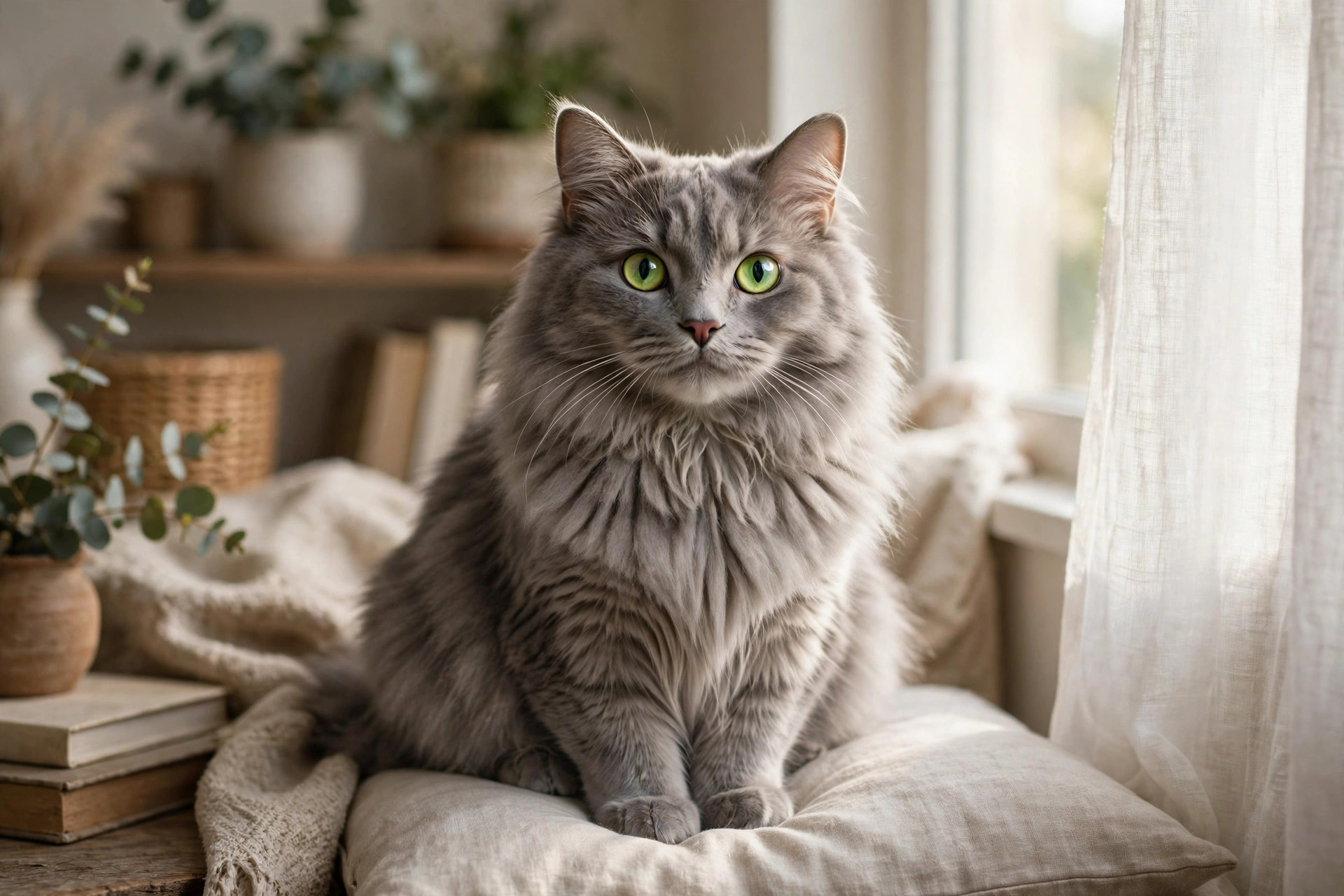
You don’t have to give up festive plants to keep your pets safe. Plenty of gorgeous Christmas plants are considered non-toxic to cats and dogs:
- Christmas cactus — blooms in red, pink, or white right around the holidays and is pet-safe.
- African violets — small, cheerful, and safe; great for tabletops.
- Boston ferns — lush greenery for a holiday planter (cats love batting the fronds, so hang it high).
- Spider plants — safe and nearly indestructible, though cats may chew the long leaves out of pure joy.
- Orchids (Phalaenopsis) — elegant, long-lasting blooms considered non-toxic to pets.
- Roses — the flowers are safe, though watch out for thorns on the stems.
- Potted rosemary “trees” — festive and fragrant; safe in small amounts, but still a decoration, not a snack.
You can also go the artificial route for the riskiest plants. A high-quality faux poinsettia or faux mistletoe looks convincing from a few feet away and eliminates the risk entirely — just make sure small parts can’t be chewed off and swallowed.
How to Pet-Proof Your Christmas Decorations
Plants aren’t the only holiday hazard. Once you’ve sorted the greenery, take a few minutes to pet-proof the rest of your Christmas setup:
- Elevate plants on sturdy stands or hang them — but remember that cats can jump, so a high shelf alone isn’t a guarantee.
- Secure the Christmas tree so a climbing cat or bumping dog can’t topple it. Anchor it to the wall if needed.
- Cover tree water — fertilized tree water can upset stomachs, and cats love drinking from the stand.
- Keep tinsel, ribbon, and string away from cats. Linear objects are a common cause of emergency vet visits during the holidays.
- Watch candles and cords. Open flames and dangling electrical cords are a dangerous mix with curious pets — similar to the hazards in our Halloween decorations safety guide, which applies just as well to Christmas lights and candles.
What NOT to Do
When it comes to pets and holiday plants, a few common mistakes can make a mild situation worse:
- Don’t assume “it’s just a poinsettia, so it’s fine.” Poinsettias are low-risk, but that doesn’t mean every red holiday plant is. Mistaking a lily arrangement for something harmless is the real danger — always identify every plant in your home.
- Don’t wait and see with lilies. If you even suspect your cat chewed a lily or drank lily water, treat it as urgent and contact your vet immediately. With lilies, hours matter.
- Don’t induce vomiting at home unless your vet specifically instructs you to. It’s not a DIY step.
- Don’t use home remedies like milk, oil, or salt to “neutralize” something your pet ate. These can make things worse — call a professional instead.
- Don’t punish your pet for chewing a plant. They don’t know it’s unsafe; your job is to manage the environment, not the animal.
- Don’t rely on plant labels alone. Store tags sometimes say “pet-friendly” loosely or not at all. When in doubt, look the plant up on the ASPCA’s toxic plant database before bringing it home.
When to See a Vet
Most poinsettia nibbles don’t require a vet visit — mild drooling or a single episode of vomiting that resolves quickly is common and usually passes. But contact your veterinarian (or an emergency clinic if it’s after hours) right away if you notice:
- Repeated vomiting or diarrhea that doesn’t settle within a few hours
- Lethargy, weakness, or hiding — especially in cats, who tend to mask illness
- Loss of appetite lasting more than 12 hours
- Excessive drooling that won’t stop
- Difficulty breathing, swelling of the mouth or face, or collapse — seek emergency care immediately
- Any suspected lily ingestion in a cat — this is always an emergency, even if your cat seems fine at first
- A large amount of any holiday plant eaten, even a “mild” one like poinsettia
Keep your vet’s number and the ASPCA Animal Poison Control number saved in your phone before the holidays. When every minute counts — especially with lilies — you don’t want to be searching for a number.
FAQ
Are poinsettias deadly to cats?
No — poinsettias are not considered deadly to cats. They’re rated as mildly toxic because their sap can irritate the mouth and stomach, possibly causing drooling, vomiting, or diarrhea. True lilies, on the other hand, are extremely dangerous to cats and can cause life-threatening kidney issues — so it’s worth double-checking that the plant in question really is a poinsettia.
Are poinsettias toxic to dogs?
Poinsettias are mildly irritating to dogs as well, mainly due to the milky sap in the leaves and stems. A curious puppy that chews the leaves may drool or vomit, but serious effects are uncommon. As with cats, the bigger holiday-plant concerns for dogs are mistletoe berries and amaryllis bulbs.
What are the signs my pet ate a poinsettia?
Common signs include drooling, lip-smacking, mild vomiting, soft stool or diarrhea, and sometimes pawing at the mouth. These signs usually appear within a few hours of chewing the plant and often resolve on their own within a day. If signs persist or worsen, contact your vet.
Should I get rid of all my poinsettias if I have pets?
Not necessarily. Many pet owners keep poinsettias safely by placing them out of reach — on high plant stands, in hanging baskets, or in rooms pets can’t access unsupervised. If your pet is a persistent plant chewer, though, swapping to a pet-safe alternative like a Christmas cactus may give you more peace of mind.
Which Christmas plants are safe for cats and dogs?
Christmas cactus, African violets, Boston ferns, spider plants, Phalaenopsis orchids, and roses are all considered pet-safe choices. Artificial versions of riskier plants (poinsettias, mistletoe) are another worry-free option — just make sure no small parts can be chewed off and swallowed.
A Safe and Happy Holiday for Everyone
Poinsettias don’t deserve their scary reputation — a nibble here or there is unlikely to cause more than a queasy stomach. The real holiday-plant villains are lilies for cats, mistletoe berries, and amaryllis bulbs, and knowing the difference is what keeps your pets safe.
With a little planning — pet-safe plants, decorations out of chewing range, and your vet’s number saved in your phone — you can enjoy every bit of Christmas magic without the worry. Here’s to a festive season full of twinkling lights, happy pets, and zero emergency vet visits.