
You sit down to answer one important email, and there she is — plopped squarely across your keyboard, tail over the spacebar, eyes half-closed like this was her plan all along. You gently lift her off, type three words, and she is back. Sound familiar?
If your cat sits on your laptop or keyboard every time you try to work, you are not alone. There are real reasons cats are drawn to your devices — from the warmth of the hardware to the fact that it holds the thing they want most: your attention.
The good news is that this habit is almost always a sign of a healthy, bonded cat. The slightly annoying news is that no cat cares about your deadline. Below, we break down the real reasons behind this behavior and share practical, cat-friendly ways to reclaim your keyboard without hurting your bond.
Why Your Cat Is Obsessed With Your Laptop and Keyboard
Cats are creatures of habit and instinct, and your laptop happens to check several boxes at once. Let us look at the most likely explanations.
1. It Is Warm and Cozy
Laptops generate heat, and cats are heat-seeking missiles. A cat’s normal body temperature runs between 100.5 and 102.5°F (38–39.2°C), and they are drawn to warm surfaces that help them stay comfortable without burning extra energy. Your laptop’s warm keyboard and glowing screen feel like a perfect heated spot — much like a sunny windowsill, but conveniently located right under your hands.
This is the same reason cats love radiators, cable boxes, freshly folded laundry, and the warm spot you leave on the couch when you get up for a snack. A laptop is simply a new entry on a very old list.
2. Your Cat Wants Your Attention
Let us be honest: this is the biggest reason. The moment you open your laptop, your eyes lock onto the screen, your hands start moving, and your cat notices that something has replaced them as the center of your universe.
Your cat has learned that sitting on your keyboard gets an immediate reaction — you talk to them, laugh, pet them, or pick them up. Even if you grumble while doing it, that is still attention. In your cat’s mind, the laptop trick works perfectly, so they keep doing it.
This is closely related to why cats follow you everywhere — both behaviors often come from a cat that simply wants to be near its person.
3. Your Scent Is All Over It
Cats have around 200 million scent receptors, and their world is built on smell. Your hands spend hours on that keyboard, which means it carries your scent in concentrated form. Sitting on the laptop is a way for your cat to wrap themselves in you — the same instinct behind face-rubbing and curling up on your freshly worn shirt. To your cat, it is scent-marking that says, “We belong together.”
4. Cats Love High, Central Spots
In the wild, cats feel safest when they can observe everything from an elevated, central position. Your desk — and especially your laptop, which usually sits at the center of it — fits that preference perfectly. From the keyboard, your cat has a front-row seat to the whole room, and a direct line to you.
Notice how your cat also sits on important papers, the TV remote, or the book you are reading. Cats do not read, but they recognize which objects matter to you, and they like to claim them.
5. The Moving Cursor Is Entertainment
A screen full of movement is basically free television for a cat. The cursor darting around, videos playing, tabs opening and closing — all of it catches their eye. Some cats go further and start batting at the cursor with their paws, which is why typing sometimes turns into a game of whack-a-mole.
If your cat seems more interested in the screen itself than in your lap, curiosity and prey instinct are probably part of the motivation. Watching things move on a glowing rectangle scratches an itch that an empty room does not.
6. It Is a Comfort and Security Behavior
Some cats gravitate toward their owner’s workspace when they feel a little unsettled — a new smell in the house, a loud day, a change in routine. Parking themselves on your laptop puts them as close to you as physically possible, which is reassuring. It does not mean anything is wrong; it usually just means your cat finds your presence calming.
7. Your Cat Has Learned a Routine
If you work from home, your cat has watched you do the same thing every day: sit at the desk, open the laptop, type. Cats are pattern-followers, and your cat may have folded themselves into that routine. To them, “you open the laptop” is the cue for “cuddle time begins.”
Routines are comforting to cats. The good news is that you can build a new routine that gives your cat what it wants without sacrificing your productivity.
8. Boredom Plays a Bigger Role Than You Think
Indoor cats can get bored, especially during long hours while you work. A laptop is warm, busy, and associated with you — an irresistible combination for a bored cat. Adding more play sessions and indoor enrichment ideas to your cat’s day can reduce the desk invasion significantly. A tired, mentally satisfied cat is much more likely to nap quietly beside you instead of on your laptop.
9. It Is an Affectionate Bonding Behavior
Here is the heartwarming truth: cats do not sit on your laptop to annoy you. They do it because they trust you and feel close to you. Many of the ways cats show they love you involve physical closeness — and keyboard-sitting belongs on that list. It may not feel loving when your cat deletes half a spreadsheet, but the underlying message is positive: you are their safe person, and they want to be exactly where you are.
How to Stop Your Cat From Sitting on Your Laptop (Without Drama)
You do not have to choose between your cat and your work. The trick is to give your cat an appealing alternative, not to fight over the keyboard.
Give Them a Better Seat Right Next to You
This is the single most effective strategy: place a cozy cat bed, folded blanket, or empty box on your desk beside your laptop. Cats often accept the trade when the alternative is warm, high up, and still next to you. If your cat leaves the bed for your keyboard, calmly move them back without fuss. Consistency matters more than force — over a week or two, many cats adopt the new spot as part of their routine.
Schedule Play Before You Sit Down to Work
A 10–15 minute interactive play session before a long work stretch burns off your cat’s energy and gives them the attention they are seeking. Wand toys and feather teasers work well. After play, feed them — the classic “hunt, catch, eat, groom, sleep” sequence ends with a nap, and a napping cat is not on your keyboard.
Create a Warm Deco
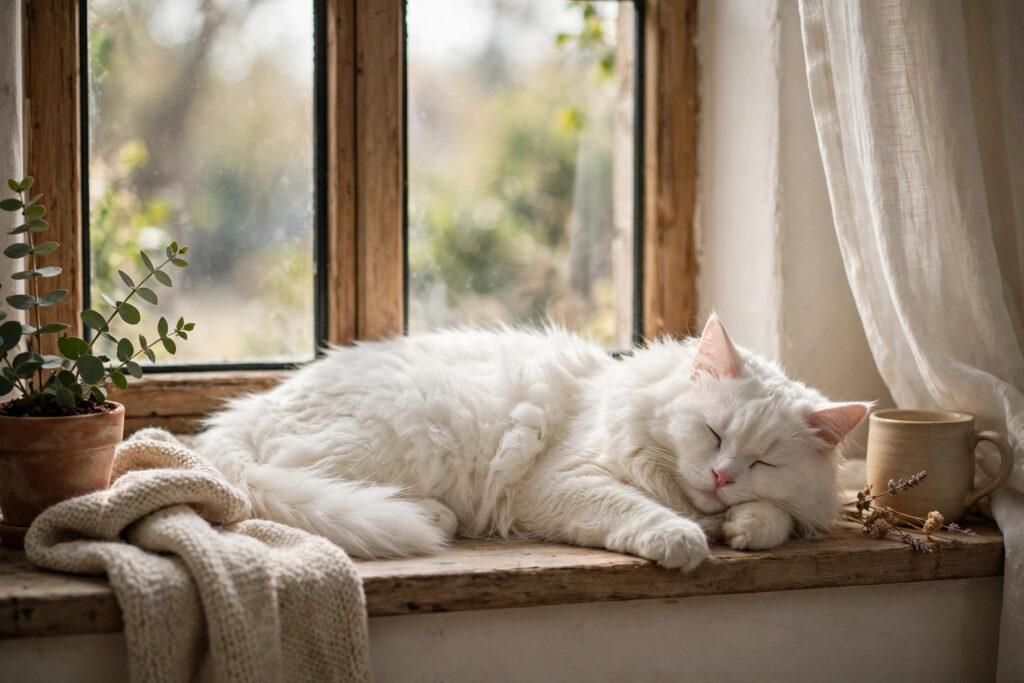
Give your cat their own warm spot that beats the laptop: a pet-safe heated cat bed, a sunny window perch with a cushion, or even an old keyboard that no longer works. Some owners swear by placing a broken keyboard next to the real one — cats often happily choose the decoy because it offers the same experience in a spot that does not matter.
Use Positive Redirection, Not Punishment
When your cat jumps on your keyboard, resist the urge to scold or shoo them roughly. Instead, gently lift them to their designated spot and reward them with a treat or a scratch behind the ears. You want the alternative seat to feel like a win, not a demotion.
Spray bottles, loud noises, and closed doors can create stress and damage trust. Cats do not connect punishment with the laptop the way we hope — they mostly just learn that desk time is scary, which is not the lesson you want to teach.
Protect Your Work Anyway
While you retrain the habit, protect yourself: lock your screen when you step away, save often, and keep drinks far from the keyboard. Think of it as insurance while the new routine takes hold.
What NOT to Do
These common reactions feel satisfying in the moment but make the problem worse — or harm the relationship you have built with your cat.
- Do not punish or scold. Yelling, spraying water, or tapping your cat teaches fear, not manners. It can increase anxiety-driven clinginess, which sends the cat right back to your lap.
- Do not lock your cat out of the room all day. Isolation can trigger stress behaviors like excessive meowing, scratching doors, or changes in eating habits. Cats that feel cut off from their people often act out in new ways.
- Do not use repellent sprays on or near your laptop. Many essential oils and scent repellents that are marketed for cats are irritants — and some are outright toxic to cats. Never put fragrances, oils, or chemical deterrents where your cat breathes or walks.
- Do not ignore your cat entirely. The laptop-sitting is communication. If you stonewall your cat’s requests for attention long enough, the behavior can escalate instead of fading.
- Do not let your cat chew cables while “working together.” Warm laptops come with cords, and some cats chew them. Keep cables tucked away or covered — electrical cords are a real safety hazard for curious teeth.
When to See a Vet
Sitting on your laptop is normal behavior, and it almost never signals a medical problem. However, a sudden, dramatic change in your cat’s clinginess can occasionally be worth a check-up. Consider calling your vet if the keyboard-sitting comes with any of the following signs:
- Sudden, intense clinginess out of nowhere. A cat that was always independent and is suddenly glued to you may be seeking comfort due to pain, nausea, or anxiety.
- Changes in appetite, litter box habits, or energy. Eating much more or less, straining in the litter box, or unusual tiredness alongside new clingy behavior deserve professional attention.
- Hiding alternating with clinginess. Sharp swings between hiding and clinging can happen when something feels wrong physically.
- Vocalizing more than usual. Excessive yowling paired with neediness can signal discomfort or, in older cats, cognitive changes worth discussing with your vet.
The framing here is simple: the laptop habit itself is fine. It is only when the habit changes suddenly — or appears alongside physical symptoms — that a vet visit makes sense. Trust your instincts; you know your cat’s normal better than anyone.
Frequently Asked Questions
Why does my cat only sit on my laptop when I am using it?
Because the behavior is mostly about you, not the laptop. When you are typing, you are engaged, focused, and unavailable — and your cat notices the shift. An unused laptop is just a warm object; a laptop you are actively using is a rival for your attention.
Does my cat sit on my keyboard because it is jealous?
Not jealous in the human sense — but cats do notice when your attention goes elsewhere and act to win it back. The motivation is simpler: connection.
Is it bad for my cat to sit on a hot laptop?
A mildly warm laptop is not dangerous, but an overheating one can be uncomfortable, and the vents your cat blocks make the machine run hotter. If the bottom of the laptop is too hot for your hand, it is too hot for your cat. Also keep cables tucked away — some cats chew them, and electrical cords are a real hazard for curious teeth.
How do I keep my cat off my desk while I work from home?
Combine the strategies above: a warm alternative bed on the desk, a play session before work, and calm, consistent redirection. A treat puzzle or feeder toy given right before a meeting can also buy you a solid quiet stretch.
Will my cat grow out of sitting on my laptop?
Probably not on their own — it is a self-rewarding habit, since the cat gets warmth and attention every time it works. But it is very manageable. Most owners who set up a cozy alternative seat and stick with gentle redirection find that their cat relocates within a couple of weeks. The affection behind the behavior does not go away; it just moves six inches to the left.
Conclusion
Your cat sitting on your laptop is not sabotage — it is a compliment wrapped in a mild inconvenience. Warmth, curiosity, routine, boredom, and above all a genuine desire to be close to you all come together in that one small glowing rectangle. Most cats do it because you are their favorite person.
The fix is not to push your cat away, but to make room for them on your terms. A warm bed beside the laptop, a good play session before work, and patient, reward-based redirection will reclaim your keyboard while keeping the bond strong. Your cat gets their cozy spot next to you, and you get to finish that email without a tail across the spacebar.