
Your indoor cat has a safe, comfortable home — but is she truly happy? Many indoor cats spend their days sleeping, eating, and watching the world from the window. Without enough mental and physical stimulation, cats can get bored, stressed, or develop problem behaviors like scratching furniture, overeating, or nighttime zoomies that keep the whole house awake.
The good news is that enrichment does not have to be expensive or complicated. Here are 15 practical ideas — from DIY toys to puzzle feeders — that work for cats of every age and energy level.
What Is Cat Enrichment and Why Does It Matter?
Enrichment means giving your cat opportunities to use her natural instincts: hunting, climbing, scratching, exploring, and playing. When cats lack stimulation, you may notice possible signs of boredom like excessive sleeping, overeating, scratching furniture, aggression, over-grooming, or restless nighttime meowing. If boredom goes unaddressed, it can contribute to weight gain and stress. The fixes below are easy, affordable, and take only a few minutes a day.
1. Play Hunting Games With a Wand Toy
A wand toy — a stick with a feather or string attached — is the single best enrichment tool you own. It lets your cat stalk, chase, and pounce, which mimics real hunting.
Drag the toy across the floor like a mouse running away, then pause and let it “hide” behind furniture. Short, jerky movements drive cats wild. Two 10–15 minute sessions per day match a cat’s natural hunting rhythm, and play before bed can reduce those 3 a.m. wake-up calls.
Tip: Always end with a “catch.” Let your cat grab the toy, then follow up with a small treat or meal — this completes the hunting cycle and leaves her satisfied.
2. Try Puzzle Feeders and Food Games
Cats are smart problem solvers, and working for food is far more interesting than eating from a bowl. You don’t need fancy equipment to start:
- Scatter dry kibble on a towel so your cat has to “forage” for it
- Put treats inside a muffin tin and cover each cup with a crumpled paper ball
- Cut holes in a cardboard box, drop kibble inside, and let your cat fish it out
Start easy and make puzzles harder over time. Aim to make at least one meal a day an enrichment meal — it slows down fast eaters and keeps brains busy.
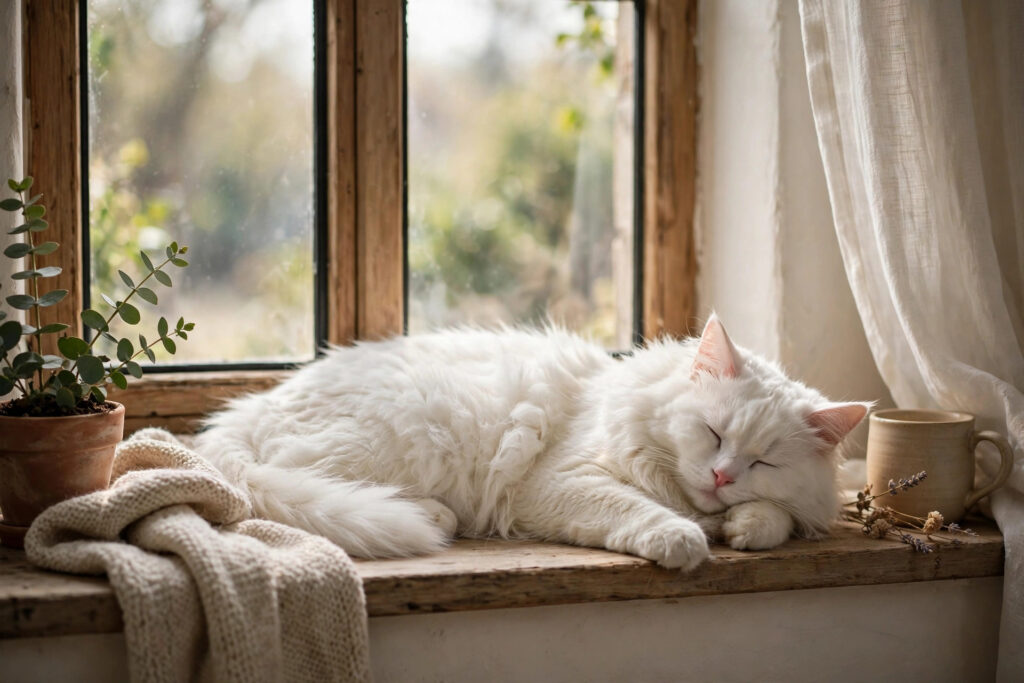
3. Create a Window Watching Station
For indoor cats, the window is television. A good window spot gives your cat hours of entertainment: birds, squirrels, and passing people.
Set up a sturdy perch or cleared-off shelf by the sunniest window. If you can, place a bird feeder outside — it turns the view into a nature documentary your cat will never turn off.
Safety note: Make sure window screens are secure and sturdy enough to hold your cat’s weight. Cats can and do fall through loose screens.
4. Build Vertical Space With Cat Trees and Shelves
Cats feel safest when they can climb high and survey their territory. A tall cat tree with multiple levels and a top perch is a great investment. If you are handy, mount a few sturdy shelves on the wall to create a “cat highway” across the room. Even a tall bookshelf with cleared-off tops can work — place vertical spots near windows for bonus points.
5. Rotate Toys to Keep Things Fresh
You do not need 50 toys — you need 8 to 10 that you rotate. Keep half in a closet and swap them every week or two. “Old” toys feel brand new after a break. Include variety: crinkle balls, catnip mice, springs, and tunnels.
DIY toy ideas that cost nothing:
- A crumpled paper ball (many cats prefer these over store-bought toys)
- A cardboard box — the classic cat favorite
- A paper bag with the handles cut off for safety
- An empty toilet paper roll with kibble tucked inside and the ends folded
Throw away any toy that starts falling apart, especially ones with loose string or small parts your cat could swallow.
6. Set Up a Scratching Station
Scratching is not misbehavior — it is a natural need. Cats scratch to stretch, shed old claw sheaths, and mark territory with scent glands in their paws.
Give your cat at least one tall, sturdy scratching post and one horizontal scratcher. Place them where your cat already likes to scratch and near sleeping spots (cats love to scratch right after a nap).
If your cat scratches the sofa, rub catnip on the new scratcher and temporarily cover the furniture with a throw. Reward your cat with a treat every time she uses the scratcher — positive reinforcement works far better than scolding.
7. Grow a Cat Grass Garden
You can buy small cat grass kits at pet stores or online. Plant the seeds in a small pot, keep the soil moist, and place it in a sunny spot. Within a week or two, your cat will have fresh grass to nibble. Replace the pot when the grass starts looking sad.
Important: Before offering any plant, make sure it is non-toxic to cats. Common houseplants like lilies are extremely dangerous for cats.
8. Create Hiding Spots and Cozy Dens
Cats need safe places to retreat, especially in busy households. A cat with nowhere to hide can feel stressed, and stress can lead to behavior problems.
Provide at least one enclosed hiding spot per cat: a covered cat bed, a cardboard box with a hole cut in the side, or a paper bag on its side. Never drag a cat out of her hiding spot — let her come out on her own.
9. Play Cat TV and Bird Sounds
When you are away or busy, screens can offer some entertainment. There are hours of “videos for cats” on YouTube featuring birds, fish, and squirrels. Many cats will watch intently, chatter at the screen, and even try to paw at the animals.
Keep sessions to 20–30 minutes and supervise at first — some cats get frustrated that they cannot catch what is on the screen. If your cat seems annoyed rather than entertained, switch it off.
10. Teach Simple Tricks With Treats
Yes, cats can learn tricks! Training is fantastic mental enrichment because it makes your cat think and problem-solve. It also strengthens your bond.
Start with “sit”: hold a treat just above your cat’s nose and slowly move it back over her head. Most cats will sit naturally to follow it. The moment her bottom touches the ground, say “yes” and give the treat. Use small, tasty treats and lots of patience. If your cat walks away, the session is over — try again tomorrow.
11. Make a Cardboard Box Castle
Cardboard boxes are the undisputed champions of cat enrichment — free, endlessly entertaining, and easy to replace.
Tape two or three boxes together, cut doorways between them, and cut a few holes in the tops for peek-a-boo play. Add a dangling toy inside. Change the layout every few weeks to keep it interesting.
12. Set Up a Safe Outdoor Experience
Many indoor cats are fascinated by the outdoors, and you can give them a taste of it safely:
- Harness walks: Some cats learn to walk on a harness and leash. Start indoors, use lots of treats, and keep first outings short. Not every cat enjoys this — follow your cat’s lead.
- A secured balcony: Make sure it is fully cat-proofed with netting so your cat cannot slip through railings.
Never let your cat roam unsupervised outdoors — traffic, predators, and diseases are real dangers.
13. Add Sensory Enrichment: Smells and Textures
Cats experience the world through their noses. New smells are exciting enrichment.
- Rub a pinch of catnip or silvervine on toys and scratchers (not all cats respond to catnip — about 30% don’t, and that’s normal)
- Bring in a safe outdoor item like a pinecone for sniffing (check it is clean and chemical-free first)
- Offer different textures: a fleece blanket, a cool tile to lie on, a crinkly mat to walk across
14. Schedule Daily Interactive Playtime
All the toys in the world cannot replace YOU. Interactive play — where you actively play with your cat — is the most valuable enrichment of all. Aim for two sessions a day of 10–15 minutes, ideally before meals (hunt → catch → eat → groom → sleep is the natural cat cycle). Rotate between wand toys and toss-and-fetch games with soft balls. Match the intensity to your cat’s age and energy level — kittens need more play, seniors prefer gentler sessions.
15. Consider a Companion — If It Fits Your Home
For some cats, the best enrichment is another cat. But this is not a decision to rush — some cats are perfectly happy as only pets. Introductions must be slow, over days or weeks, with separate spaces at first. Consider a cat of similar age and energy level, and give both cats plenty of resources (litter boxes, food bowls, hiding spots) to avoid competition.
What NOT to Do
Even with the best intentions, some common mistakes can make enrichment backfire:
- Don’t force play on a tired or scared cat. If your cat walks away, hides, or flattens her ears, the session is over. Forcing interaction damages trust.
- Don’t use your hands as toys. It seems cute with kittens, but it teaches cats that biting hands is a game — a habit that hurts when they grow up. Always use a toy between your hands and your cat.
- Don’t leave string toys out unsupervised. Yarn, ribbon, and elastic strings are dangerous if swallowed. Put wand toys away after each session.
- Don’t overwhelm with too much change at once. Introduce new toys, furniture, or routines one at a time. Too much novelty can stress a sensitive cat.
When to See a Vet
Enrichment solves boredom, but some behaviors can also be possible signs of health issues. Contact your vet if you notice:
- Sudden behavior changes: A playful cat that becomes withdrawn, or a calm cat that becomes aggressive, may be in pain or unwell.
- Changes in appetite or thirst: Eating or drinking much more or less than usual can be signs of underlying conditions.
- Litter box changes: Straining, crying in the box, going outside the box, or blood in urine or stool always warrant a vet visit.
- Over-grooming or fur loss: This can signal skin problems, allergies, or pain — not just boredom.
- Lethargy in a young cat: All cats sleep a lot, but a young cat with no interest in play may need a checkup.
- Weight gain or loss: Noticeable changes in either direction deserve a vet’s opinion.
This article is for general information, not a diagnosis. When in doubt, a quick call to your vet is always the right move.
Related: Why Does My Cat Follow Me Everywhere?
Frequently Asked Questions
How much playtime does an indoor cat need each day?
Most indoor cats do well with two 10–15 minute interactive play sessions per day. Kittens may want more; senior cats may prefer shorter, gentler sessions. If she walks away or lies down, she is done.
My cat ignores all her toys. What should I do?
Try rotating the toys — put half away for a week or two, then swap. Experiment with different types and DIY options like crumpled paper or boxes. Play WITH her using a wand toy, since interactive play is more exciting than solo toys. If a young cat shows zero interest in any play over time, mention it to your vet.
Is catnip safe for my cat?
Catnip is generally considered safe for cats and is non-addictive. About 50–70% of cats respond to it. Offer it in moderation — a pinch on a toy a few times a week is plenty. Kittens under about 6 months usually don’t respond yet.
Can indoor cats be happy without going outside?
Absolutely. Indoor cats can live long, happy lives — often longer than outdoor cats, since they avoid traffic, predators, and many diseases. The key is making the indoors interesting: vertical space, window views, daily play, puzzle feeders, and scratching spots.
How do I keep my indoor cat active if I work long hours?
Set up enrichment that works while you are gone: puzzle feeders for meals, a window perch with a bird feeder outside, rotated toys, and a cardboard box castle. When you get home, make the first 15 minutes about interactive play — it is the highest-value time you can give.
A Happy Cat Is an Enriched Cat
You don’t need a big house or an expensive toy collection to keep your indoor cat happy. What she needs most is a home that lets her be a cat: places to climb, things to chase, puzzles to solve, cozy spots to hide, and — most importantly — playtime with you.
Start with just two or three ideas from this list and build from there. Watch what your cat loves and do more of that — a playful, curious cat is a truly happy one.
1 thought on “Indoor Cat Enrichment Ideas: 15 Simple Ways to Keep Your Cat Happy and Active”