
It happens so quietly that most of us almost miss it. Your cat used to race up the stairs two at a time and greet you at the door. Now she pauses at the bottom of the stairs, looks up, and decides the couch downstairs is fine for today. She still purrs when you scratch her chin, but something in her face looks… tired.
This is the hardest part of loving a cat. Cats are masters at hiding pain — an old instinct from the wild, where showing weakness was dangerous, still tells your cat to act like everything is fine even when it isn’t. As cats age, discomfort usually creeps in through small, easy-to-miss changes rather than one dramatic moment. You know your cat better than anyone, and noticing the quiet shifts in how she looks, moves, eats, and behaves is often the first step toward getting her help.
In this guide, we’ll walk through the gentle signs that a senior cat may be in pain or slowing down, and simple, kind things you can do at home to keep her comfortable. Everything here is meant to help you observe and support your cat — not to diagnose anything. When in doubt, your vet is always your best partner.
Read Your Cat’s Face: The Cat Grimace Scale Cues
One of the most useful tools for spotting pain in cats needs no equipment — just your eyes and a few quiet minutes. Researchers developed the Cat Grimace Scale, based on five small facial cues that can shift when a cat is uncomfortable. You don’t need to study it — just knowing the cues helps you see what you might otherwise overlook:
- Ear position: Ears that flatten, rotate outward, or pull slightly back instead of sitting relaxed and upright.
- Eyes: Half-closed or squinty eyes, or a narrowed gaze that wasn’t there before.
- Muzzle: A tense, slightly wrinkled look around the mouth and nose.
- Whiskers: Whiskers pressed stiffly against the face or sticking straight out, instead of lying loose and relaxed.
- Head position: A head held low, tucked in, or leaning on something instead of being carried normally.
The pattern is what matters. If her face often looks different from her usual relaxed expression — especially alongside changes in how she moves or eats — it’s worth paying attention.
For a closer look at these cues, see our guide on the cat grimace scale and how to read facial pain cues in cats. For a broader overview of body-language signals, our post on how to tell if your cat is in pain: 12 warning signs covers everything from posture to hiding behavior.
Changes in Movement: The Quiet Slowing Down
The most common changes in a senior cat show up in how she moves. Some slowing is a normal part of aging; some can reflect joint stiffness or other discomfort. Watching how she moves gives you real insight either way:
- Hesitating before jumps. She used to go from floor to bed in one motion; now she jumps halfway, paws at the edge, or stops jumping altogether and waits to be lifted.
- Stiffness after rest. She rises from a nap slowly, stretches a lot, and takes a few careful steps before moving normally — a classic pattern of age-related joint discomfort.
- Skipping the stairs. One step at a time, long pauses, or simply staying on one floor.
- Playing less. The feather wand sits untouched. Less play often reflects that quick movement hurts or tires her — not sadness.
- Grooming changes. She may stop grooming her lower back or hind legs because twisting is hard — or over-groom one spot repeatedly, her way of soothing something that bothers her.
What you can do: Make her world easier to navigate — a sturdy step next to her favorite high spots so she can climb instead of jump, and food, water, the litter box, and a warm bed on the same floor she uses most. Keep play short and slow; gentle wand-toy sessions let her join in without overdoing it.
Appetite and Eating Changes: Reading the Bowl
Changes in eating rarely happen overnight. She eats a little less, takes longer, or leaves food she used to finish in minutes.
- Eating less or more slowly. Some cats with mouth discomfort eat slowly or drop food; others lose interest in hard kibble but still enjoy soft food.
- Preference changes. Favoring wet food over dry, chewing on one side of the mouth, or preferring a raised bowl can reflect difficulty rather than fussiness.
- Weight changes. Gradual weight loss hides well under a fluffy coat. Run your hands along her ribs every couple of weeks — a prominent spine or bony hips that weren’t obvious before deserve a vet’s attention.
What you can do: Offer wet food, which most older cats find easier to eat and which helps hydration. Warm it slightly to bring out its aroma, try a shallow raised dish if bending low is hard, and keep a simple one-week food log for your vet.
Litter Box Habits: A Window Into Comfort
The litter box is one of the most honest reporters in a senior cat’s life. Changes here usually reflect physical difficulty, not stubbornness.
- Going beside the box. A cat who used the box faithfully for years and now goes next to it may be struggling to climb over high sides. This is not spite — it is often pain.
- Straining or crying in the box. Vocalizing, lingering, or going in and out repeatedly can signal discomfort. If you notice your cat straining in the litter box, that guide explains what to watch for and when it’s urgent.
- Changing position. Leaning against the side, standing instead of squatting, or avoiding digging can be ways of protecting sore joints.
- Going more or less often. Both directions are worth noting.
What you can do: Switch to a box with at least one low entry side — one with a cut-out doorway, or marketed for senior cats. Make it extra roomy, scoop daily, keep one box on every floor she uses, and try a soft, unscented, sand-like litter that’s gentle on tender paws.
Behavior and Mood: The Emotional Side of Slowing Down
A cat in discomfort doesn’t just move differently — she often acts differently.
- Hiding more. A social cat spending hours under the bed or in closets may be withdrawing because she doesn’t feel well.
- Less interaction. She stops greeting you at the door, skips lap time, or leaves when the house gets lively.
- Irritability. Swatting or moving away when touched where she used to enjoy it can mean she’s guarding sore spots. Let her set the terms.
- Sleeping much more. Seniors already sleep 16 to 18 hours a day — the question is whether it’s noticeably more than her normal, with less alert, engaged time in between.
- Nighttime restlessness. More nighttime vocalizing or wandering can reflect confusion in very old cats; your vet can help you understand what’s happening.
What you can do: Keep her routine calm and predictable, create quiet warm resting spots at easy heights, and spend gentle, low-key time together — a soft lap, a slow brushing if she enjoys it — so she stays part of the family at a slower pace.
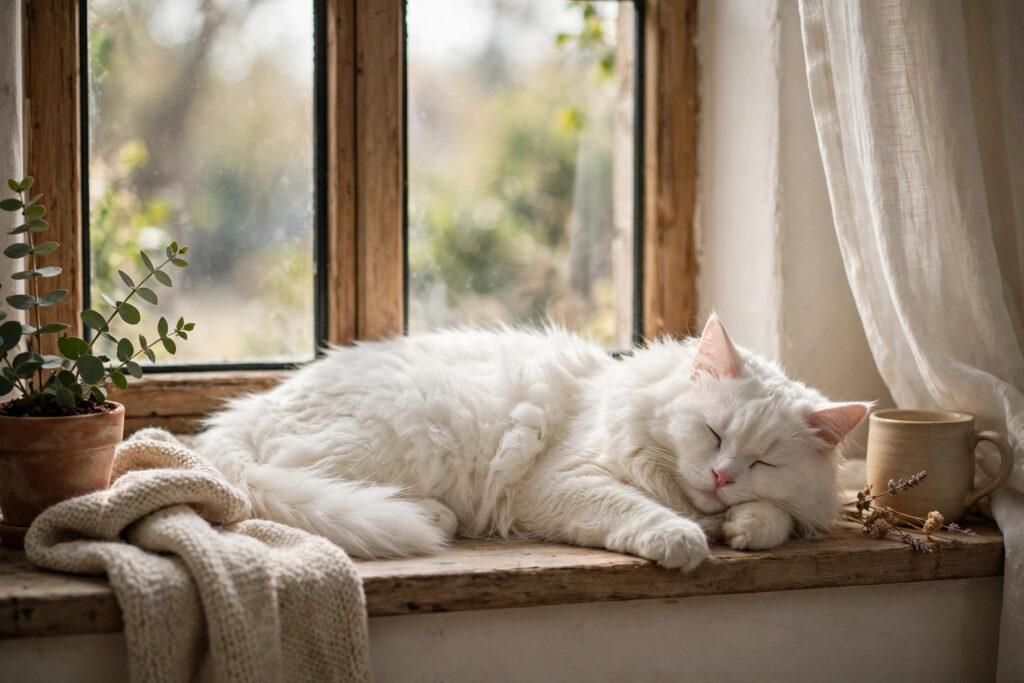
Comfort at Home: Small Changes That Help a Lot
- Warmth everywhere. Older cats feel the cold more: a low heated pet pad with a cover, or a folded blanket in her favorite spot.
- Easy access. Pet stairs or ramps to the bed and couch, non-slip rugs on slippery floors, raised food and water dishes.
- Senior-friendly litter boxes. Low sides, large size, one per floor, scooped daily.
- Gentler play. Two-minute sessions twice a day, plus a simple puzzle feeder with a few treats.
- Grooming help. If she can’t reach certain areas, a soft brush a few times a week — and a chance to notice lumps, mats, or skin changes.
- Regular vet checkups. Many vets recommend twice-yearly checkups for cats over 10–12.
What NOT to Do
Caring for a senior cat comes from the heart, and that’s exactly why a few common mistakes are worth flagging — things done with love that can backfire:
- Don’t give human pain medication. Never give your cat ibuprofen, aspirin, acetaminophen, or any human painkiller — many are extremely dangerous or even fatal to cats. Only give medications your vet has specifically prescribed.
- Don’t assume “she’s just getting old.” Age explains a lot, but it’s not an answer by itself. Slowing down, eating less, or hiding can reflect something treatable — let your vet decide what’s normal aging and what needs attention.
- Don’t force exercise or rough play. Pushing a slowing cat to move more can cause pain or injury. Follow her lead — gentle encouragement, never forcing.
- Don’t punish litter box accidents. She’s almost certainly not being difficult. Punishment adds stress to an already uncomfortable cat and never fixes a physical problem.
- Don’t wait and watch for too long. It’s natural to hope a change passes on its own. But cats hide pain well, and what looks small to you may be bigger than it appears. When several signs line up, call the vet sooner rather than later.
- Don’t overhaul her diet on your own. Sudden food changes can upset a sensitive stomach. Transition gradually and ask your vet about the best diet for her age and needs.
When to See a Vet
Knowing when to call is one of the most caring things you can do. Don’t wait for your cat to “prove” something is wrong — cats rarely will. Call promptly if you notice:
- Refusing food for more than 24 hours. Cats can develop serious liver problems after even a short period of not eating — always a reason to call.
- Clear signs of pain. Crying out when touched or picked up, limping, difficulty standing, or sudden inability to jump.
- Straining to urinate with little or no urine. Especially in male cats, this can be a life-threatening emergency.
- Rapid weight loss, heavy panting, or open-mouth breathing. Panting in a cat is unusual and always worth an urgent call.
- A combination of small changes. If her face looks different, the bowl is half-finished, the stairs are skipped, and she’s hiding more — that pattern alone is reason enough for a checkup.
Frequently Asked Questions
How do I know if my older cat is in pain or just slowing down from age?
Look for changes from her own normal rather than comparing her to a younger cat. Keep a simple note on your phone: how she moves, eats, uses the litter box, and behaves this week versus last month. Gradual changes across several areas — the face, the appetite, the stairs, the hiding — are a stronger signal than any single moment. When you’re unsure, that’s exactly what vets are for.
What is the cat grimace scale, and can I use it at home?
It’s a research-developed tool that looks at five facial cues — ear position, eye openness, muzzle tension, whisker position, and head position — to help identify pain. You can use the basic idea at home by learning what your cat’s relaxed face looks like and noticing when it often looks different. Photos of her resting face help you compare over time. If the tense, squinty pattern shows up frequently — especially alongside eating or movement changes — mention it to your vet.
Is it normal for a senior cat to sleep all day?
Seniors sleep a great deal — 16 to 18 hours a day is typical. The question is whether it’s noticeably more than her usual, and what her waking hours look like. A senior who is alert, affectionate, and engaged when awake is very different from one who sleeps constantly and seems groggy when roused. Track the pattern for a couple of weeks; a big jump in sleep with less interest in food, play, or company is worth a vet visit.
Should I change my senior cat’s food?
Many older cats benefit from food suited to their life stage — often higher in digestible protein, with attention to hydration. But sudden changes can upset a sensitive stomach. If she’s eating less, struggling with hard kibble, or losing weight, talk to your vet before switching. Warming wet food slightly and offering smaller, more frequent meals are gentle steps most vets endorse.
My senior cat hides all the time and seems sad. What should I do?
Increased hiding is among the most common signs that something isn’t right — from discomfort to anxiety. Make her world feel safe and easy: a quiet resting spot she doesn’t have to climb to, everything she needs on one floor, a calm routine, and gentle company on her terms. If the hiding persists for more than a few days, or comes with appetite or litter box changes, call your vet — cats withdraw when they hurt, and early attention gives you both the best chance of making her comfortable again.
A Final, Gentle Thought
She may not leap like she used to, but she still knows your voice, still chooses your lap, still purrs when you get the chin scratch just right. Give her warmth, give her ease — and when the signs tell you she needs more help than you can give at home, make that vet call.