
You watch your cat walk into the litter box, squat, and strain — but almost nothing comes out. They hop out, pace around the house, and go straight back in to try again. It is stressful to watch, and it is natural to feel worried.
Straining in the litter box can mean several different things, and some of them are serious. The most important thing to know right now: if your cat is straining with little or no urine coming out — especially a male cat — treat it as an emergency and call your vet immediately. A urinary blockage can become life-threatening within hours.
This guide will help you understand the possible causes, show you the red-flag signs that mean “call the vet now,” and give you safe comfort steps to take while you are waiting for the vet.
Why Cats Strain in the Litter Box
Before we talk about what to do, it helps to know what might be going on. When a cat strains in the litter box, it usually means they feel the urge to urinate or pass stool but cannot do it comfortably. Here are the possible causes:
- Urinary tract infection (UTI): A bacterial infection in the bladder can make urination painful and urgent, so your cat strains and passes only small amounts of urine.
- Urinary blockage: This happens when the urethra (the tube that carries urine out) gets blocked — by crystals, mucus plugs, or stones. Urine cannot escape, the bladder fills up, and the cat strains hard. This is an emergency, most common in male cats because their urethra is narrower.
- Bladder stones: Stones in the bladder can irritate the bladder wall and make urination painful, leading to straining and frequent trips.
- Constipation: If your cat is straining to pass stool rather than urine, constipation is a possible cause. Dehydration, low-fiber food, or hairballs can contribute.
- Stress or anxiety: Cats are sensitive animals. Changes in the home — a new pet, a move, a different litter — can cause litter box problems and straining behavior.
- Inflammation without infection: Sometimes the bladder becomes inflamed even without bacteria. Vets often call this feline lower urinary tract disease (FLUTD), and stress can make it worse.
You cannot tell which of these is happening just by watching. That is why a vet visit is so important — they can check what is going on and keep your cat safe.
Red Flags: Call the Vet Right Now
Some signs mean you should call your vet immediately, even in the middle of the night. Do not wait to see if it gets better. Contact an emergency vet clinic if your regular vet is closed.
Call the vet now if you see any of these:
- Straining with little or no urine coming out. This is the biggest red flag — it can signal a urinary blockage.
- Your cat cries out or meows in pain while trying to use the litter box.
- Repeated trips to the litter box — your cat goes in and out over and over with almost nothing produced.
- Blood in the urine or very dark, pink-tinged urine.
- Your cat is vomiting, hiding, or suddenly lethargic along with the straining.
- A swollen, hard-feeling belly — this can mean the bladder is dangerously full.
- Your cat keeps licking their genital area excessively after trying to urinate.
- Your cat is a male and cannot pass urine at all. Male cats are at much higher risk of a complete blockage, and this can turn deadly within 24–48 hours.
When you call, tell the vet exactly what you are seeing: “My cat keeps straining in the litter box but almost no urine is coming out.” That sentence tells them the situation is urgent. If you are unsure whether it is urine or stool your cat is straining to pass, tell the vet that too — they will know what questions to ask.
Cats are masters at hiding discomfort, so if you notice any of these signs your cat might be in pain, do not ignore them. Pain signals combined with straining make the vet call even more urgent.
Comfort Steps While You Wait for the Vet
Once you have called the vet, there are safe things you can do at home to keep your cat comfortable until the appointment or while you are on the way. These tips do not treat the problem — they just make the wait easier and safer.
Keep water available and encourage drinking
Offer fresh, clean water in several spots around the house. Some cats drink more from a wide, shallow bowl; others prefer running water from a pet fountain. Wet food also helps — you can offer a spoonful of wet food with extra water stirred in, if your cat will eat it. Better hydration may help your cat pass urine a little more easily, and it is good for the bladder in general.
Make the litter box easy and inviting
Keep the litter box spotless. Scoop it completely and add fresh litter if needed. If your cat is straining, make sure the box is easy to get into — a low-sided box is better, especially if your cat seems uncomfortable. Keep the box in a quiet, calm spot, not near noisy appliances or busy hallways.
Keep your cat calm and close by
Stress can make bladder problems worse. Keep the house quiet, avoid visitors or loud noise, and let your cat rest in a comfortable, warm spot. If your cat wants to sit with you, let them. If they want to hide somewhere quiet, let them do that too — just keep an eye on them.
Watch and take notes
Pay attention to what happens while you wait. Note how often your cat tries to urinate, whether anything comes out, what color it is, and whether your cat cries or seems restless. This information helps the vet a lot. If you can, take a quick photo or video of the behavior — it is easier than trying to describe it later.
Get to the vet safely
Put your cat in a carrier with a soft blanket. Drive calmly — your cat can pick up on your stress, so steady and gentle is best. If you are heading to an emergency clinic, call ahead so they know you are coming.
Long-Term Habits That Support a Healthy Bladder
After your vet has seen your cat and given you the all-clear (and only with your vet’s guidance), these everyday habits can help support your cat’s urinary health going forward:
- Fresh water everywhere: Keep multiple water bowls around the house, and consider a pet water fountain. Many cats drink more from moving water.
- Feed some wet food: Wet food has much more moisture than dry food, which supports hydration. Even mixing wet food into your cat’s routine can help.
- Clean litter box, always: Scoop daily and do a full litter change regularly. Many cats avoid a dirty box, and holding urine is not good for the bladder.
- One box per cat, plus one extra: In multi-cat homes, not having enough boxes creates stress and waiting — both of which can contribute to urinary issues.
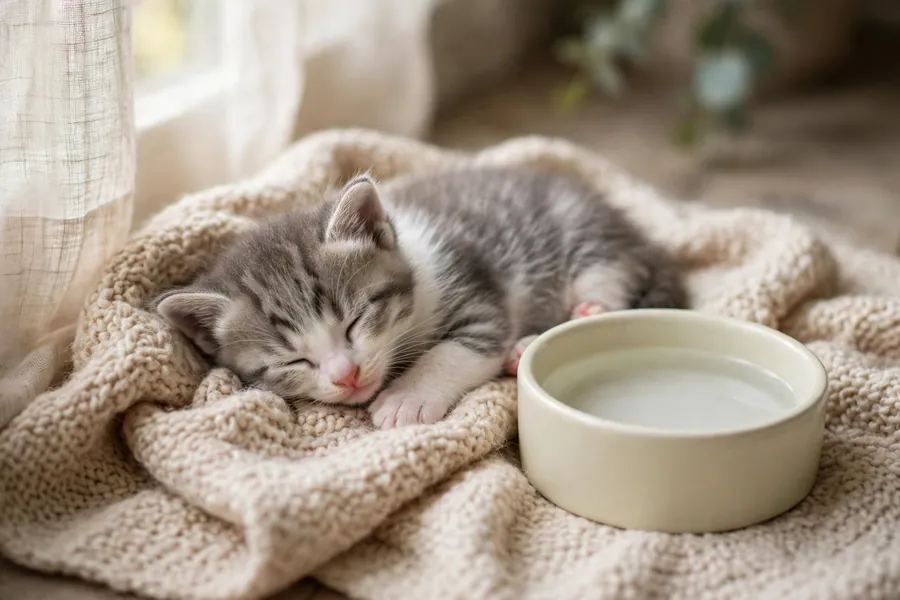
- Reduce stress: Cats and stress do not mix. Keep a consistent routine, provide hiding spots and vertical space, and introduce any changes (new pets, moves, new food) gradually. If you are introducing a new kitten to an older cat, a slow, calm introduction can prevent the stress that sometimes triggers bladder problems.
- Watch the weight: Overweight cats are more prone to urinary problems. Ask your vet about a healthy weight and diet for your cat.
What NOT to Do
When your cat is straining and you are worried, it is tempting to try anything. But some well-meaning actions can make things worse:
- Do not give your cat any human medicine. Painkillers like ibuprofen or paracetamol (acetaminophen) are toxic to cats and can be fatal. Never give any medication unless your vet specifically tells you to.
- Do not give “leftover” antibiotics or pet medicine from another animal. The wrong drug, dose, or treatment can hide symptoms, cause harm, or delay real help.
- Do not try to “help” your cat urinate by pressing on the belly. Pressing a full, blocked bladder can rupture it — this is extremely dangerous.
- Do not wait and hope it passes. A urinary blockage does not get better on its own, and the situation can become life-threatening fast. “Wait and see” is the riskiest choice of all.
- Do not assume it is just constipation. Straining to urinate and straining to pass stool can look very similar. Only a vet can tell the difference safely.
- Do not switch foods suddenly as a “quick fix.” Sudden diet changes can upset your cat’s stomach and cause diarrhea, which only adds to the problem. If your cat also has loose stools, learn about possible causes of cat diarrhea and what to do — but any diet change should still go through your vet.
When to See a Vet
Here is the simple rule: any straining in the litter box deserves a vet’s attention.
- Go immediately (emergency): Straining with little or no urine, crying in pain, repeated unproductive trips, blood in urine, vomiting, lethargy, a hard swollen belly, or a male cat that cannot pass urine. Call now — day or night.
- Go the same day: Straining that produces small amounts of urine, more frequent trips than usual, licking the genital area, or any behavior change alongside the straining.
- Book a prompt appointment: Even if your cat seems to be passing urine and the straining comes and goes, do not ignore it. Recurring straining can signal stones, infections, or inflammation that need treatment.
At the vet, they may feel the bladder, test the urine, or do an ultrasound or X-ray. These checks are quick and painless, and they tell the vet exactly what is going on so your cat gets the right care.
Frequently Asked Questions
Why does my cat keep going to the litter box but nothing comes out?
This usually means your cat feels a strong urge to urinate but cannot pass much urine. Possible causes include a urinary blockage, bladder stones, a urinary tract infection, or bladder inflammation. If nothing or almost nothing is coming out, call your vet right away — a blockage is an emergency.
Is straining in the litter box an emergency?
It can be. Straining with little or no urine — especially in male cats, and especially with crying, repeated trips, or blood — is an emergency and can be life-threatening within hours. When in doubt, always call your vet. It is far better to call and be told it is fine than to wait and wish you had not.
Can stress cause my cat to strain in the litter box?
Yes, stress is a known trigger for bladder inflammation in cats (often called FLUTD). Changes like a new pet, a move, loud noises, or a dirty litter box can all contribute. That said, never assume straining is “just stress” — always rule out a medical cause with your vet first.
How can I tell if my cat is straining to urinate or straining to poop?
It can be genuinely hard to tell — the posture looks very similar. If you see urine in the box afterward, it was urination. If you find small, hard stools or none at all, constipation is possible. Because the two look alike and the risks are very different, let your vet figure it out rather than guessing.
What will the vet do for a cat that is straining?
It depends on the cause. The vet will examine your cat, may test the urine, and might use X-rays or ultrasound to look for stones or a blockage. If there is a blockage, they will need to relieve it — this is a procedure done at the clinic. For infections, they will prescribe the right treatment. Follow-up care usually includes diet, hydration, and stress-reduction advice.
A Final Word
Watching your cat strain in the litter box is scary, but you are already doing the right thing by learning about it. Remember the key points: straining with little or no urine is an emergency — call your vet right away. Keep your cat calm, hydrated, and comfortable while you wait, and never give medicine or press on the belly.
Once your cat is through this episode, the everyday habits — fresh water, wet food, a clean litter box, and a low-stress home — go a long way toward keeping their bladder healthy. Your cat trusts you to notice when something is wrong, and paying attention is the best care of all. Give them an extra gentle chin scratch from us. 🐱