
Does your dog love you? If you have ever asked yourself that question while your dog rested their head on your lap, you are not alone. Dogs cannot say “I love you” in words, but they say it every day through their body language, their habits, and the small choices they make about where to be and who to be near.
Most dogs are not subtle about their feelings. Once you know what to look for, the signs are easy to spot. A soft gaze, a loose and wiggly body, and a dog who chooses your side of the sofa are all ways your dog tells you that you are their favourite person. This guide covers the clearest signs your dog loves you, and how to tell happy affection apart from behaviour that may mean stress or anxiety.
1. The Soft, Relaxed Gaze
One of the sweetest signs of love in dogs is the soft eye contact they share with people they trust. This is not a hard, fixed stare. It is a gentle look with relaxed eyes, sometimes with slow blinks and a soft face. Your dog may look at you while you cook or read. They are not asking for anything. They are just checking in with you.
Researchers have found something lovely about this gaze. When a dog and their owner look into each other’s eyes, both release more oxytocin, a hormone linked to bonding and closeness. It is the same hormone that helps parents bond with their babies. In simple words, calm, happy eye contact makes the bond between you and your dog stronger.
When your dog looks at you with soft eyes, look back gently or speak in a calm voice. If your dog looks away after a few seconds, that is normal too. A hard stare is different: a stiff body and wide eyes can be a sign of stress, so give your dog space and do not stare back. To learn more about staring, see our guide on why your dog stares at you.
2. The Loose, Full-Body Wag
Not all tail wags mean the same thing. A fast, stiff wag with a tense body can mean worry or even a warning. But the wag of a dog who loves you looks completely different. The whole body joins in: the hips wiggle, the back end swings from side to side, and the tail moves in big, loose sweeps. Some dogs wag so hard that their whole body looks like it is dancing.
3. Leaning Into You
When a dog leans their whole weight against your leg or your side, they are giving you one of the biggest compliments in dog language. Dogs lean on people they trust. It is their way of asking for closeness and saying, “I feel safe with you.”
Some dogs lean gently while they sit beside you. Others press their full body against you as if they are trying to become part of you. Large dogs are famous for this, and they seem to forget their size entirely. It can be funny, and a little heavy, but it is a real sign of trust.
4. Following You Around the House
Does your dog follow you to the kitchen, to the bathroom, and back to the sofa again? Many owners laugh about their “shadow” dog, but this habit is one of the clearest signs of love. Your dog is not following you because they are bored. They are following you because being near you is their favourite place to be.
There is a difference between a happy shadow and a worried shadow. A happy follower is relaxed and may lie down near you and doze off. A worried follower may pant, pace, or whine, and seem unable to settle. If your dog becomes very upset every time you leave the room, that may be a sign of anxiety, and it is worth talking to your vet. We explain this habit in our article on why your dog follows you everywhere.
5. Happy Greetings When You Come Home
Few things feel as good as coming home to a dog who is genuinely thrilled to see you. Your dog may run to the door, spin in circles, wag their whole body, or bring you a toy. Some dogs even “smile,” pulling their lips back in a relaxed, goofy grin.
This greeting is special because it happens even when you have only been gone for five minutes. To your dog, your return is always worth celebrating. A calm, happy greeting is a healthy sign: the dog is excited but settles down within a few minutes.
6. Bringing You Their Favourite Toy
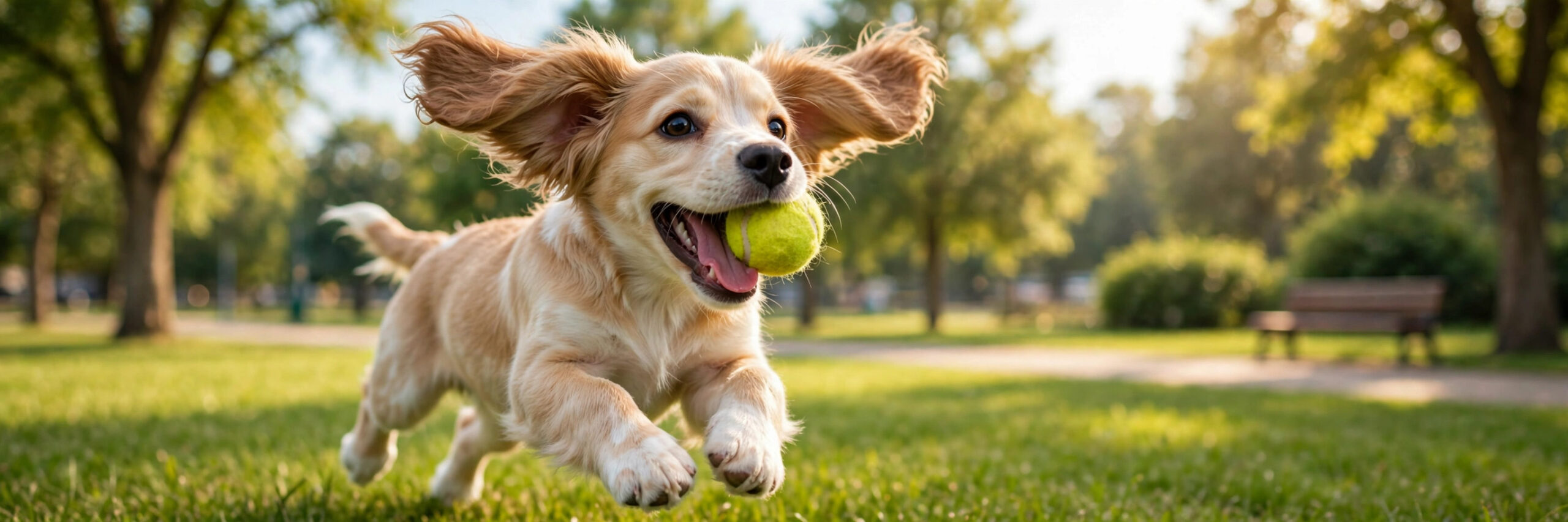
When your dog brings you a toy, a sock, or even an old slipper, they are sharing something precious with you. To a dog, their favourite toy is a treasure. Offering it to you is a sign of trust and affection, a bit like a child offering you their favourite teddy bear.
Dogs bring toys for a few reasons. Sometimes they want to play, sometimes they are greeting you, and sometimes they are simply showing you something they love. A dog who brings a toy with a loose, wiggly body and bright eyes is inviting you to share in their joy.
7. Sleeping Near You, or On You
Where a dog chooses to sleep says a lot about how they feel. Dogs are at their most vulnerable when they sleep, so a dog who sleeps near you, with their back against your leg, or curled up at the foot of your bed, is showing deep trust. They feel safe enough to let their guard down around you.
Some dogs sleep touching you. Others sleep nearby but not quite on top of you. Both are signs of love. A dog who sleeps with their belly up, legs in the air, is showing extra trust, because that position leaves their tummy exposed. Our guide on why your dog sleeps on their back explains what this relaxed position can mean.
8. Checking In With You on Walks
A dog who loves you will check in with you, even when the world is full of exciting smells. On a walk, they may glance back at you, come back to your side for a moment, or look up at your face before running off to sniff the next tree. In a new place, they may stay close and look to you for guidance.
This checking in is a lovely sign. It means your dog sees you as their safe base. They feel brave enough to explore because they know you are there. It is the same reason a small child runs off to play but keeps looking back to make sure a parent is still watching.
9. Signs That Look Like Love But May Mean Anxiety
Not every behaviour that looks like love is actually love. Some signs can also be signs of stress or anxiety, especially when they appear together or seem extreme. Knowing the difference helps you support your dog in the right way.
A dog who follows you everywhere and panics when you leave, even for a few minutes, may be showing separation anxiety rather than simple affection. Signs can include barking or howling when left alone, chewing door frames, toileting in the house despite being trained, drooling, or pacing. A dog who greets you frantically and cannot calm down for a long time may also be feeling overwhelmed rather than just happy.
10. Simple Ways to Show Your Dog You Love Them Back
Dogs show us love in their own way, and we can return it in ways they understand. You do not need expensive toys or grand gestures. Small, daily acts of kindness mean the most.
Keep routines steady. Regular meal times, walk times, and rest times help your dog feel calm and secure. Use gentle training and kind words, and reward the behaviour you like with treats, praise, or play. Avoid shouting or punishment, which can damage trust. And take care of their health: regular vet check-ups, a good diet, fresh water, and enough exercise are all acts of love.
What NOT to Do
Even with the best intentions, some common mistakes can confuse a dog or damage the trust between you.
Do not force cuddles. Not all dogs enjoy being hugged. Many find a tight hug stressful, even from someone they love. If your dog stiffens, turns away, or tries to move away, let them go. A dog who is free to move away will often come back on their own terms.
Do not punish affectionate behaviour. If your dog leans on you or brings you a toy, do not scold them. These are signs of trust. If a behaviour is a problem, such as jumping up on guests, teach an alternative calmly instead of punishing the dog for being affectionate.
Do not ignore sudden changes. If your dog suddenly stops showing affection, hides away, or becomes unusually clingy, do not assume it is just an off day. It can be a sign of pain, illness, or stress, so speak to your vet if it lasts more than a day or two.
When to See a Vet
Most of the signs in this article are normal and healthy, and they are nothing to worry about. But there are times when a change in your dog’s behaviour is a good reason to speak to your vet.
See your vet if your dog suddenly becomes very clingy or very distant, especially if the change lasts more than a day or two. See your vet if your dog shows signs of distress when left alone, such as howling, destructive behaviour, drooling, or toileting in the house. See your vet if your dog stops eating, drinks much more or much less water than usual, seems tired all the time, or shows signs of pain, such as limping or avoiding being touched.
Frequently Asked Questions
How do I know if my dog loves me the most?
Dogs often have a favourite person, usually the one who spends the most time with them, feeds them, walks them, and plays with them. Signs include following you around, greeting you with the most excitement, and choosing to sleep near you.
Does my dog love me if they are not cuddly?
Yes. Not all dogs are cuddly, and that does not mean they love you less. Some breeds are more independent, and some dogs prefer to show affection by staying near you rather than climbing on top of you.
Why does my dog stare at me with soft eyes?
A soft, relaxed gaze is often a sign of affection and trust. Research suggests gentle eye contact between dogs and their owners can raise oxytocin levels in both of them, which strengthens the bond.
Is it normal for my dog to follow me everywhere?
Yes, for most dogs it is completely normal. Dogs are social animals, and many simply prefer to be near their people. It only becomes a concern if your dog seems unable to settle or panics when you leave the room.
Can dogs feel love the way people do?
We cannot know exactly what a dog feels inside, but scientists have found that dogs have similar brain responses to people when they see or smell someone they love. Their oxytocin levels rise during gentle eye contact, they seek out their owners for comfort, and they choose to be near the people they trust.
Conclusion
Your dog loves you in a hundred small ways every day. In the soft gaze across the room, the full-body wag when you walk through the door, the warm weight of a dog leaning against your leg, the toy placed hopefully at your feet, and the quiet choice to sleep beside you when the house is still.
If you have ever wondered whether your dog loves you, look at the evidence around you. The dog who follows you, greets you, leans on you, and chooses your side of the sofa has already answered the question. They love you. And the more you notice it, the more you will see it, every single day.