
It is a quiet evening, your cat is curled up beside you, and then you hear it — a small, soft chirp that repeats every few seconds. It sounds a little like a hiccup, and your first thought is probably the same one every cat owner has: “Wait, can cats even get hiccups?”
The answer is yes. Cats can get hiccups, just like people and dogs do. Most of the time, a hiccuping cat is nothing to worry about at all. The little spasm passes on its own in a few minutes, and your cat goes right back to napping, playing, or asking for dinner as if nothing happened.
But sometimes a cat owner is right to pause and watch a little more closely. Hiccups that keep coming back, last too long, or show up alongside other symptoms can be a sign of something else going on. This guide covers what cat hiccups are, what may cause them, how to tell them apart from coughing or gagging, and when it is time to call your vet.
What Causes Hiccups in Cats?
There is no single cause of hiccups in cats. In most cases, something has briefly irritated the diaphragm or the nerves that control it. Here are the most common possible causes.
Eating Too Fast or Swallowing Air
This is one of the most common reasons a cat hiccups. When a cat gulps down food quickly, it swallows extra air along with each bite. That trapped air can irritate the diaphragm and set off a bout of hiccups. Cats that compete for food with other pets, or get very excited at mealtime, are more likely to eat quickly and swallow air. A very full stomach can also press on the diaphragm, so overeating can trigger hiccups too.
Hairballs
Hairballs are a part of life for most cats, especially long-haired breeds and cats that groom themselves often. When a cat swallows a lot of loose fur, it can build up in the stomach and irritate the digestive tract, which can sometimes lead to hiccups as the body tries to move the hairball along. If your cat hiccups and then coughs up a hairball, the two are likely connected.
Kittens Are More Prone
Kittens get hiccups more often than adult cats, and this is usually completely normal. A kitten’s nervous system is still developing, and the nerves that control the diaphragm can be a little more excitable than in an adult cat. Kittens also tend to eat quickly and play hard, both of which can bring on hiccups. Most kittens grow out of frequent hiccups as they get older.
Excitement and Stress
A burst of excitement, such as a vigorous play session, or a stressful moment, such as a vet trip or a new visitor, can change the way your cat breathes. Fast, shallow breathing can irritate the diaphragm and trigger hiccups. This type of hiccup usually stops once your cat calms down and their breathing returns to normal.
Sudden Temperature Changes and an Upset Stomach
Drinking very cold water or eating cold food straight from the fridge can sometimes trigger hiccups in sensitive cats. Letting wet food warm up to room temperature before serving is a simple way to avoid this. Mild stomach upset — from a new food or a small dietary change — can also sometimes cause hiccups, which usually pass once the stomach settles.
How to Tell Hiccups Apart From Coughing and Gagging
One of the trickiest parts is that hiccups can look and sound similar to coughing and hairball gagging. Knowing the difference matters, because coughing can be a sign of something that needs attention.
Hiccups are rhythmic and regular. Your cat’s body will give a small, even jerk every few seconds, and the sound is usually a soft chirp or squeak. Your cat will look relaxed, their body posture stays normal, and the episode ends on its own after a short time.
Coughing and Hairball Gagging
A cough is harsher and more forceful than a hiccup. A coughing cat often crouches low, stretches its neck out, and makes a sharp hacking sound in strained bursts. If you are unsure which one you are hearing, it is worth reading about why cats cough and what it could mean. Hairball gagging is different again: the cat hunches forward and makes repeated retching sounds, usually ending with a hairball, while hiccups simply fade away on their own.
How to Help Your Cat When They Hiccup
Most of the time, you do not need to do anything at all — the hiccups will pass on their own in a few minutes. But there are a few gentle things you can do to help your cat feel comfortable and to reduce the chances of hiccups happening again.
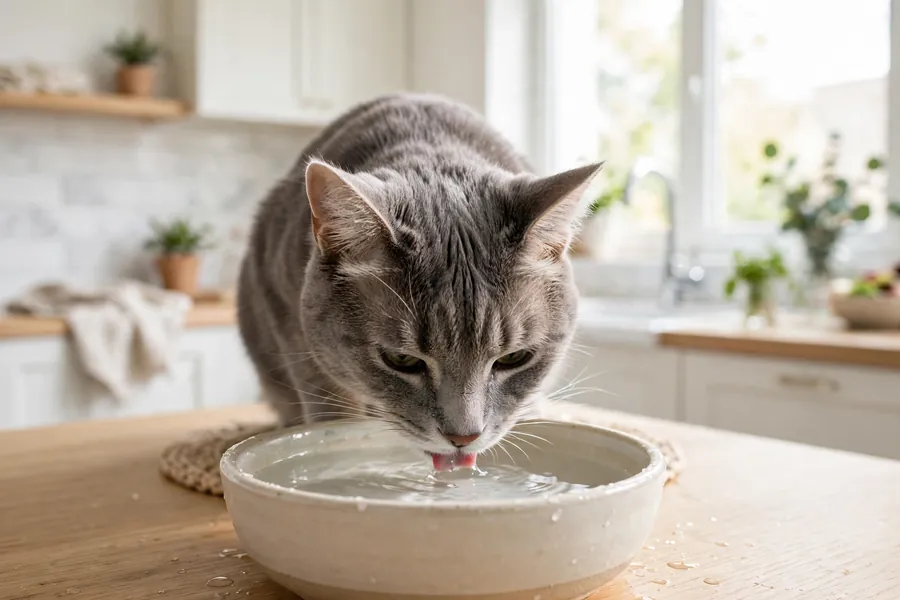
Offer a Small Sip of Water
A few small sips of fresh water can sometimes help a bout of hiccups pass. Do not force your cat to drink — just make sure a clean bowl of water is nearby and let them drink if they want to.
Slow Down Mealtimes
If your cat often hiccups after eating, the problem may be that they are eating too quickly. A slow-feeder bowl or a lick mat can help your cat eat at a gentler pace. You can also try splitting their daily food into three or four smaller meals instead of one or two large ones.
Keep Hairballs Under Control
Regular brushing is one of the easiest ways to reduce hairballs. Brushing removes loose fur before your cat can swallow it, which means less fur in the stomach and less irritation. For long-haired cats, a daily brush is ideal. For short-haired cats, a few sessions a week are usually enough.
Create a Calm Mealtime Space
If your cat rushes through meals because other pets are nearby, try feeding your cats in separate rooms or at different times. A calm, quiet feeding spot helps your cat eat slowly and comfortably, and that alone can cut down on post-meal hiccups.
Watch for Patterns
Keep a simple mental note of when the hiccups happen. Do they follow meals or play? Do they come with any other signs, such as vomiting or a change in appetite? A pattern can help you and your vet work out what might be behind the hiccups if they keep happening.
Interestingly, dogs can get hiccups for many of the same reasons — eating too fast, excitement, and swallowing air. If you also share your home with a dog, you may find it helpful to read about why dogs get hiccups and how to help them stop.
What NOT to Do
When your cat hiccups, it is tempting to try the same tricks people use on each other. But most human hiccup remedies are not safe or helpful for cats. Here is what to avoid.
Do Not Scare Your Cat
Scaring a cat to stop hiccups is a bad idea. A sudden fright can stress your cat, damage their trust in you, and may even trigger more hiccups.
Do Not Hold Your Cat’s Mouth or Nose
Never cover your cat’s nose or mouth, hold their breath, or try to force them to swallow. This can cause panic and breathing trouble, and it will not stop the hiccups.
Do Not Give Human Medicine
Never give your cat any medicine meant for people, including hiccup remedies or antacids, unless your vet has specifically told you to. Many human medicines are toxic to cats, even in small amounts.
Do Not Force Food or Water
Do not try to make your cat eat or drink to stop the hiccups. Forcing food or water can cause choking. Let your cat decide what they want.
Do Not Ignore Ongoing Hiccups
A single short episode is almost always fine. But hiccups that last a long time, keep coming back every day, or show up with other symptoms should not be brushed aside. If you are ever unsure, a quick call to your vet is always the right move.
When to See a Vet
Most cat hiccups are harmless and pass quickly. But there are clear signs that mean it is time to get professional advice. Contact your vet if you notice any of the following.
Hiccups That Last Over an Hour
A bout of hiccups that goes on for more than an hour is unusual. Short episodes are normal, but an hour of continuous hiccups is a sign that something may be irritating the diaphragm, and it deserves a check.
Hiccups That Happen Every Day
Hiccups once in a while are normal, especially in kittens. But if your cat is hiccuping every day, or several times a day, mention that pattern to your vet. Daily hiccups can be a clue that something ongoing is irritating your cat’s stomach, chest, or nerves.
Hiccups With Other Symptoms
See your vet promptly if hiccups come with vomiting, coughing, wheezing, or fast or difficult breathing. Breathing trouble is always urgent in cats — if your cat seems to be gasping, breathing with their mouth open, or struggling for air, seek veterinary care right away. Also contact your vet if hiccups appear alongside a loss of appetite, weight loss, or unusual tiredness, hiding, or low energy. The same applies if your cat already has a health condition such as asthma or a digestive disorder — mention frequent hiccups to your vet even if the episodes seem short.
When you call your vet, it helps to have a few details ready: how long the hiccups lasted, how often they happen, whether they follow meals or play, and whether you have noticed any other signs. A short video of the episode can also be very helpful.
If your cat is also sneezing often, that is another symptom that can look minor but sometimes needs attention. You can learn more about why cats sneeze and what it could mean.
FAQ
Can cats get hiccups?
Yes, cats can get hiccups. A hiccup is an involuntary spasm of the diaphragm, and cats have a diaphragm just like people and dogs do. In cats, hiccups often sound like a soft chirp or a small squeak, and you may see your cat’s belly give a gentle jerk with each one. Most episodes are harmless and pass within a few minutes.
Are cat hiccups normal?
In most cases, yes. Occasional hiccups are normal in cats, and they are especially common in kittens, whose nervous systems are still developing. Hiccups after eating quickly, after a burst of play, or after a hairball are all common and usually nothing to worry about. It is only when hiccups last a long time, happen every day, or come with other symptoms that they may be a sign of something that needs a vet’s attention.
How long do cat hiccups last?
A typical bout lasts a few seconds to a few minutes, and most episodes stop on their own without any help. If your cat has been hiccuping for more than an hour, or the hiccups keep coming back throughout the day, contact your vet for advice.
Why does my kitten hiccup so much?
Kittens hiccup more often than adult cats because their nervous systems are still developing, which can make the nerves controlling the diaphragm more excitable. Kittens also tend to eat fast and play hard, both of which can trigger hiccups. Most kittens hiccup less as they grow older. As long as the hiccups are short and your kitten is eating, playing, and growing normally, there is usually nothing to worry about.
Should I be worried if my cat hiccups after eating?
Hiccups right after a meal are very common and usually happen because your cat ate too quickly or swallowed air while eating. Try a slow-feeder bowl or smaller, more frequent meals. But if post-meal hiccups happen every day, last a long time, or come with vomiting, a loss of appetite, or lethargy, talk to your vet.
Conclusion
Hearing your cat hiccup for the first time can be surprising, but in most cases it is just a small, harmless quirk of a healthy cat. A soft chirp after dinner, a few little jerks after a wild play session, or a short spell in a young kitten — these are all normal parts of cat life, and they almost always pass on their own within minutes.
The most important thing you can do is simply pay attention. Learn what your cat’s hiccups look and sound like, notice when they happen, and keep an eye out for anything that changes. A calm mealtime routine, regular brushing, and a relaxed home will prevent many of the most common triggers.
And trust your instincts. You know your cat better than anyone. If the hiccups last too long, keep coming back, or show up with vomiting, coughing, breathing trouble, or a change in appetite or energy, do not wait — call your vet. A quick check is always better than worrying.
Most of the time, though, your cat will hiccup, look up at you as if nothing happened, and go straight back to napping in a sunbeam.