
You reach down to boop your cat’s nose, and it feels warm and dry instead of cool and damp. Your heart sinks a little. Is your cat sick?
Take a slow breath. In most cases, a dry nose on its own is completely normal. A cat’s nose changes from wet to dry many times during the day. A dry nose does not automatically mean your cat is ill, and a wet nose does not automatically mean your cat is healthy. This guide explains what is normal, what is harmless, and when a dry nose is worth a call to your vet.
How a Cat’s Nose Normally Works
A healthy cat’s nose is often cool and a little damp, but not dripping wet. That dampness comes from tiny sweat glands in the nose, fluid from the tear ducts, and regular licking. A damp nose helps scent particles stick to it, so your cat can smell better, and it helps cool the air your cat breathes in.
When the nose is dry for a little while, it does not mean it has stopped working. It usually just means something in the moment has changed. Think of your own lips: sometimes they feel soft, and sometimes they feel dry after a nap or a sunny day. Your lips are not broken. A cat’s nose works in much the same way.
The Old Myth: “Dry Nose Means a Sick Cat”
Many owners grew up hearing that a wet nose means a healthy cat and a dry nose means a sick cat. It sounds like a handy test, but it is not true. Vets say nose wetness alone is a poor way to judge health. A very sick cat can have a wet nose, and a perfectly healthy cat can have a dry nose.
Look at the whole cat instead. Is your cat eating normally, drinking water, moving around as usual, and using the litter box normally? If the answer is yes, and the only change is a dry nose, there is usually nothing to worry about. The myth probably started because a fever can sometimes make a nose feel warmer and drier. But fever almost always comes with other signs, like tiredness, hiding, or not eating.
7 Harmless Reasons Your Cat’s Nose Is Dry
1. Your Cat Was Just Sleeping
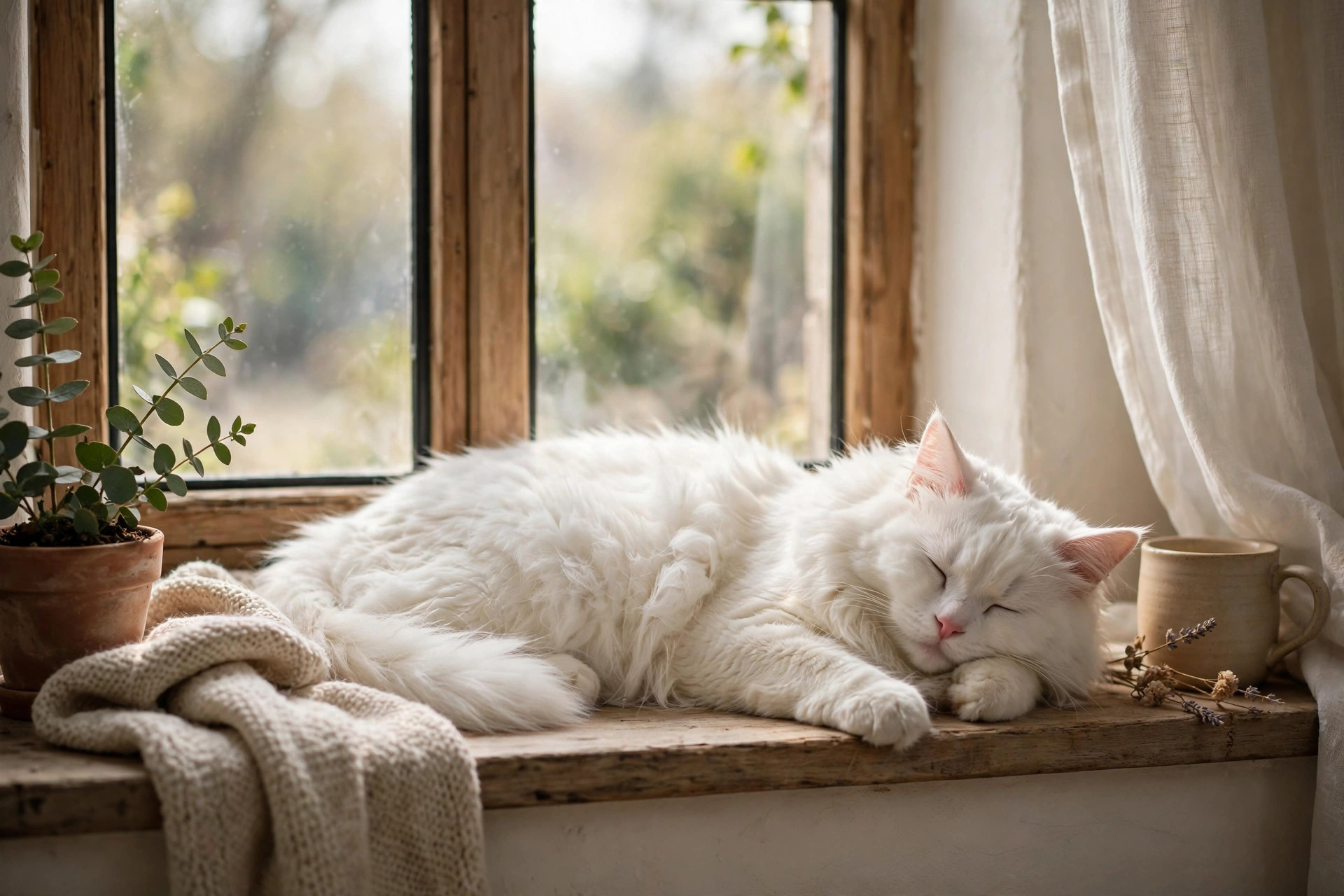
This is the most common reason. While your cat sleeps, it stops licking its nose, so the moisture dries up. The nose may also feel warmer after curling up under a blanket. Wait 20 to 30 minutes after your cat wakes up. Once it stretches, grooms, and licks its nose again, the dampness usually returns on its own.
2. Sunbathing or a Warm Room
Cats love sunny windowsills, heaters, and cosy blankets, and all of them can dry out a nose. Once your cat moves to a cooler spot and has a drink, the nose usually goes back to normal. This is why owners notice dry noses more in summer, and in winter when the heating is on all day.
3. Low Indoor Humidity
Heating in winter and air conditioning in summer pull moisture out of the air in your home. That dry air can dry out your cat’s nose, just as it dries out your own skin and lips. A bowl of water in the room, or a humidifier if you have one, can help both you and your cat.
4. Your Cat Has Not Been Grooming as Much
Cats groom many times a day, and grooming keeps the nose moist. If your cat has been playing, exploring, or sitting still for a long time, it may not have licked its nose recently. Older cats may groom less because their joints feel stiff, which can also leave the nose a little drier, even though nothing is wrong.
5. Natural Individual Variation
Some cats naturally have a wetter nose, and some naturally have a drier one. Breed, age, and nose shape can all play a part. What matters most is what is normal for your cat. If your cat’s nose has always been on the dry side, and your cat is happy, eating, and active, that is probably just how your cat is.
6. Older Age
As cats get older, their skin and noses can become a little drier, just like our skin does with age. An older cat may also drink less, sleep more, and groom less. A dry nose in a senior cat is not a problem on its own. What matters is whether your older cat is still eating well, drinking, and moving around. If you are learning to spot discomfort in an older cat, our guide on how to tell if your cat is in pain can help you know what to watch for.
7. Not Drinking Enough Water
If your cat has not had a drink for a while, or if it is a hot day, the nose may feel drier. This does not always mean serious dehydration. It can simply mean your cat needs a fresh drink. Keep clean, fresh water available at all times, and try a wide, shallow bowl or a pet water fountain — some cats drink much more from running water. Wet food can also help, because it contains a lot of water. If your cat loves taps and sinks, here is why so many cats drink from the faucet and how to use that habit to keep them hydrated.
When a Dry Nose Might Mean Something More
A dry nose alone is rarely a reason to worry, but a dry nose plus other changes can be a useful clue. Possible causes that deserve a closer look include a mild cold, allergies, a fever, or dehydration. In these cases, the nose is rarely the only thing that changes. You may also notice sneezing, a runny nose, watery eyes, a change in appetite, or unusual tiredness.
Watch for nasal discharge. A little clear moisture is normal, but thick, yellow, green, or bloody discharge is not, and it should be checked by a vet. The same goes for a nose that is cracked, crusty, sore, or bleeding. A healthy nose should look smooth, even if it feels dry at times.
Sunburn can also affect a cat’s nose, especially in cats with pink or pale noses and in hairless breeds. Too much strong sun can make the nose red, sore, or flaky, so make sure your sun-loving cat always has shade. Frequent sneezing with a dry nose is also worth noting, as it can point to irritation or infection. Our guide on why your cat keeps sneezing explains the possible causes and what to do next. This article cannot diagnose your cat — it can only help you notice possible signs and decide when a vet visit is a good idea.
Simple, Practical Tips to Help Your Cat
Keep fresh water available at all times. Change it daily, wash the bowl regularly, and try a second bowl in another room. A water fountain can help cats that prefer moving water.
Keep the air in your home comfortable. If heating or air conditioning makes the air very dry, a humidifier can help. Let your cat choose its resting spots: a sunny windowsill is fine, as long as a cool, shaded spot is nearby too.
Brush your cat gently a few times a week. It helps the coat and skin, and it gives you a chance to notice changes early. Finally, watch the whole cat, not just the nose. Once a day, notice whether your cat is eating, drinking, playing or resting normally, and using the litter box. Those daily habits tell you far more than a quick touch of the nose. Do not try to wet the nose yourself, and do not apply creams or oils unless your vet has told you to.
What NOT to Do
Do not apply Vaseline, petroleum jelly, human hand lotion, lip balm, or any moisturiser to your cat’s nose unless your vet has specifically told you to. Cats lick their noses often, so anything you apply will almost certainly be swallowed, and many human products are not safe for cats to swallow.
Do not use essential oils on or near your cat’s nose. Many, including tea tree, peppermint, lavender, and eucalyptus oils, can be harmful or toxic to cats, and their strong smell can irritate a sensitive nose.
Do not force water into your cat’s mouth, and do not keep wiping the nose with a damp cloth. This only stresses your cat, and stress can make a cat eat less and hide more. Do not use human nasal spray, eye drops, or any medicine made for people — only a vet can decide what is safe for your cat. And do not rely on home remedies found online. If a tip tells you to put something on your cat’s nose, check with your vet first.
When to See a Vet
A dry nose on its own, with a happy, eating, active cat, usually does not need a vet visit. Contact your vet promptly if you notice any of the following, especially if more than one appears at the same time.
Call your vet if the nose is cracked, crusty, sore, bleeding, or has sores that do not heal. Call if there is coloured nasal discharge, frequent sneezing or coughing, or watery, sticky eyes. Call if your cat seems lethargic — unusually tired, weak, or unwilling to move or play — or hides much more than usual.
Call if your cat stops eating or eats much less than usual for more than a day. Loss of appetite is one of the most important warning signs in cats. Call if your cat is vomiting, has diarrhoea, or shows signs of fever, such as warm ears or shivering. Call if your cat is drinking much more or much less water than usual, or is not urinating normally.
And call if you simply feel worried. You know your cat better than anyone, and a short phone call can give you peace of mind. When you call, note when you first saw the dry nose, whether your cat is eating and drinking normally, whether there is sneezing or discharge, and whether energy and behaviour have changed.
FAQ
Is a dry nose normal for cats?
Yes, in most cases. A cat’s nose changes from wet to dry many times a day. Sleeping, sunbathing, warm rooms, and dry indoor air can all make it feel dry. If your cat is eating, drinking, playing, and behaving normally, a dry nose on its own is usually nothing to worry about.
Should I worry if my cat’s nose is dry after sleeping?
No. While your cat sleeps, it stops licking its nose, so the moisture dries up. Wait 20 to 30 minutes after your cat wakes up. Once it grooms and licks its nose again, the nose usually becomes damp again on its own.
Can a dry nose mean my cat is dehydrated?
It can be one small possible sign, but not proof on its own. Make sure fresh water is always available, and watch for other signs such as very dry gums, tiredness, or not eating. If you are worried about dehydration, contact your vet for advice.
Can I put Vaseline or lotion on my cat’s dry nose?
No, not without your vet’s guidance. Cats lick their noses often, so anything you apply will likely be swallowed. Many human moisturisers, Vaseline, lip balms, and essential oils are not safe for cats. If the nose looks cracked or sore, ask your vet what is safe to use.
When should I take my cat to the vet for a dry nose?
If the dry nose comes with cracking, crusting, sores or bleeding, coloured nasal discharge, frequent sneezing, lethargy, loss of appetite, vomiting or diarrhoea, or a fever. A dry nose alone, with a happy and active cat, usually does not need a visit, but a quick call to your vet can help you feel sure.
Conclusion
A dry nose on its own is usually normal. It can change with sleep, sun, warm rooms, dry air, age, and the time of day. Let go of the old myth that a dry nose always means a sick cat, and look at the whole cat instead. A cat that eats well, drinks fresh water, and rests happily is almost certainly fine, even if its nose feels dry after a long nap in the sun.
Keep fresh water available, keep the air comfortable, and take a quiet moment each day to notice how your cat is doing. Those simple habits do more than any cream or quick fix. And if you ever feel unsure, trust your instincts and call your vet. Give your cat a gentle pat, a fresh bowl of water, and a cosy spot to nap in — chances are, by the time it wakes up, that little nose will be cool and damp again.