
You are lying in bed, cozy under your warm blanket, when suddenly — CHOMP. Something sharp grabs your foot from under the covers. You jolt, pull your feet up, and then it happens again: your cat is attacking your feet under the blanket, and it is not gentle.
If this sounds familiar, you are not alone. Almost every cat owner has experienced this strange and slightly painful nighttime ritual. Your cat is not being mean, and they are not punishing you. In most cases, they are simply being a cat. Blanket-foot attacks are usually playful, instinct-driven behavior — but they can be annoying, and in some cases they need a little attention.
This guide explains why your cat attacks your feet under the blanket, what you can do to stop it, and when it might be worth mentioning to your vet.
Your Cat Thinks Your Feet Are Prey
The number one reason cats attack feet under the blanket is that your moving toes look like prey. A wiggling lump under the covers is basically a cat’s dream target. In the wild, cats hunt small animals that move under grass, leaves, and snow. Your feet shifting under the blanket trigger that same hunting instinct.
Your cat is not trying to hurt you. They are practicing the hunting skills their instincts tell them to use. The pounce, the grab with the paws, the “bunny kick” with the back legs, the little bite — this is exactly how a cat would handle a mouse in the grass.
What to do: Give your cat better things to hunt. A 10–15 minute play session before bed with a wand toy or feather teaser lets your cat “hunt,” “catch,” and “kill” something that is not your foot. This wears them out and satisfies the urge. Many owners find that a good evening play session dramatically cuts down on nighttime foot attacks.
They Are Bored and Your Bed Is the Most Exciting Place
Cats that do not get enough mental and physical stimulation during the day will find their own entertainment — and a warm human under a moving blanket is very entertaining. If your cat naps all day while you are at work and then gets restless at night, your feet become the evening show.
What to do: Add more play and enrichment to your cat’s daily routine. Puzzle feeders, rotating toys, cardboard boxes, and window perches all give your cat something to do besides plot foot ambushes. Even small changes, like moving a toy to a new spot each day, can keep an indoor cat mentally engaged. A well-stimulated cat is far less likely to treat your blanket like a hunting ground. For more ideas, check out these 15 simple ways to keep your indoor cat happy and active — many of them take only a few minutes to set up.
The Warmth and Movement Combination Is Irresistible
Cats love warm spots, and your feet under a blanket are warm, soft, and moving. That combination is hard for a cat to ignore. Many cats start by snuggling near your feet for the warmth and then get tempted by the movement. What begins as a cuddle can quickly turn into a sneak attack.
What to do: Give your cat their own warm, cozy spot near you. A heated cat bed or a soft blanket placed at the foot of your bed (on top, not under) can redirect the snuggling instinct away from your feet. If your cat insists on being close, try gently guiding them to their spot with a treat when they settle there.
They Want Your Attention
Some cats learn very quickly that biting feet under the blanket gets an instant reaction. You yell, you move, you laugh, you shove them off — and to a cat, any reaction is attention. If your cat feels lonely or wants to play and you are ignoring them, a foot attack is a guaranteed way to get you to respond.
This is more common in single cats who do not have a feline companion, and in cats whose owners are busy during the day.
What to do: Make sure your cat gets quality one-on-one time with you every day, especially in the evening. Cats are social creatures, even the independent ones. If your cat follows you everywhere, they may be telling you they want more together-time — and a few extra minutes of petting or play can reduce attention-seeking ambushes at night.
Your Cat Is Overstimulated
Sometimes a foot attack is not about hunting at all — it is about overstimulation. You have been petting your cat on the bed, they were purring and happy, and then suddenly the teeth come out. Or your feet move just a little too much, the excitement builds, and your cat crosses the line from play into overarousal.
Signs of overstimulation include a twitching tail, flattened ears, dilated pupils, and skin rippling along the back. If you see these signs, an attack may be coming.
What to do: Learn to read your cat’s body language and give them space when you see the warning signs. Keep your feet still when your cat is in a hyped-up state. If an attack starts, freeze instead of pulling away — pulling away triggers the chase instinct and makes the attack worse. Once your cat lets go, calmly walk away and give them a few minutes to cool down.
They Are Anxious or Stressed
A stressed cat may act out in unexpected ways, including aggressive play. Changes in the household — a new pet, a new baby, moving furniture, guests, loud noises — can raise your cat’s stress levels. Foot attacks can become a way of releasing pent-up nervous energy.
What to do: Look for recent changes that might be stressing your cat and try to give them extra calm, predictable routine. A quiet hiding spot, like a box or a covered bed, helps anxious cats feel safe. Keep your daily routine as consistent as possible — cats find comfort in predictability. If the foot attacks started right after a big change in the home, that timing is a useful clue.
What NOT to Do When Your Cat Attacks Your Feet
It is tempting to fight back, but the wrong response makes the problem worse. Here is what to avoid:
Do not punish your cat. Yelling, spraying water, hitting, or throwing your cat off the bed does not teach them anything. It only damages trust and can increase stress-related behavior. Your cat does not connect the punishment with the foot attack — they just learn that you are scary.
Do not pull your feet away quickly. Fast movement looks exactly like escaping prey, which triggers your cat to bite harder and hold on tighter. Instead, go still. When the “prey” stops moving, it becomes boring, and most cats will let go.
Do not play with your feet as toys. Wiggling your toes at your cat to be funny teaches them that feet are fair game. Keep play with toys, not body parts. This also applies to hands — if you let your cat wrestle your hands during playtime, do not be surprised when feet get the same treatment.
Do not chase your cat after an attack. Chasing turns the whole thing into a game and rewards the behavior. The cat learns: bite feet → fun chase happens. Instead, calmly leave the room if needed, or simply go still and ignore them until they lose interest.
Do not ignore the problem for months. If foot attacks are becoming more frequent, more intense, or are breaking the skin, do not just put up with it. Address it early with more play and enrichment, and mention it to your vet if it escalates.
When to See a Vet
Most blanket-foot attacks are normal playful behavior. But in some cases, a sudden change in behavior is worth a vet visit. Contact your vet if you notice any of the following:
- The attacks started suddenly in an adult cat that never did this before
- The biting is hard enough to break the skin or draw blood regularly
- The aggression is spreading to other situations — your cat is also biting or scratching at other times of day
- Your cat seems to be in pain (hiding, not eating, limping, crying when touched)
- There are other behavior changes, like excessive meowing at night or loss of appetite
- You suspect the aggression could be pain-related — cats in pain can become defensive and reactive
A vet can check for underlying medical issues like pain, dental problems, skin irritation, or neurological concerns that might be making your cat more irritable. They can also refer you to a feline behaviorist if the issue is behavioral. Never try to diagnose the cause yourself, and never give your cat any calming medication or supplement without your vet’s guidance.
Frequently Asked Questions
Why does my cat only attack my feet at night and not during the day?
Cats are naturally most active at dawn and dusk (crepuscular), and many indoor cats get a burst of energy in the evening. During the day you are moving around and interacting with them, but at night you are still and your feet are under a moving blanket — the perfect storm of temptation. An evening play session before bed usually helps a lot.
Is it normal for kittens to attack feet under the blanket?
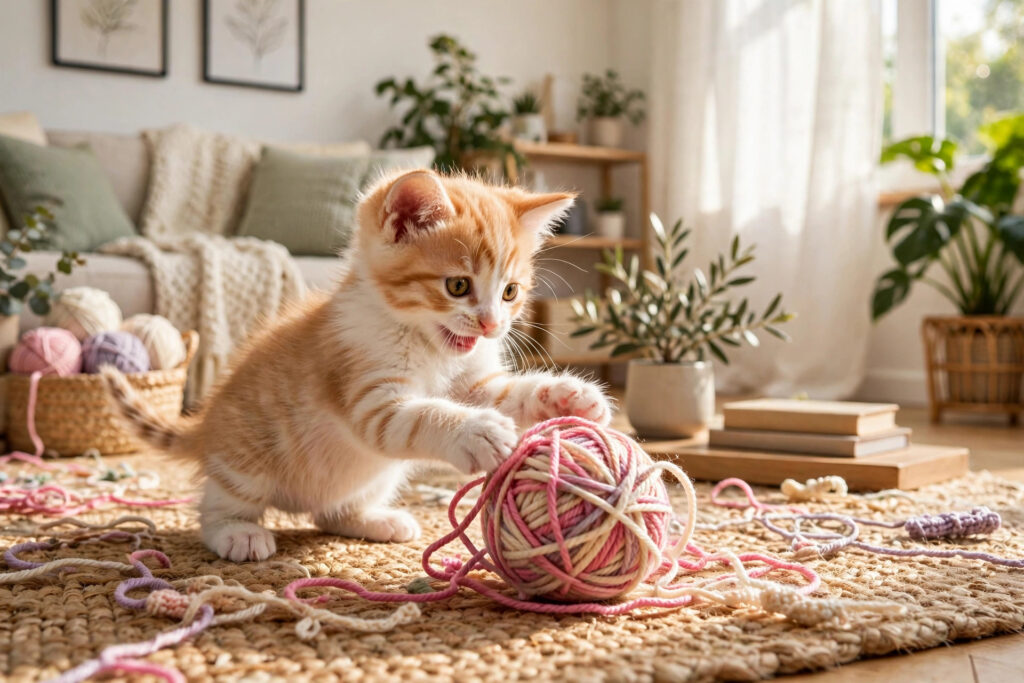
Yes, it is extremely normal. Kittens have enormous energy and are learning how to hunt through play. Foot attacks in kittens almost always fade as they grow older, especially if you consistently redirect the play to toys and avoid rewarding the behavior. The habits you build during kittenhood stick, so it is worth teaching early that feet are not toys.
Should I shut my cat out of the bedroom to stop foot attacks?
Closing the bedroom door can work as a short-term solution, but it does not fix the root cause — and it can cause other problems. Some cats become more stressed or start scratching the door and meowing, which is worse than the foot attacks. It is better to address the behavior with more play and enrichment first. If you do need to close the door temporarily, make sure your cat has food, water, a litter box, and comfortable sleeping spots elsewhere.
Does my cat attack my feet because they are angry at me?
Almost certainly not. Cats do not hold grudges the way people imagine. What looks like “anger” is usually play, overstimulation, boredom, or anxiety. True aggression in cats is rare and usually fear- or pain-based. If your cat is otherwise affectionate — headbutting, purring, slow blinking — the foot attacks are play, not hostility. Learning to read the signs your cat actually loves you can help you tell the difference between playful nips and genuine distress.
Will getting a second cat stop the foot attacks?
Sometimes, yes. A playmate gives a lonely cat someone to wrestle with, which can reduce attacks on your feet. But it is not a guaranteed fix — some cats are perfectly happy solo, and introducing a new cat is a big decision that needs to be done carefully. It should be a decision made for the right reasons, not just to solve foot attacks. If you are considering it, read up on how to introduce a new kitten to an older cat before taking the plunge.
Conclusion
Your cat attacking your feet under the blanket is one of those quirky behaviors that is annoying in the moment but actually makes perfect sense once you understand it. Your feet are warm, they move, and they hide under a blanket — to your cat, that is basically the most exciting thing in the house. The behavior is almost always playful, not mean.
The fix is usually simple: more play, more enrichment, and calmer reactions from you. A tired cat with plenty of toys is a cat that lets you sleep in peace. Be patient with the process — habits take a few weeks to change — and stay consistent. Your cat is not trying to ruin your sleep. They just need a little help finding better things to hunt than your toes.
Sweet dreams, and may your feet survive the night.