
If you have ever woken up at 3 a.m. to the sound of your cat howling down the hallway, you are not alone. Night-time meowing is one of the most common complaints from cat owners — and one of the least understood.
The good news: in most cases, night meowing is normal cat behaviour with a simple explanation. Cats are naturally most active at dawn and dusk, while we are built to sleep through the night. That schedule mismatch is the root of the whole problem.
Why Cats Are Noisy at Night in the First Place
Cats are crepuscular — wired to be most awake and active around sunrise and sunset. In the wild, this is when their prey is most active, so their hunting instinct kicks in right around the hours you are trying to sleep. Indoor cats carry the same instincts, just with nowhere to spend that energy. If your cat sleeps most of the day, she wakes up in the evening with a full battery and a strong urge to hunt, explore, and vocalise.
Age also plays a role. Kittens under a year old are famously chatty at night. Senior cats may start meowing more at night because of changes in vision, hearing, or sleep patterns.
Common Reasons Your Cat Meows So Much at Night
1. She is bored or has excess energy
This is the number-one cause. A cat who sleeps all day and has little stimulation in the evening arrives at bedtime wide awake. What to try: Schedule an active play session of 10–15 minutes about an hour before your bedtime — a wand toy “hunt,” then a small meal to mimic the natural hunt-eat-groom-sleep cycle. Adding variety with new indoor cat enrichment ideas can help burn that extra energy before lights-out.
2. She is hungry
Some cats learn that meowing at night gets them food. What to try: Offer a satisfying meal or a small portion of high-protein wet food right before bed. A timed automatic feeder set for an early-morning meal breaks the habit of waking you up for breakfast.
3. She wants attention or company
Cats that follow you everywhere during the day do not stop needing company at night. Give her extra attention in the evening, or leave a worn piece of your clothing near her sleeping spot. Letting her sleep with you often solves the problem instantly.
4. It is mating season behaviour
Unspayed female cats in heat are famously loud at night; unneutered males may vocalise and pace. The long-term fix is spaying or neutering — talk to your vet about timing.
5. Changes in the home or routine
A new home, new baby, new pet, or even rearranged furniture can make a cat feel unsettled. Keep routines predictable, give her safe hiding spots, and try a pheromone diffuser during transitions.
6. Age-related changes (senior cats)
Cats over 10 years old sometimes vocalise more at night because of fading vision or hearing, or disrupted sleep cycles. Leave a soft night light on and keep her sleeping area warm and easy to reach.
7. She might not feel well
A sudden change in vocalising can be a sign that something feels off. Pain, thyroid issues, high blood pressure, and other health changes can make cats restless and vocal at night — especially in older cats or when the meowing comes with appetite loss, weight changes, or different litter box habits. Watch for patterns, then check the “When to See a Vet” section below.
Practical Tips to Quiet the Night Meowing
- Play before dinner. A 10–15 minute hunt-style play session in the evening, followed by her main meal.
- Feed a bedtime snack. A small portion right before you go to bed helps her settle.
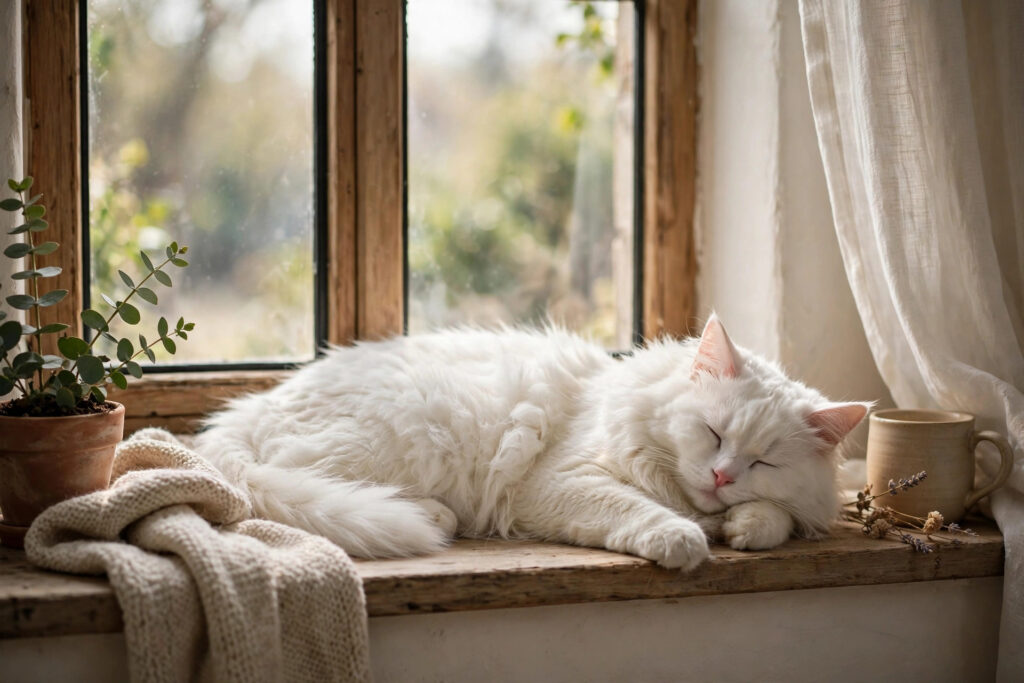
- Set up a sleep-friendly spot. A cosy bed, warm blanket, and quiet corner — ideally with a night light if she is older.
- Keep the routine consistent. Same play time, same feeding time, same bedtime.
- Try background sound. Soft music or white noise also masks outdoor sounds that can trigger meowing.
- Do not change the rules halfway through. Mixed signals make the meowing worse.
What NOT to Do
- Do not yell or spray water at your cat. Punishment increases anxiety — and anxiety increases vocalising.
- Do not lock her in a room without warning. Suddenly shutting a cat out of the bedroom usually leads to louder yowling at the door.
- Do not get up to feed her every time she meows. One 4 a.m. feeding teaches her that the system works.
- Do not ignore a sudden behaviour change. If a normally quiet cat suddenly starts crying at night, a vet check is the safe move.
- Do not add a second cat as a quick fix. A companion can help a lonely cat, but it can also double the noise if the introduction goes badly.
When to See a Vet
Night meowing alone is rarely an emergency, but book a vet visit if: the meowing started suddenly and is much louder than before; your cat is over 10 and the behaviour is new or worsening; she shows other changes (eating less, drinking more, losing weight, vomiting, sneezing more than usual, litter box changes, unsteadiness); she seems confused or disoriented; she appears to be in pain. If you have noticed extra sneezing alongside the vocalising, it is worth mentioning, since things like cat sneezing causes can sometimes overlap with restlessness at night.
Frequently Asked Questions
Why does my cat meow at 3 a.m. every night?
Around 3–4 a.m. is when a cat’s natural activity peak overlaps with the quietest part of the night. A late-evening play session plus a bedtime snack usually shifts this schedule.
Should I let my cat sleep in my bedroom?
For many owners, yes — it is the simplest fix. Cats that meow at night mostly want company, and sleeping nearby solves it.
Will getting a second cat stop the night meowing?
It can help if loneliness is the cause, but it is not guaranteed. Only adopt a second cat if you genuinely want one, and introduce them gradually.
Why is my senior cat suddenly yowling at night?
Older cats may vocalise more at night because of fading vision or hearing, disrupted sleep cycles, or confusion in the dark. A soft night light, an easily reachable bed, and a vet check-up are the best first steps.
How long does it take to stop night meowing?
With a consistent routine — evening play, bedtime feeding, and no rewards for night-time crying — most owners notice improvement within one to two weeks.
The Bottom Line
A cat that meows at night is usually just being a cat — active when her instincts say to be active, and asking for the things she wants: food, play, or you. The hunt-play-eat-sleep routine, a consistent schedule, and a cosy sleeping spot resolve the problem for most households. And remember the one exception: a sudden, loud change in a cat who was previously quiet — especially a senior — deserves a vet visit rather than a wait-and-see approach.