
That Awful “Present” on Your Doorstep
You wake up, open the front door, and there it is: a dead mouse lying on the mat. Or worse — you find it on your pillow, placed there with obvious care by your cat, who sits nearby looking extremely proud of herself.
Your first reaction is probably a mix of disgust, horror, and confusion. Why would your pampered, well-fed cat do this? She has a full food bowl inside. She does not need to hunt to survive. And why bring the body to you?
Before you panic or scold your cat, take a deep breath. This behavior is completely normal, and it is one of the most misunderstood parts of cat behavior. What looks gross to us makes perfect sense in a cat’s world. Here is why cats do it, what they are trying to tell you, and how you should respond.
Reason 1: Your Cat Thinks You Are a Terrible Hunter
This is the most popular explanation among animal behaviorists. In the wild, a mother cat teaches her kittens to hunt: first she brings dead prey, then half-dead prey for practice, and finally lets them hunt alone.
Your cat may see you the same way — as a hopeless kitten who never learned to hunt. You never bring home fresh prey. From your cat’s point of view, you are clearly starving, and someone needs to feed you. She is not trying to gross you out. She is trying to save your life, the only way she knows how. It is a strange kind of love.
Reason 2: It Is Part of Her Hunting Instinct
Hunting is hardwired into cats. Even the laziest cat who naps 18 hours a day is a predator at heart. Domestic cats follow the full hunting sequence — stalk, pounce, catch, kill — even when they are not hungry.
The interesting part is what happens after the kill. A cat’s hunting cycle does not always end with eating. Many well-fed house cats do not eat what they catch. Instead, they carry the “trophy” somewhere safe — and for many cats, the safest place is near you.
This is the same predatory energy you see when your cat ambushes your feet under the blanket. The drive to chase, catch, and deliver is all one instinct. Your cat is not being cruel; she is being a cat.
Reason 3: She Is Sharing With Her Family
Cats that live in colonies share food. When your cat drops a dead bird at your feet, she may be treating you as part of her social group — someone worth sharing with.
If your cat follows you from room to room, it is because she sees you as her person, her family. The hunting “gift” comes from the same place. You are her family, and family shares food — even if the “food” is a dead mouse you never asked for.
Reason 4: She Wants Your Attention
Cats are smart, and they learn fast. If you reacted strongly the last time your cat brought you a present — screaming, jumping, running to look — your cat noticed. To a cat, a big dramatic reaction can look like excitement and celebration.
Some cats genuinely seem to enjoy the ritual: present the gift, sit next to it, and wait for acknowledgment. In their mind, they did something impressive, and impressive things deserve a reaction.
Reason 5: It Is a Sign She Feels Safe
A cat that brings prey home is a cat that feels secure in her territory. Frightened, stressed cats do not deliver trophies. The fact that your cat brings her catch to your door, porch, or even your bed means she considers your home the center of her world.
Annoying as it is, the “gift” is a sign of a confident cat who trusts you completely. Small comfort when you are holding a dead lizard with a tissue, but comfort nonetheless.
Why She Does Not Eat It Herself
Many owners ask: if she caught it, why doesn’t she just eat it? A few possible reasons:
- She is not hungry. Well-fed cats hunt for the activity, not the calories. The thrill is in the chase, not the meal.
- She prefers her regular food. Your cat may simply like her kibble better than raw mouse. Fair enough.
- She caught it for you. This connects back to the mother-cat theory — the prey was never meant for her.
- It tastes bad. Some animals, like certain toads or shrews, taste unpleasant or may be mildly toxic to cats, so she drops them.
Practical Tips: How to Respond When It Happens
Stay calm
Your cat is watching your reaction. Screaming or making a huge fuss can either scare her or teach her this is a great way to get attention. A calm, neutral response is best.
Dispose of the animal safely
Wear gloves or use a bag over your hand to pick up the dead animal — wild animals can carry bacteria, parasites, or fleas. Seal it in a bag and put it in the outdoor trash, then wash your hands well.
Check your cat over
Give your cat a quick once-over. Look for scratches, bites, or anything unusual. Outdoor hunting comes with risks — fights with other animals, parasites, and exposure to pesticides. If you notice any wounds, limping, or odd behavior, call your vet.
Clean the spot
If the “gift” was left indoors, clean the area with a pet-safe disinfectant. This removes bacteria and also removes the scent, which might otherwise encourage your cat to bring the next one to the same spot.
Do not punish your cat
Punishing your cat will not stop the behavior, and it will damage the trust between you. Your cat genuinely does not understand that you are upset about the gift. From her perspective, she did something generous. Scolding, yelling, or pushing her away will only confuse her and may make her anxious.
Redirect the hunting drive indoors
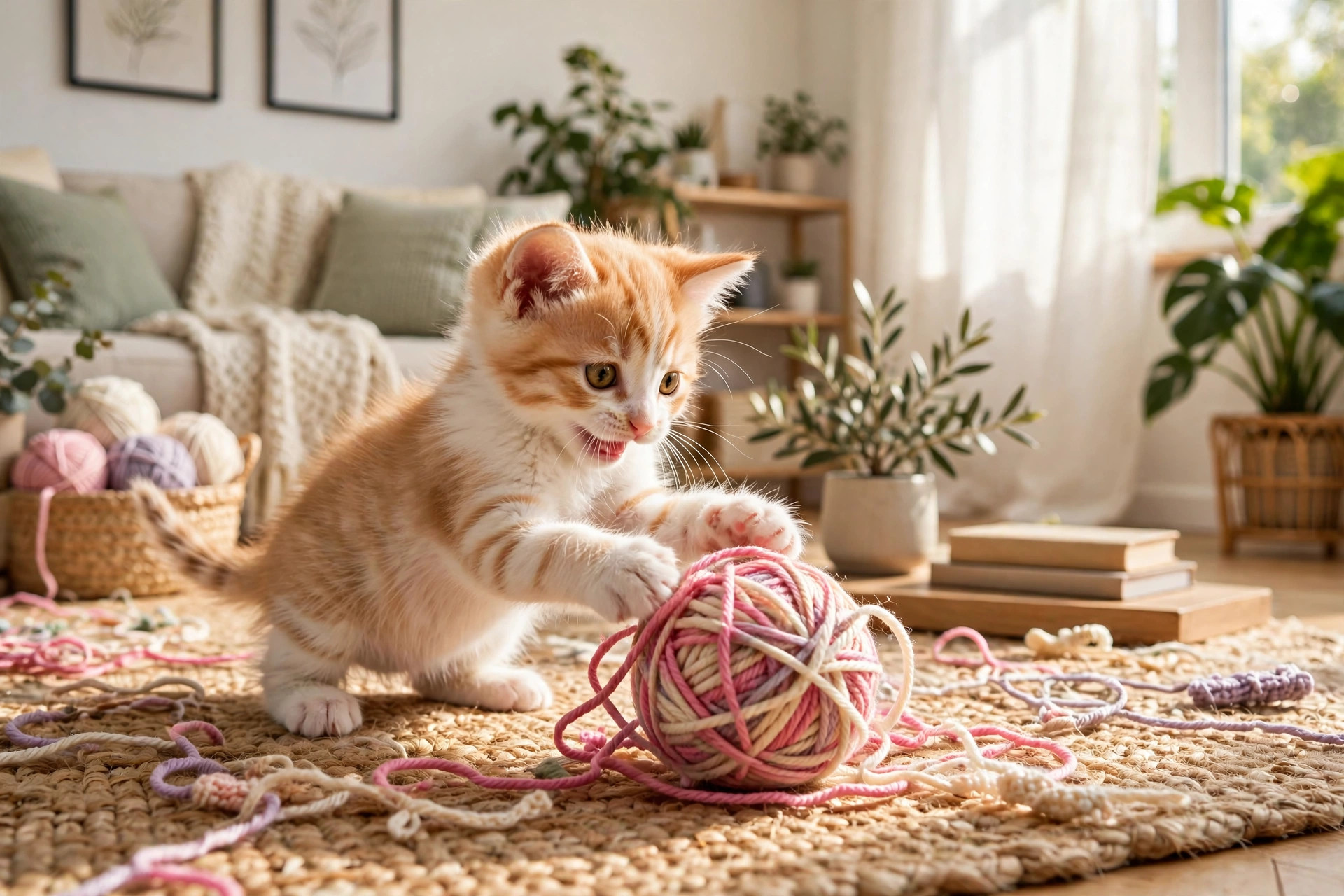
The best long-term strategy is to give your cat’s hunting instinct a safe outlet. Interactive play sessions with wand toys, feather teasers, or crinkle balls let her stalk, chase, and “catch” something without involving real wildlife. Try indoor enrichment ideas to keep your cat happy and active — a tired, mentally stimulated cat hunts less outdoors. Aim for two 10–15 minute play sessions a day, ideally before meals, so the “catch” is followed by food.
Consider Keeping Your Cat Indoors (or Supervised Outdoors)
This is the single most effective way to stop the gifts — and it protects wildlife too. Outdoor cats kill huge numbers of birds and small mammals every year. Keeping your cat indoors eliminates the hunting entirely.
If your cat loves the outdoors, consider safer alternatives:
- A catio or enclosed patio gives fresh air without hunting access.
- Leash walks let your cat explore under your supervision.
- A bell on the collar can reduce hunting success, though clever cats learn to stalk silently even with one. Use breakaway collars, the safest type.
- Brightly colored collars have been shown to reduce bird catches significantly.
Transitioning an outdoor cat indoors takes patience. Start gradually, increase indoor play, and make the inside of your home more interesting than the outside.
What NOT to Do
Do not yell at or punish your cat
Your cat is acting on deep instinct and, in her mind, affection. Punishment will not rewire millions of years of evolution. It will only make your cat fearful of you.
Do not throw the “gift” back at your cat
Tossing the dead animal toward the cat will not teach her a lesson. She will likely just think you are playing, or she will be confused and stressed.
Do not let your cat eat wild prey
If you catch your cat in the act or find her chewing on her catch, gently remove it. Wild mice, birds, and other animals can carry parasites like roundworms and tapeworms, bacteria, and in some areas, diseases like tularemia. They can also carry fleas and ticks. Keep your cat’s deworming and flea prevention up to date, and mention the hunting habit to your vet.
Do not handle dead animals with bare hands
Wild animals can carry leptospirosis, salmonella, and other bacteria. Always use gloves or a bag. If you are bitten or scratched while handling one, wash the wound immediately and contact your doctor — and keep your cat’s rabies vaccination current.
Do not assume one gift means an infestation
Finding one dead mouse does not mean your house is overrun. But if your cat keeps bringing mice from inside the house, check for entry points: seal gaps around doors and pipes, and store dry food in sealed containers.
Do not lock your cat out as punishment
Shutting your cat outside after she brings a gift does not teach her anything — and it actually gives her more hunting opportunities. Handle the situation calmly and bring her inside.
When to See a Vet
Bringing home prey is normal behavior, not a medical problem. But hunting exposes your cat to health risks, so watch for these signs:
- Wounds, swelling, or limping after a hunting trip — bites from other animals can abscess quickly.
- Vomiting, diarrhea, or loss of appetite after eating wild prey — possible signs of parasites or infection.
- Excessive scratching or visible fleas/ticks picked up outdoors.
- Lethargy, fever, or unusual behavior following a hunt.
Also, tell your vet that your cat hunts. Your vet may recommend a deworming schedule, flea and tick prevention, and keeping vaccinations (especially rabies and feline leukemia) up to date. An outdoor hunter needs a slightly different preventive care plan than a strictly indoor cat. When in doubt, a quick call to the clinic is always worth it.
Frequently Asked Questions
Why does my cat bring me dead animals but not eat them?
The most likely explanation is that your cat hunted for the instinct and the activity, not because she was hungry. Well-fed cats often go through the whole stalk-pounce-catch sequence and then lose interest in eating. Many behaviorists believe the cat is bringing the prey to you specifically — as a gift for her “family” or a hunting lesson for her hopeless human. It is normal feline behavior, not a sign that anything is wrong with her diet.
Does my cat bringing me gifts mean she loves me?
In cat terms, yes — probably. Sharing prey is something cats do with those they trust and consider family. Combined with other affectionate behaviors, the “gifts” are a sign that your cat feels safe with you. It is not love in the human sense, but it is genuine social bonding. Accept the compliment, dispose of the mouse, and give her a scratch behind the ears instead.
How do I stop my cat from bringing dead animals home?
The only reliable way is to remove the opportunity: keep your cat indoors, build a catio, or take her outside only on a leash. Bells and bright collars reduce hunting success but do not eliminate it. Increasing indoor play with interactive toys also helps, because a cat that gets to “hunt” during play sessions has less pent-up predatory energy. Never try to stop the behavior with punishment — it does not work and harms your relationship with your cat.
Is it dangerous for my cat to hunt wild animals?
It carries real risks. Wild prey can transmit parasites (roundworms, tapeworms), bacteria, and fleas or ticks. Cats can get bitten or scratched by prey or by other predators, and wounds can become infected. Some prey animals, like certain toads, are toxic. There is also a small risk of diseases like tularemia depending on your area. If your cat hunts regularly, keep her vaccinations current, use year-round flea and tick prevention, follow your vet’s deworming advice, and watch for any signs of illness after hunting.
Should I praise my cat for bringing me a gift?
This is tricky. Enthusiastic praise may encourage more gift-giving, which is the opposite of what most owners want. But scolding damages trust. Most behaviorists suggest a calm, neutral response: quietly remove the animal, give your cat a brief calm acknowledgment, and move on. Then focus on prevention — indoor play, enrichment, and supervised outdoor time — rather than reacting to each gift.
A Strange Compliment
Nobody asks for a dead mouse on their pillow. But once you understand what your cat is doing, it becomes a little less horrifying and a little more touching. Your cat is not trying to upset you. She is doing what cats have done for thousands of years — and she is doing it for you, the strange tall kitten who cannot seem to catch anything.
So take a breath, grab some gloves, and handle the gift calmly. Then channel that incredible hunting instinct into playtime, keep her safe from the risks of real hunting, and appreciate the weird, wild love behind it. Not every pet would go to such lengths to make sure you are fed. Your cat does — every single time she drops one at your feet.