
If your cat is curled up on the sofa at 10 in the morning, still there at 2 in the afternoon, and dozing again by evening, you have probably wondered: why does my cat sleep all day?
The short answer is reassuring: a healthy adult cat sleeps about 12 to 16 hours a day, averaging around 15 hours. Kittens and senior cats often sleep even more, up to 18 to 20 hours a day — roughly two-thirds of her life asleep, and still perfectly healthy.
But “normal” differs for every cat: one who has always slept 16 hours is probably fine, while one who jumped from 12 to 20 hours and skips meals is telling you something has changed.
How Much Sleep Is Normal for a Cat?
- Adult cats: about 12 to 16 hours a day, averaging around 15 hours.
- Kittens: up to 18 to 20 hours a day — growing takes a lot of energy, and a kitten can fall asleep mid-play.
- Senior cats: also up to 18 to 20 hours a day, as older cats move more slowly and rest more.
Breed, personality, weather, and lifestyle matter too: a young cat who goes outside may sleep less than a calm indoor cat, and a cat in a warm home on a cold day may sleep more than in summer.
The most useful number is your own cat’s normal pattern. Learn her baseline, and you will spot a real change quickly — that change, more than the total hours, is what matters.
Why Cats Sleep So Much
Cats are not lazy. They are built this way.
Cats Are Crepuscular Hunters
Cats are crepuscular, meaning they are naturally most active at dawn and dusk — a habit from wild ancestors who hunted at twilight. That is why many cats race around the house at 5 in the morning and again in the early evening, then sleep through the long stretch in between.
They Conserve Energy Between Short Bursts
A cat hunts in short, intense bursts: stalk, pounce, catch, rest. In the wild, a cat might hunt for only a few minutes and spend many hours resting in between — sleeping is how cats save energy for the next burst. Even a house cat who eats from a bowl follows this pattern: a five-minute play session can be followed by a three-hour nap.
Much of That “Sleep” Is Only Light Rest
A lot of what looks like deep sleep is actually a light doze. A cat’s ears keep twitching and her senses stay switched on, so she can wake instantly at the sound of a can opener or a bird outside. Deep sleep is only a smaller part of the total, so a cat who seems asleep all day may really be resting lightly — aware of the world, just choosing not to get up.
Everyday Reasons Your Cat Sleeps More Than Usual
Age. Kittens grow fast, and growth takes energy. Senior cats slow down naturally and their joints may ache, so they rest more. Gradually sleeping a bit more each year is usually normal aging. For what else changes as cats age, read our guide to signs your senior cat is in pain and slowing down — it explains which changes are normal and which to mention to your vet.
Cold weather. Cats love warmth, and cold makes almost every cat sleepier. On a chilly day, your cat may claim the warmest spot in the house — a sunny windowsill, a blanket, or your lap — and stay there for hours.
Boredom and indoor life. An indoor cat with little to do will sleep more than a cat with things to explore. With no toys, window views, or play sessions, sleep becomes the easiest way to pass the time. A bored cat can become a less happy cat, so add some enrichment to her day.
Recent vaccines. If your cat was vaccinated in the last day or two and is sleeping more, that is a common, short-lived reaction. Many cats feel tired and quiet for 24 to 48 hours after a vaccine. If the sleepiness lasts longer, or she stops eating, call your vet.
A big meal or a busy day. Like people, cats feel sleepy after a large meal or an exciting day — guests, a vet trip, or a long play session can all leave a cat ready for a long nap.
Sleepy or Lethargic? How to Tell the Difference
This matters, because the difference between a sleepy cat and a lethargic cat is the difference between “normal” and “needs a vet.”
A sleepy cat wakes easily. Call her name, shake a treat bag, or pick up her favorite toy, and she opens her eyes, stretches, and gets up. She eats, uses the litter box, grooms herself, and plays when invited. She may sleep for hours, but when awake, she is herself.
A lethargic cat stays dull and flat even when awake. She is hard to rouse, shows little interest in food or play, moves slowly or not at all, and may hide or sit hunched in one place. Lethargy is not just sleeping a lot — it is a lack of energy that does not lift when you try to engage her.
Try this quick check. Wake her gently by calling her name or rustling a treat bag: a sleepy cat responds, a lethargic cat barely reacts. Offer food or a favorite toy: a sleepy cat will usually eat or play a little, while a lethargic cat may sniff and walk away. Watch her grooming and posture too — a healthy sleepy cat still grooms herself and lies relaxed, while a sick cat may stop grooming and sit hunched with her head low.
If your cat wakes easily, eats, grooms, and plays, her long naps are almost certainly normal. If she is hard to wake and dull when awake, call your vet.
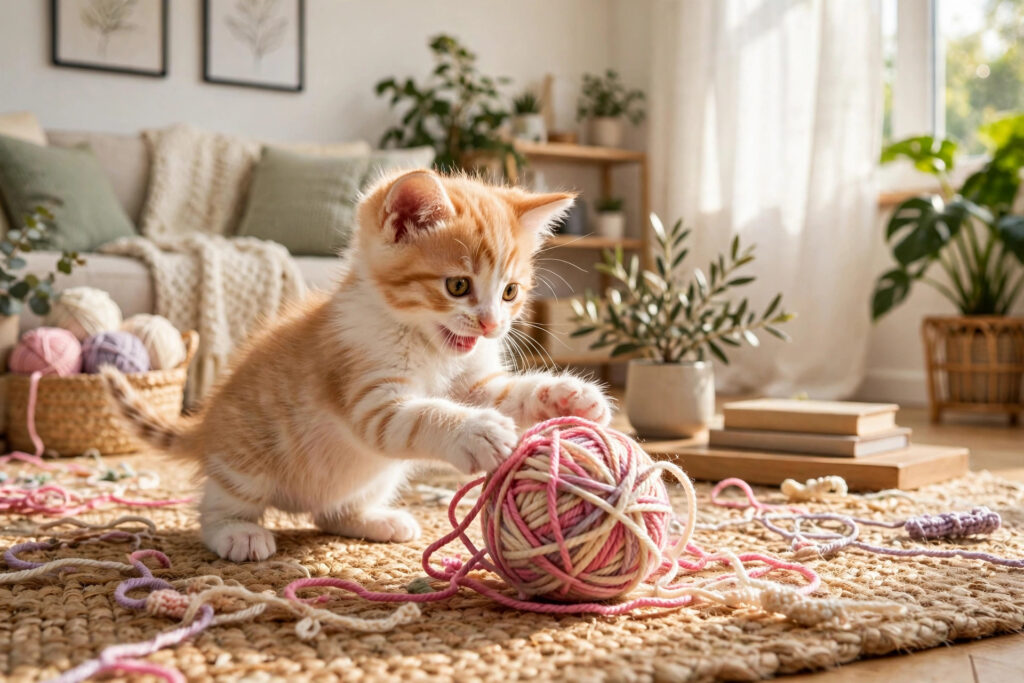
Practical Tips: Helping Your Cat Sleep Well and Stay Active
You cannot — and should not — try to make your cat sleep less. But you can make her waking hours richer, which keeps her healthy and happy.
Give her a warm, safe sleeping spot: a soft bed in a quiet corner, a blanket on a sunny windowsill, or a covered hideaway. Many cats love sleeping near their people — if you have wondered why your cat picks your chest as her favorite bed, our article on why your cat sleeps on your chest explains the warmth, comfort, and trust behind it.
Play with her at dawn and dusk. Cats are naturally most active then, so a ten to fifteen minute session morning and evening, with a wand or feather toy, gives her the hunting-style exercise her body expects. End with a small treat or her meal, mimicking the natural “hunt, catch, eat, rest” cycle.
Offer enrichment during the day. A window perch with a view of birds, a puzzle feeder, a cardboard box, or a climbing tree can turn a boring afternoon into an interesting one. Rotate toys every few days so they stay novel — an enriched cat still naps, but she also plays and explores more when awake.
Keep a steady routine and watch for changes, not hours. Feed her at the same times each day and keep her litter box clean. Notice what “normal” looks like for her, and if it changes, note when it started — that helps your vet.
What NOT to Do
Do not wake her constantly. Sleep matters for cats, and waking her over and over to check on her only stresses her and disturbs her rest. Check gently once or twice, then let her sleep.
Do not cut back her food to “wake her up.” A cat who sleeps more does not need less food — a cat who stops eating is a red flag, not a solution. Never withhold food or water, or take away her bed to force her to be active.
Do not give her human medicine or supplements. Never give a cat medicine meant for people, and do not start supplements or calming products without talking to a vet first. Many human medicines are toxic to cats.
Do not assume it is “just old age.” Senior cats do sleep more, but extra sleep can also signal pain or another health issue. If your senior cat’s sleep jumps suddenly, or she also eats less, loses weight, or stops grooming, get her checked.
Do not ignore hiding along with extra sleep. Cats often hide when they feel unwell or stressed. If your cat has started spending her days under the bed or in a closet, read our guide on why your cat hides under the bed. Hiding plus extra sleep is worth mentioning to your vet.
When to See a Vet
Most cats who sleep all day are healthy. But extra sleep with other changes can signal illness, and cats hide discomfort well. Call your vet if extra sleep comes with any of the following:
- Not eating: nothing at all for 24 hours, or much less than usual for more than a day or two.
- Hiding: far more than usual, or in one spot all day.
- Vomiting or diarrhea: more than a one-off upset stomach, or anything that keeps coming back.
- Drinking or peeing much more, or much less: a clear change in water intake or litter box use.
- Weight loss: her body feels thinner, or her ribs and spine are suddenly easy to feel.
- Stopped grooming: her coat looks greasy or matted because she no longer cleans herself.
- A sudden change: she slept 13 hours a day and now sleeps 20, with no obvious reason.
When you call, say when the change started, what her normal pattern was, and which other signs you noticed. You do not need a diagnosis — that is the vet’s job; yours is simply to describe what you see.
Go to an emergency vet now if: your cat is very hard to wake or cannot be woken at all; she collapses or cannot stand; she breathes with her mouth open, gasps, or struggles to breathe; or she strains to pee with little or nothing coming out, or cries in the litter box. Do not wait — get her to an emergency vet right away.
FAQ
Is it normal for my cat to sleep 20 hours a day?
For a kitten or a senior cat, yes — up to 18 to 20 hours can be normal. For a healthy adult, 20 hours is high, but it can still be normal if that has always been her pattern and she wakes easily, eats, grooms, and plays normally. What matters most is a change from her own usual pattern.
Why does my cat sleep all day but go crazy at night?
Your cat is crepuscular, wired to be most active at dawn and dusk — and often in the middle of the night. Daytime is her natural rest time, so an evening play session followed by a meal can help her settle down for the night.
Should I be worried if my cat suddenly sleeps more?
A sudden increase deserves attention, especially with other changes: is she still eating normally, waking easily, grooming and playing, or has she started hiding? A one-day sleepy spell after a vaccine or a busy day is usually nothing to worry about. A change lasting more than a day or two, or one that comes with not eating, hiding, vomiting, or weight loss, is worth a vet visit.
Do indoor cats sleep more than outdoor cats?
Usually, yes. Outdoor cats have more to do — exploring, hunting, patrolling — while indoor cats live in a smaller, safer, less stimulating world. Indoor life is not bad for cats; it just means they need more play and enrichment to stay active when awake.
How can I tell if my cat is sleeping normally or is actually sick?
Watch how she acts when awake. A healthy sleepy cat wakes easily, stretches, eats, grooms, and shows interest in play or affection. A sick cat stays dull even when awake, is hard to rouse, eats less, grooms less, or hides. If you are ever unsure, a quick call to your vet is always the right move.
Conclusion
Your cat sleeping all day is, most of the time, simply your cat being a cat: twelve to sixteen hours for an adult, up to twenty for a kitten or a senior, with light dozing between bursts of dawn and dusk energy. That is the normal rhythm of a healthy cat’s life.
So enjoy those long, peaceful naps: the warm weight of her on your lap, the soft purring from the sunny windowsill, the funny sight of her falling asleep mid-play.
Just keep one gentle habit: know what normal looks like for your cat. If her sleep suddenly increases, or extra sleep comes with less eating, hiding, vomiting, or a dullness that does not lift, trust your instincts and call your vet. You know your cat better than anyone.